How to Choose a Vapour Blasting Supplier in 2026
Selecting the right vapour blasting machine supplier affects production consistency, operating costs, and machine longevity for years to come. Manufacturing engineers and operations leaders face a decision that goes beyond purchase price.
The supplier you choose determines whether your surface finishing process delivers repeatable results across thousands of components or becomes a source of production bottlenecks. This guide walks you through the evaluation factors that matter when assessing vapour blasting equipment suppliers for industrial applications.
From process control capabilities to aftermarket support structures, you'll learn what separates suppliers who deliver long-term value from those offering short-term savings.
Key takeaways: How to choose a vapour blasting supplier in 2026
- Evaluate suppliers on process repeatability and control systems rather than purchase price alone, as running costs compound over machine lifetime.
- Verify the supplier offers proof-of-concept testing with your actual components before committing to a capital purchase.
- Assess automation capabilities against your production volumes, throughput requirements, and required surface finish specifications.
- Vapormatt machines deliver consistent surface finishes through precision engineering, with automated systems using less than half the energy of competitors.
- Confirm global aftermarket support, spare parts availability, and technical escalation paths exist regardless of your manufacturing location.
What is vapour blasting and why does supplier selection matter?
Vapour blasting (also called wet blasting, vapor blasting, aqua blasting) combines water, abrasive media, and compressed air to clean, finish, and prepare component surfaces. The water cushions the abrasive impact, producing uniform surface textures without the substrate damage associated with other finishing methods.
Unlike other surface preparation approaches, wet blasting creates a specific surface roughness (Ra value) that optimises bonding and coating adhesion. The process removes oils, grease, scale, and oxidation in a single operation while suppressing airborne particles.
Your supplier choice determines whether you achieve those outcomes consistently. A machine that cannot hold process parameters produces variable surface finishes, rejected components, and rework costs that quickly exceed any initial savings.
How do process control capabilities affect surface finish quality?
Process control separates production-grade wet blasting equipment from workshop-level machines. Industrial applications require consistent surface finishes across production runs of hundreds or thousands of components.
What process parameters should be controllable?
Your supplier should offer machines with precise control over blast pressure, media concentration, nozzle distance, and exposure time. Recipe-driven systems store proven parameters for specific component types, eliminating operator variability.
Vapormatt wet blasting machines feature recipe-driven process control that ensures repeatability across shifts and operators. This consistency matters when your customer specifications demand documented surface preparation standards.
Why does slurry concentration monitoring matter?
Abrasive media breaks down during use. Without monitoring, slurry concentration drifts, changing surface finish characteristics mid-production. Automated concentration management maintains target parameters without manual intervention.
Ask potential suppliers how their machines monitor and maintain slurry concentration. Systems that require frequent operator checks introduce variability and increase labour costs.
What automation level matches your production requirements?
Automation decisions depend on your production volumes, component variety, and required throughput. Higher automation reduces labour costs and improves consistency but requires greater capital investment.
When are manual wet blasting machines appropriate?
Manual machines suit low-volume applications, prototype work, or operations where component geometry varies significantly between batches. They require skilled operators who understand blast angles and dwell times.
If you process fewer than 50 components daily and your surface finish specifications allow operator judgment, a manual machine may meet your needs. Assess whether your production will scale before committing to manual equipment.
What benefits do automatic wet blasting systems deliver?
Automatic systems handle higher volumes with greater consistency. Rotating fixtures, programmable nozzle movements, and integrated handling reduce cycle times while eliminating operator-dependent variation.
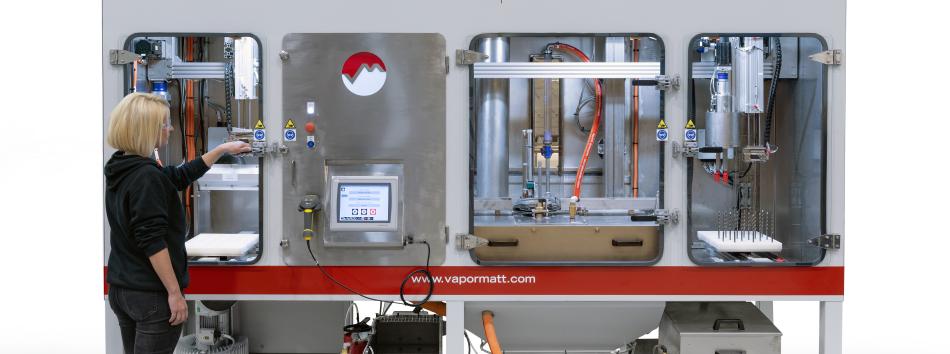
The Vapormatt Puma+ automatic wet blasting machine range delivers consistent, controlled surface finishes through rotating nozzles and programmable parameters. Automated machines from Vapormatt typically use less than half the energy of equivalent competitor machines across pumps and blast guns.
How should you evaluate supplier engineering expertise?
Engineering capability determines whether a supplier can configure a machine for your specific application or simply sells standard products that may not fit your requirements.
Does the supplier offer application-specific configuration?
Your components have unique geometries, material compositions, and surface finish requirements. A supplier with genuine engineering expertise will ask detailed questions about your production mix before recommending equipment.
Vapormatt has sold more than 2,000 wet blasting machines across more than 50 countries, with eight decades of application knowledge shaping equipment recommendations. This experience translates into machines configured for aerospace, automotive, medical device, and precision engineering applications.
What proof-of-concept testing should suppliers offer?
Before committing capital, you should see results on your actual components. Ask suppliers whether they offer sample processing at their facility using your parts and target surface specifications.
Proof-of-concept testing builds your internal business case with documented evidence. It also reveals whether the supplier understands your application or is simply quoting from a catalogue.
What machine build quality indicators should you assess?
Build quality affects maintenance requirements, machine longevity, and total cost of ownership. A lower purchase price means nothing if the machine requires replacement after five years.
How do cabinet construction and material selection affect longevity?
Wet blasting creates an abrasive environment inside the machine cabinet. Cabinet construction, internal geometry, and material selection determine how well the machine withstands that environment over time.
Examine where suppliers position critical components. Motors, drives, and control systems placed away from the abrasive zone require less maintenance and last longer than those exposed to slurry overspray.
What running costs should you factor into total cost of ownership?
Running costs compound over machine lifetime. Energy consumption, abrasive media usage, water consumption, and maintenance labour all contribute to total cost.
Smaller nozzle diameters mean lower air consumption and lower media consumption. Vapormatt machines achieve efficiency through engineering rather than premium options lists. Ask potential suppliers for running cost analyses covering these factors.
How do you evaluate supplier support and aftermarket capabilities?
Your relationship with a supplier extends beyond the purchase. Spare parts availability, technical support, and upgrade paths affect your production continuity for years.
What aftermarket support structure should you expect?
Ask suppliers about spare parts stockholding, service response times, and technical support availability. Global manufacturers should have parts stocked by distributors across multiple regions.
Vapormatt maintains a global network of sales and service partners handling local support, with spare parts stocked across Europe and North America. Their engineering team sits behind that network for technical escalation.
Does the supplier offer structured implementation support?
Capital equipment purchases benefit from structured implementation processes. Ask suppliers what happens between order and production readiness.
Vapormatt assigns a dedicated project leader at order stage, managing delivery through 10 defined quality gates from kick-off through site acceptance. This structured approach reduces commissioning delays and gets your production running faster.
What industry-specific experience should your supplier demonstrate?
Wet blasting applications vary significantly across industries. A supplier with experience in your sector understands the surface finish standards, material handling requirements, and regulatory considerations you face.
What matters for aerospace and defence applications?
Aerospace applications demand documented process repeatability, material traceability, and surface finishes meeting specific standards. Your supplier should understand NADCAP requirements and provide equipment capable of delivering auditable process records.
Vapormatt wet blasting machines serve composite bonding preparation, turbine blade processing, and component cleaning applications across aerospace MRO facilities. The cushioning effect of water prevents damage to carbon fibre and delicate substrates.
What requirements apply to medical device manufacturing?
Medical device surface preparation requires biocompatible processing that meets regulatory standards. Your supplier should demonstrate experience with sterilisation-grade surface finishes and understand validation documentation requirements.
The wet blasting process produces contamination-free surfaces when properly specified. Ask potential suppliers about their medical device customer base and whether they can reference validated applications.
What considerations apply to cutting tool and additive manufacturing?
Cutting tool applications require edge honing and coating preparation without dimensional changes. Additive manufacturing post-processing needs removal of un-sintered powder from complex internal channels.
Vapormatt equipment supports deburring applications and additive manufacturing post-processing. The controlled process removes burrs gently without altering dimensional accuracy or damaging component geometry.
How should you structure your supplier evaluation process?
A structured evaluation process reduces risk and ensures you compare suppliers on criteria that matter for your application.
What questions should you ask during initial discovery?
Start by providing potential suppliers with your component specifications, production volumes, and target surface finish requirements. Assess whether they ask detailed questions or immediately provide generic recommendations.
Suppliers with genuine expertise will want to understand your production mix, timeline, and existing process challenges before recommending equipment. Those who quote immediately without discovery are likely offering catalogue products rather than configured solutions.
What should sample processing demonstrate?
Request sample processing using your actual components at the supplier's facility. Document the process parameters used and verify the achieved surface finish against your specifications.
This testing should also demonstrate the supplier's technical support capability. Observe how their application specialists approach your components and whether they can explain their recommendations.
What commercial and contractual factors should you verify?
Before finalising supplier selection, verify the specification in writing. Confirm exactly what is included in the quoted price and what constitutes optional extras.
Ask about payment terms, delivery timelines, installation support, and warranty coverage. Understand what happens if the machine does not meet specified performance standards after commissioning.
What common supplier evaluation mistakes should you avoid?
Manufacturing engineers often focus on specifications while overlooking factors that determine long-term satisfaction with equipment and supplier relationship.
Why should you look beyond purchase price?
A lower purchase price is only an advantage if the machine delivers what your production requires. A machine that cannot hold process parameters consistently, requires frequent intervention, or needs replacing after five years costs more than a machine that runs reliably for twenty.
Calculate total cost of ownership across energy consumption, media usage, maintenance, and expected machine lifetime. The purchase price is one component of a larger financial picture.
Why does supplier financial stability matter?
Capital equipment creates a multi-decade relationship with your supplier. Spare parts, technical support, and upgrade paths depend on supplier business continuity.
Assess supplier financial stability, ownership structure, and investment in research and development. Vapormatt invests more in R&D than any of their competitors, indicating commitment to technology advancement and long-term business viability.
What does the evaluation process look like when working with Vapormatt?
Understanding what a structured purchase process looks like helps you assess whether potential suppliers follow similar rigour.
How does Vapormatt's discovery and recommendation process work?
Vapormatt's process begins with discovery: learning your production mix, components, target surface condition, and timeline. This ensures wet blasting is the right technology for your application before proceeding.
Where wet blasting fits your requirements, you receive an initial machine recommendation and indicative budget. This recommendation reflects your specific needs rather than a standard product offering.
What happens during proof of concept and specification?
Once the initial concept and investment levels have been agreed, Vapormatt helps build your business case through sample processing, relevant case studies, and running costs analysis covering abrasive usage, energy consumption, and expected maintenance costs.
With the business case approved, the final specification is agreed in writing before order. The quote reflects exactly what has been agreed, with no hidden costs or unexpected options emerging later.
In conclusion: How to choose the right vapour blasting supplier for your operation
Choosing a vapour blasting machine supplier requires evaluating capabilities that extend beyond equipment specifications. Process control, automation level, engineering expertise, build quality, and aftermarket support all affect your long-term production outcomes.
Focus on suppliers who demonstrate genuine interest in your application through detailed discovery questions and proof-of-concept testing. Compare total cost of ownership rather than purchase price alone.
The right supplier relationship delivers consistent surface finishes, reliable equipment, and responsive support for decades. Start your evaluation by identifying suppliers who ask the right questions about your production requirements rather than those who provide immediate quotes from catalogue specifications.
FAQs about how to choose a vapour blasting supplier
What is the difference between vapour blasting and dry blasting?
Vapour blasting (wet blasting) combines water with abrasive media, producing uniform surface finishes without substrate damage. The water cushions the abrasive impact and suppresses airborne particles. Vapormatt machines create precisely controlled surface roughness values for optimal coating adhesion.
How long should a wet blasting machine last?
Production-grade wet blasting equipment should operate reliably for 20 years or more with proper maintenance. Vapormatt machines are built to this standard, with cabinet construction and component placement designed to withstand abrasive operating environments throughout that lifetime.
What should I look for in vapour blasting machine automation?
Assess whether automation matches your production volumes and component variety. Automatic systems reduce labour costs and improve consistency for high-volume applications. Vapormatt automatic wet blasting machines feature recipe-driven control that eliminates operator-dependent variation across production runs.
How do I compare running costs between different suppliers?
Request running cost analyses covering energy consumption, abrasive media usage, water consumption, and maintenance labour. Vapormatt machines typically use less than half the energy of competitor machines through smaller nozzle diameters and efficient engineering design.
What proof-of-concept testing should suppliers offer before purchase?
Suppliers should offer sample processing using your actual components at their facility. This demonstrates whether the equipment achieves your target surface specifications and reveals the supplier's application expertise. Vapormatt conducts proof-of-concept testing at their R&D facility or demonstration centre.
Can vapour blasting machines be configured for specific industry requirements?
Yes. Aerospace, medical device, automotive, and precision engineering applications each require specific process configurations. Vapormatt configures machines for industry-specific requirements, drawing on decades of application experience across more than 50 countries.