
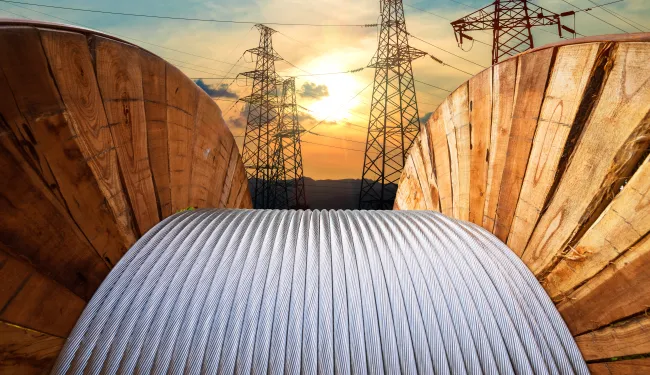
A non-specular (de-glared) finish is a uniform matte surface on the outer aluminium strands of overhead conductor. It makes the line less visible against the landscape and helps the conductor shed heat. Wet blasting (vapor blasting) produces this finish inline to ASTM B979, raising surface emissivity from about 0.5 to 0.8 for around 5% more current-carrying capacity, without the dust and contamination of dry blasting. Getting that finish wrong costs you compliance, crew safety, and ampacity your customers have already rated into their infrastructure.
As the originators of wet blasting, Vapormatt has supplied conductor manufacturers across North America and Europe with inline finishing systems purpose-built for overhead power cable. Our first machine for this application was placed with a European overhead cable manufacturer in 2010. The Profelis is now the established choice for the world's leading conductor manufacturers.
De-glare
A non-specular finish to ASTM B979 that reduces the line’s visual impact
Cooler
Emissivity rises from about 0.5 to 0.8, so cable runs cooler at the same load
Ampacity
Around 5% more current-carrying capacity with no extra conductor material
Repeatability
360° coverage gives the same finish along every reel
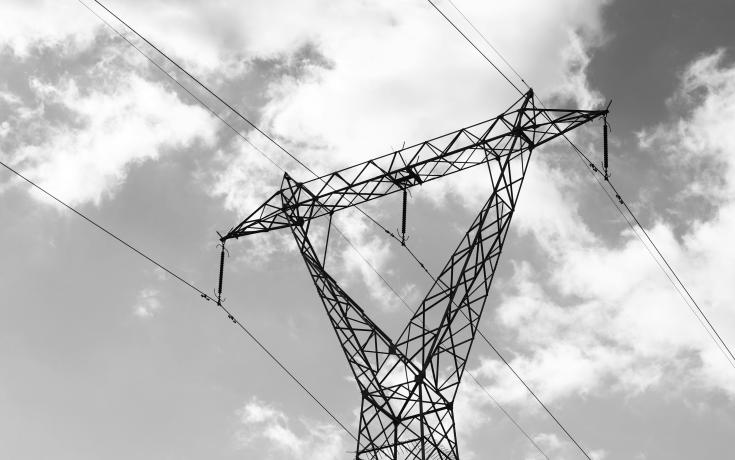
A 5% increase in current carrying capacity is built into the finish
Surface emissivity determines how efficiently a conductor dissipates heat into the surrounding air. An untreated, specular aluminium conductor has an emissivity of approximately 0.5. Wet blasting creates a uniform non-specular surface that raises emissivity to approximately 0.8. Higher emissivity means the conductor radiates more heat, so it runs cooler at the same load and can carry more current before reaching its maximum operating temperature.
An increase in current carrying capacity of around 5% can be achieved through emissivity improvement alone. Full calculations are in our emissivity white paper. For a manufacturer supplying ACSR, AAAC, or HTLS conductor at scale, that is a verifiable performance advantage built into every reel you ship. Utilities and permitting authorities, including on US federal land, commonly specify non-specular conductor to ASTM B979 where visual impact matters.
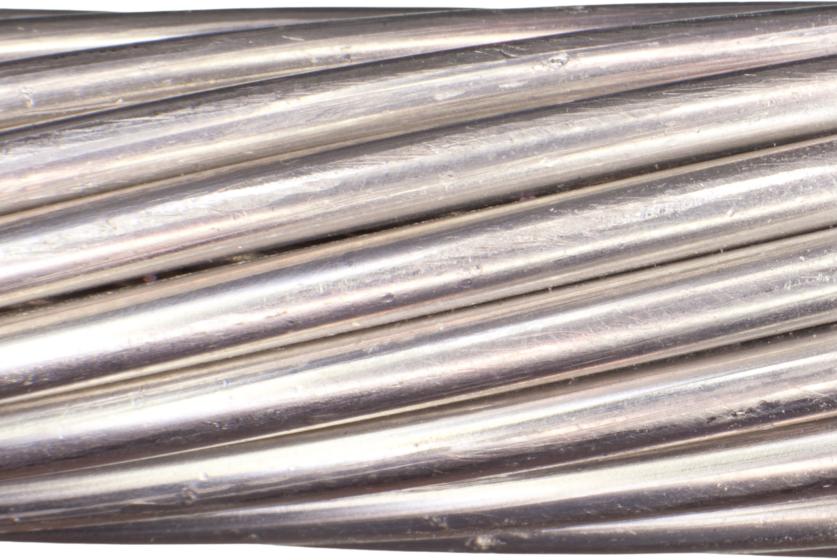
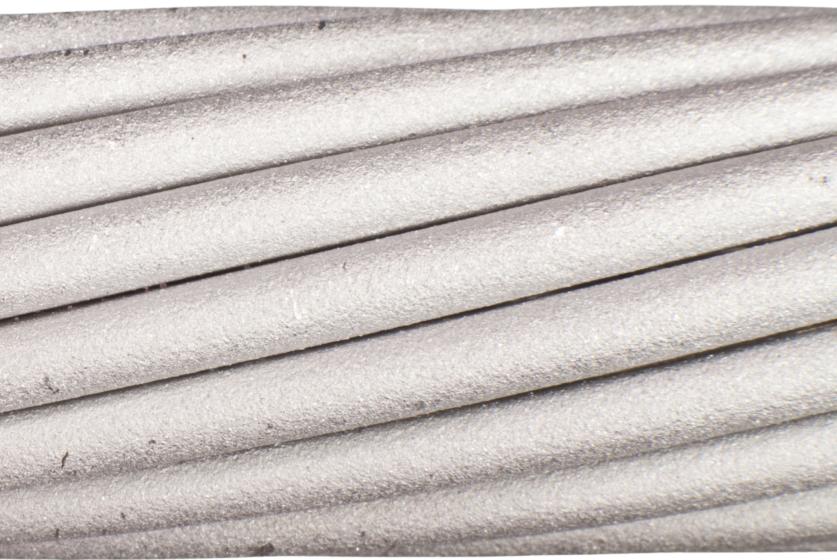
Overhead power cable before and after wet blasting
Why dry blasting creates production liabilities wet blasting eliminates
Wet blasting inline handles simultaneous cleaning, drawing lubricant removal, oxide removal, and controlled surface texturing to ASTM B979 diffuse reflectance requirements in a single pass. The Profelis processes conductor from 1mm to 54mm (0.04" to 2.13") in diameter, covering the full range of standard and compact concentric-lay stranded conductors, including:
vs. dry blasting on working environment: Dry blasting aluminium conductor generates sustained airborne dust. The health risk to operators is well-documented and the regulatory exposure for your plant is real. Wet blasting suppresses dust entirely at the point of generation. There is no airborne contamination, no dust collector maintenance burden, and no residual dust on finished conductor when it reaches the installation site.
vs. dry blasting on production cleanliness: Finished conductor must arrive at the delivery point clean and free of contaminants under ASTM B979 acceptance conditions. Wet blasting carries media in a water slurry that flushes the surface continuously. The integrated rinse stage removes all residue, with no secondary cleaning step required before reeling.
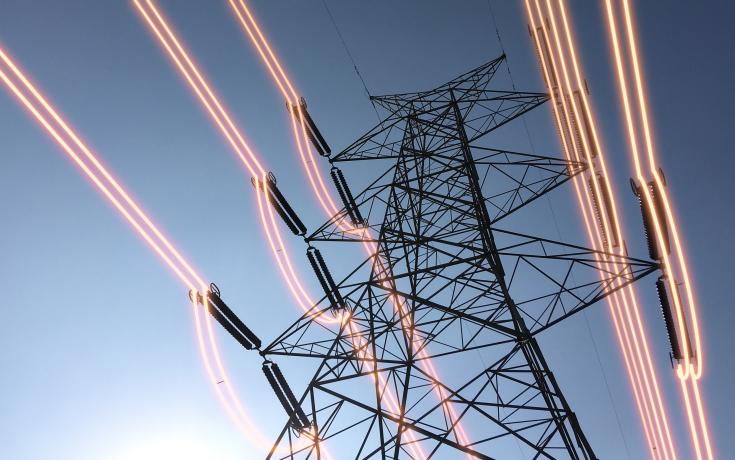
Wet blasting applications for overhead conductor
Wet blasting inline handles simultaneous cleaning, drawing lubricant removal, oxide removal, and controlled surface texturing to ASTM B979 diffuse reflectance requirements in a single pass. The Profelis processes conductor from 1/32" to 2-1/8" (1mm to 54mm) in diameter, covering the full range of standard and compact concentric-lay stranded conductors, including:
- AAC, AAAC, ACSR, and HTLS outer strands
- Shaped wire compact concentric-lay conductors (ACSR/TW)
- Aluminium 1350 and aluminium alloy wire for outer layers
Learn more about Vapormatt's wire and cable finishing capabilities
Why Vapormatt
360-degree coverage at production line speeds: The Profelis uses a manifold of four blast guns at 90-degree intervals as standard, with an eight-gun configuration available for maximum surface uniformity. Consistent 360-degree coverage produces a repeatable diffuse reflectance reading across the full conductor circumference, and uses around 20% less compressed air than equivalent dry blast systems, reducing your finishing line running costs directly.
Inline integration without process disruption: The Profelis sits inline with existing stranding and reeling equipment, configurable left-to-right or right-to-left to suit your floor layout. Integrated rinsing and drying are included as standard, with no additional handling step between finishing and reeling.
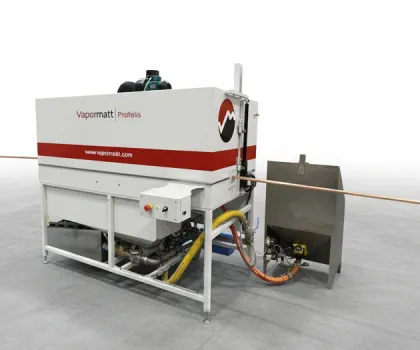
Watch the Profelis wet blasting machine in action
The bottom line
Utilities and permitting authorities specify ASTM B979 non-specular conductor where visual impact matters, including on US federal land. Wet blasting meets that standard with a cleaner, safer process than dry blasting, and delivers approximately 5% greater ampacity at no additional conductor material cost. Contact us to discuss your finishing requirements and arrange a sample trial.
Related machines
FAQs
What is a non-specular conductor?
A non-specular conductor is overhead conductor whose outer aluminium strands have a dull, matte finish instead of a shiny one. The de-glared surface makes the line less visible against the landscape and raises emissivity, so the conductor runs cooler. The finish is applied in the factory, typically by wet or dry blasting, and is specified to ASTM B979.
What is ASTM B979?
ASTM B979 is the standard specification for non-specular surface finish on overhead aluminium conductors. It uses diffuse reflectance measurement to define a uniform matte finish that makes a line less visible against the landscape, and gives manufacturers a basis for consistent process control. Wet blasting (otherwise known as vapor blasting or wet abrasive blasting) is a factory process used to meet it.
How does a non-specular finish increase the current-carrying capacity of overhead conductor?
A non-specular finish raises surface emissivity from about 0.5 to about 0.8, so the conductor radiates more heat. It runs cooler at the same load and can carry around 5% more current before reaching its maximum operating temperature, with no extra conductor material. Full calculations are in Vapormatt’s emissivity white paper.
How is a non-specular finish measured?
A non-specular finish is measured by diffuse reflectance, as set out in ASTM B979. The reading shows how much light the conductor surface scatters rather than reflects, which confirms the finish is uniform and within specification. Vapormatt’s sample trials return a test report with measurements, so you can check the result on your own conductor.
Is wet blasting or dry blasting better for a non-specular finish?
Both can meet ASTM B979, but wet blasting does it without airborne dust. The water slurry suppresses dust where it is generated, so there is no dust collector to maintain and no residue on finished conductor. The integrated rinse cleans the surface before reeling. The Vapormatt Profelis also uses around 20% less compressed air than equivalent dry blast systems.
Can a non-specular finish be applied to conductor that is already installed?
No. A non-specular finish is a factory treatment applied to the outer strands during manufacture. With the Vapormatt Profelis, it is applied inline between stranding and reeling, so the conductor leaves the factory with the finish already in place.
What blast media is used in wet blasting for aluminium conductor finishing?
Wet blasting for overhead conductor uses fine abrasive media suspended in a water slurry. Common options include glass beads and aluminium oxide. Media type and particle size are chosen to suit the conductor alloy and the target diffuse reflectance value, giving the texture ASTM B979 requires without removing excess material from the outer strands.
How does wet blasting affect the tensile strength and dimensional tolerances of ACSR and AAAC conductors?
When correctly configured, wet blasting removes surface oxides and drawing lubricants without measurably affecting the tensile strength or diameter of outer strand wires. The process parameters, including blast pressure, media concentration, and dwell time, are set to texture the surface rather than abrade the base material, preserving conductor mechanical ratings.
How fast can overhead conductor be wet blasted?
The Vapormatt Profelis runs at up to 120 m/min (394 ft/min), matched to your stranding and reeling line. Speed depends on conductor diameter, the finish required and whether the four- or eight-gun manifold is fitted. Larger conductors run slower to keep full 360-degree coverage to ASTM B979.
How is wastewater from the wet blasting process managed and disposed of in a conductor manufacturing facility?
The Profelis recirculates blast media and rinse water in a closed loop inside the machine. Removed material, including aluminium oxide and drawing lubricant residue, is separated out and disposed of in line with local regulations.
Can I trial wet blasting on my own conductor before buying?
Yes. Send a length of your conductor to Vapormatt’s sample processing facility. It is wet blasted to a recipe developed for your product and returned with a test report covering the recipe, measurements and photographs.