Every failed bond on a carbon fibre assembly costs more than the part. It costs rework, time and confidence in a structure that has to perform.
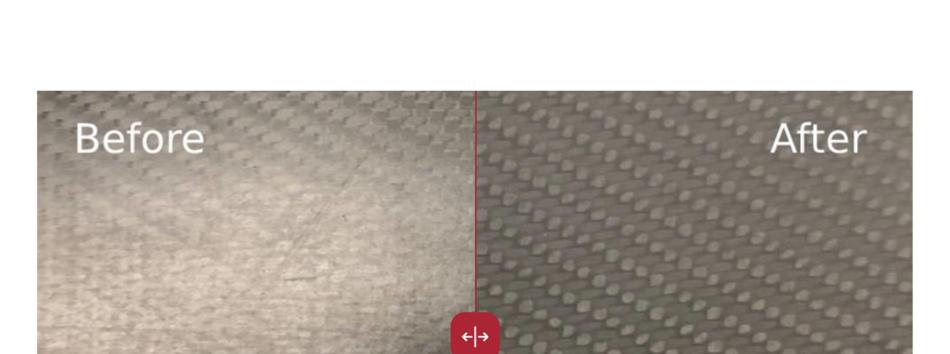
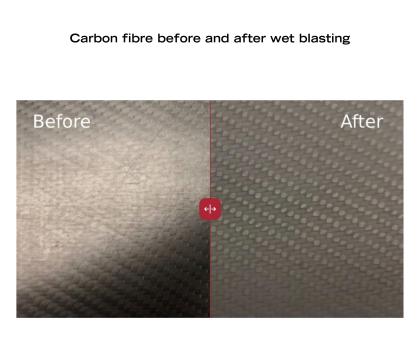
Carbon fibre leaves the autoclave with a resin-rich surface that repels adhesive. Wet blasting fixes that in one dust-free pass. The water cushions the abrasive to protect the fibres, rinses contamination away and removes the static charge that attracts it back.
The results are measurable:
- Water contact angle of 43 to 48°, against 76 to 88° for peel ply, manual sanding and dry grit blasting
- 757 J/m² fracture toughness for a European airframe OEM, against a 450 J/m² requirement
- No fibre damage at recommended pressures of up to 4 bar
- A surface that stays bond-ready for over two weeks
Consistency is where the Cougar+ comes in. Its recipe-controlled automatic process delivers the same surface profile on every part, set up through a simple colour touchscreen. The 1200mm working envelope handles fan blades and structural panels alike, and the twin-turntable option lets your team load one batch whilst the next is blasting.
It’s why a Vapormatt Cougar+ has prepared composites at the UK’s National Composites Centre since 2013.