
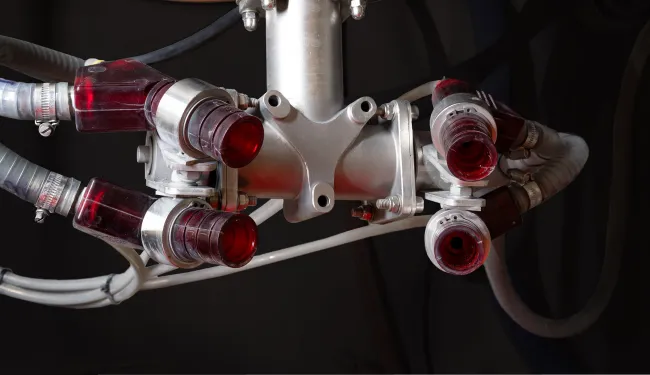
Wet blasting definition and key facts
Wet blasting is a surface finishing process in which abrasive media is mixed with water to form a slurry, then accelerated by compressed air onto a component. The water cushions each particle, so the part is cleaned, degreased and finished in a single step, with virtually no airborne dust and far less heat and media embedment than dry blasting.
If you'd like an explanation of how wet blasting works, or to discuss your specific finishing requirements, or request the sample processing of your components, speak to one of our experts.
Key wet blasting facts:
| Also known as | Vapor blasting, vapour blasting, liquid honing, wet abrasive blasting, hydro abrasive blasting, vapor honing, slurry blasting, aqua blasting |
| Developed | Late 1940s, UK, by Norman Ashworth |
| Typical finish | Down to 0.2µm Ra |
| Common media | Glass bead, aluminium oxide, plastic, ceramic, stainless steel |
| Used for | Cleaning, deburring, edge honing, coating prep, peening, paint stripping |
| Machine types | Manual cabinets and automatic production machines |
How does wet blasting work?
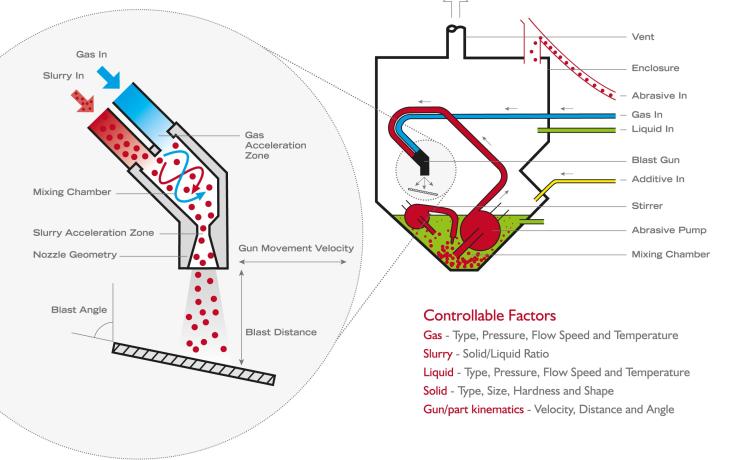
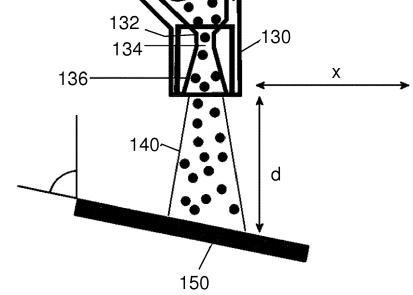
Wet blasting delivers a lubricated, cushioned flow of abrasive slurry onto the surface rather than into it. Water and abrasive media are mixed to form a slurry, then compressed air projects it onto the component in a controlled stream that cleans, finishes and degreases in a single pass. The result: minimal media embedment, no heat distortion and virtually no airborne dust.
- Abrasive media and water is mixed in the sump to form a slurry.
- A pump delivers the slurry to the blast gun.
- Compressed air accelerates the slurry through the nozzle.
- The water-cushioned media laps across the component surface, cleaning and finishing it.
- The slurry drains back to the sump and is recycled.
- Broken, undersized media is separated out to keep the finish consistent.
Who invented wet blasting?
In the late 1940s, Norman Ashworth was working alongside Sir Frank Whittle on the development of the jet engine which led him to engineer something entirely new: a process he called 'liquid honing', combining water and abrasive media to produce a finish no dry process could match. That process became wet blasting. The fourth generation of the Ashworth family still owns and runs the company today.
The results are measurably different from dry blasting or grit blasting, where particles strike at full velocity, ricochet unpredictably, and embed into the substrate. Vapormatt machines achieve surface roughness values as low as 0.2µm Ra and hold edge hone tolerances to within ±2µm.. Few mechanical surface treatments reach those numbers.
How wet blasting is controlled: the variables behind a repeatable finish
Precision outcomes require precise inputs. A wet blast result is governed by up to 15 interacting variables.
Discover how Vapormatt engineering gives a repeatable process
Every Vapormatt machine runs as a closed-loop system as standard. Water and abrasive media are recycled continuously while slurry quality and air pressure are monitored and controlled in real time. This allows a process 'recipe' to be established once and reproduced exactly, cycle after cycle.
Central to that consistency is the Vapormatt Slurry Pipework System (VSPS), our proprietary modular delivery architecture, that ensures slurry reaches the right place at the right time, without the variability that compromises less controlled systems. It is the engineering reason our process results hold where others drift.
Because wet blasting captures dust in water rather than creating a combustible dust cloud, it typically falls outside the ATEX/DSEAR requirements that apply to dry blasting. No dust extraction system is needed, the dust explosion risk of dry blasting is removed, and operator exposure to respirable dust, the cause of diseases such as silicosis, is dramatically reduced. A COSHH assessment is still required for the media and any coatings being removed, but the starting risk is far lower.
Have a target Ra surface roughness in mind? Tell us and we'll tell you if we can hit it
Trusted where failure is not an option
Wet blasting was developed to give jet engine turbine blades a finish no dry process could achieve, but its safety case followed quickly. When the Factories Act 1948 banned silica in sandblasting to stop silicosis, British industry needed a safer alternative, and wet blasting was ready. Because it captures particles in water rather than releasing them into the air, it remains the process of choice wherever operator exposure or secondary contamination must be controlled.
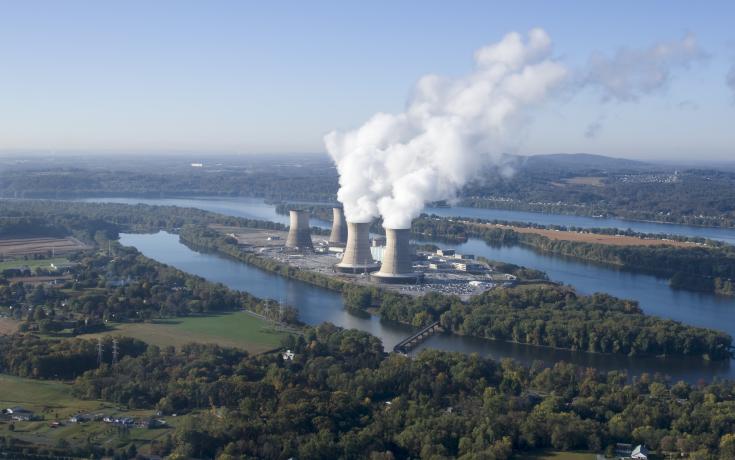
Vapormatt supplied over 30 nuclear decontamination installations in the USA, including work carried out following the Three Mile Island incident. When a process is trusted at that level, every other application becomes a question of configuration, not capability.
What is wet blasting used for?
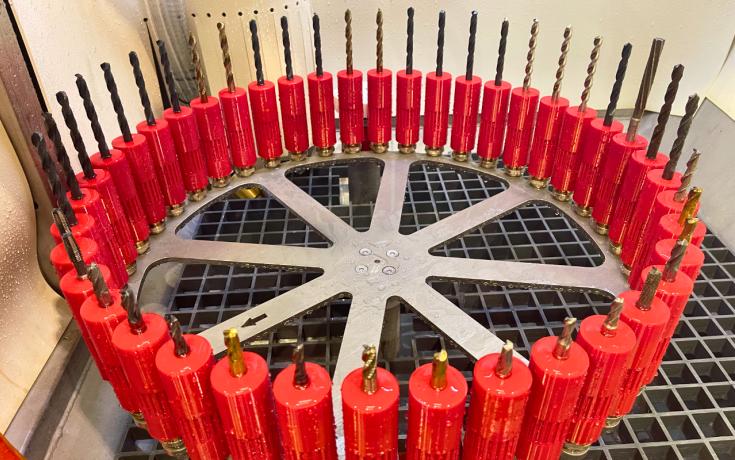
The same fundamental process, configured differently, handles cleaning, deburring, edge honing, surface preparation for coatings, peening, descaling, and powder removal; often in a single operation, eliminating handling steps and reducing cycle time.
It is why wet blasting is the process of choice across several of the world's most controlled and highly technical manufacturing industries:
- Aerospace: paint stripping, shot peening, preparation for NDT
- Carbide tooling: edge honing to K-factor, pre-coating preparation, burr removal
- Additive manufacturing: smoothing, depowdering and internal cleaning
- Medical devices: controlled surface roughness finishes for biocompatibility and sterilisation
- Aluminium extrusion: die cleaning to reduce polishing
- Composites: surface activation for bonding
Not sure if wet blasting suits your parts? Discuss your application
Wet vs dry blasting
Dry blasting, including sandblasting, fires abrasive at full velocity in air, which can embed media in the part and creates dust that needs extraction. Wet blasting cushions the abrasive in water, giving a finer, more uniform finish with virtually no airborne dust and minimal media embedment.
See the full comparison of wet blasting against dry blasting and other finishing processes
The other names for wet blasting
As well as 'liquid honing', wet blasting is sometimes referred to as vapor blasting, vapour blasting, vapor honing, hydro abrasive blasting, wet abrasive blasting, slurry blasting or aqua blasting. Click on the relevant links to learn about each term.
Browse our guides
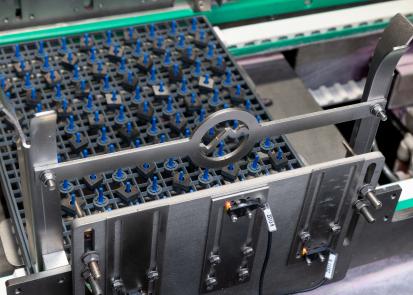
The benefits of wet blasting
Learn how wet blasting delivers superior results and safer operation compared to other technologies.
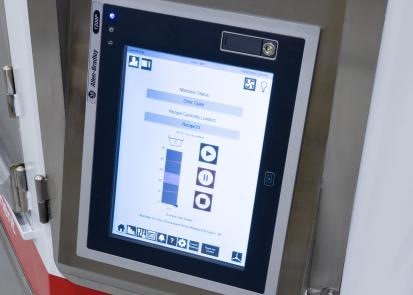
Process control
Discover why repeatability isn't a claim, it's engineered into every Vapormatt machine.
Health and safety
Learn how wet blasting removes airborne dust at source, and how Vapormatt designs every machine around operator safety.
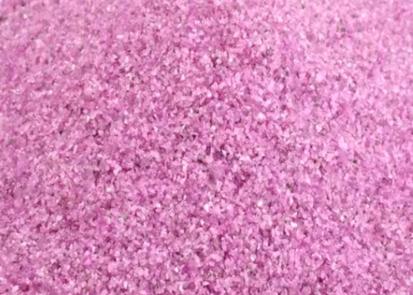
Abrasive blast media guide
Understand why size, shape and hardness of media influence the blasting process.
FAQs
What surface finish can wet blasting achieve?
Vapormatt machines achieve Ra values as low as 0.2µm and can hold edge hone tolerances to within ±2µm. The specific outcome depends on media selection, pressure, and process configuration, variables our engineers define for your application before a machine is specified. It can be used on most substrates and materials and is particularly effective on stainless steel, aluminium, carbide, titanium or nitinol parts.
Is vapor blasting different from wet blasting?
No. Vapor blasting (spelt vapour blasting in the UK, Australia, New Zealand and several other countries) is another name for the same process: water and abrasive media mixed into a slurry, then projected onto a surface by compressed air in a controlled stream.
Some sources describe vapor blasting as a gentler variant in which air turns the water into a mist. In fact, the name comes from the fine, mist-like spray visible at the nozzle, which is present in any wet blasting system. How gentle or aggressive the result is depends on the media, pressure and settings, not on which name is used. Read our vapor blasting page for more detail.
Is wet blasting the same as dustless blasting?
They work on the same principle, but they're used for different jobs. "Dustless blasting" usually refers to mobile wet abrasive blasting, where abrasive and water are sprayed from a trailer-mounted unit to strip paint and rust from vehicles, boats and buildings on site. It is built for fast, heavy removal.
Industrial wet blasting takes place in an enclosed machine that recycles its water and media. It is designed for manufactured components where the finish has to be precise and repeatable, part after part. No blasting process is completely dust-free, but wet blasting in an enclosed machine produces virtually no airborne dust.
When is dry blasting the better choice?
Wet blasting isn't the right process for every job. Dry blasting is often faster and more economical for heavy material removal where the final finish matters less, such as stripping thick rust, mill scale or heavy coatings from large steel structures. It can also suit parts that can't tolerate moisture, or porous materials that might trap water, and sites where handling process water isn't practical. Where surface quality, dimensional control, cleanliness or operator safety are the priority, wet blasting has the clear advantage.
If you're unsure which process suits your components, talk to one of our applications engineers
Who invented wet blasting?
Norman Ashworth developed the first wet blasting process in the UK in the late 1940s, while working with Sir Frank Whittle on the jet engine. He called it liquid honing.
What media is used in wet blasting?
Glass bead, aluminium oxide, plastic, ceramic and others, chosen for the substrate and target finish.
What materials can be wet blasted?
Most metals, including stainless steel, aluminium, titanium, carbide and nitinol, plus many composites, ceramics and polymers.
Is wet blasting the same as water jetting or hydro blasting?
No. Hydro blasting and water jetting use high-pressure water alone, with no abrasive. Wet blasting carries abrasive media in water at much lower pressure, which is what allows it to finish and profile a surface rather than only clean or strip it. Hydro abrasive blasting, however, is another name for wet blasting. The word "abrasive" is the difference.
Does wet blasting cause rust?
Corrosion inhibitors can be added to the water to prevent flash rust on ferrous parts.
Do I need a manual or automatic machine?
It depends on your production volumes, how varied your parts are and how much consistency you need. Manual machines give operators hands-on control and suit smaller batches, a wide mix of components and frequent changeovers. Automatic machines suit higher volumes of repeat parts, producing the same finish every cycle with minimal operator input and traceable process data. If you're unsure which is right for your components, our applications engineers can recommend the best option.
Can you trial wet blasting on my parts?
Yes. Tell us about your components and the finish you need, then send us samples and our applications engineers will process them at our R&D Centre. We'll share the results along with a recommendation for the right process and machine, so you can see what wet blasting achieves on your parts before you invest.