Image


Tooth honing, gullet peening, deburring, cleaning, surface preparation for coating and branding
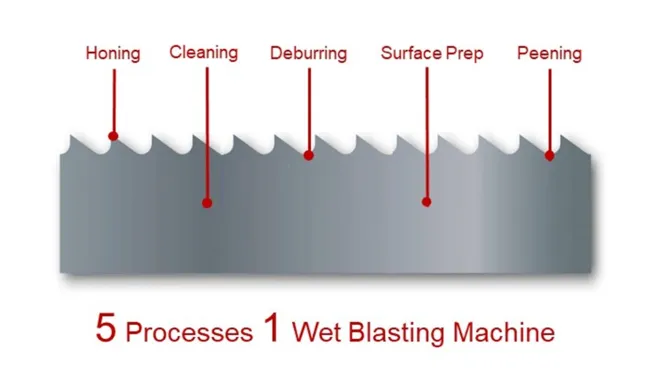


Carbide teeth are honed to an exact edge radius, eliminating chipping from first cut
Gullet peening creates -1,500 MPa compressive stresses, preventing fatigue cracks
Burrs, heat marks, and notches removed in a single pass, ready for coating
Inline processing integrates directly into your production line, maximising throughput
Your customers expect a blade that performs from the first cut. Carbide teeth that chip on contact, gullets that crack under load, and a surface that won't retain cutting lubricants are not acceptable failure modes. They are unhappy customers, returns, and lost repeat orders waiting to happen.
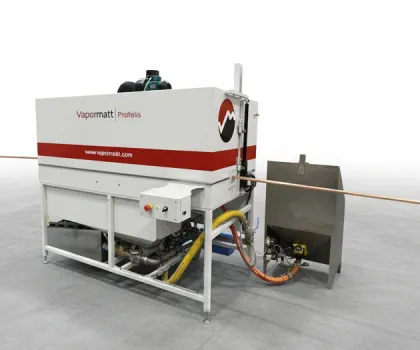
The unique Vapormatt Profelis automatic wet blasting system resolves all three in a single in-line operation. Vapormatt has supplied bandsaw blade finishing systems globally since 1998, processing blades from coil to coil and in loop configurations up to 370mm in height.
Learn more about the Vapormatt Profelis in-line automatic wet blasting system
Dry blasting and dry shot peening remain common in bandsaw blade production. They clean and peen to a degree. But they cannot hone a carbide tooth accurately, they generate dust that forces the process off-line into a sealed room, and they leave a surface that is less reactive and less consistent than wet blasting achieves.
Wet blasting uses a controlled slurry of water and abrasive media. The water cushions impact, giving finer control over surface energy and finish consistency than dry processes allow. It delivers three outcomes in a single pass that dry alternatives cannot replicate together.
Read the bandsaw blade industry brochure
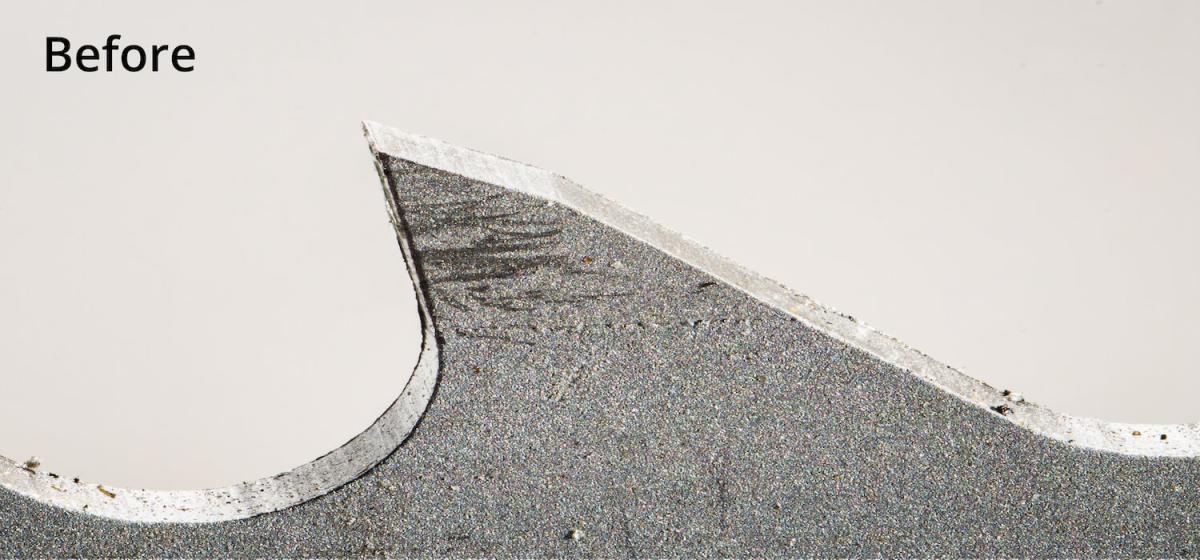
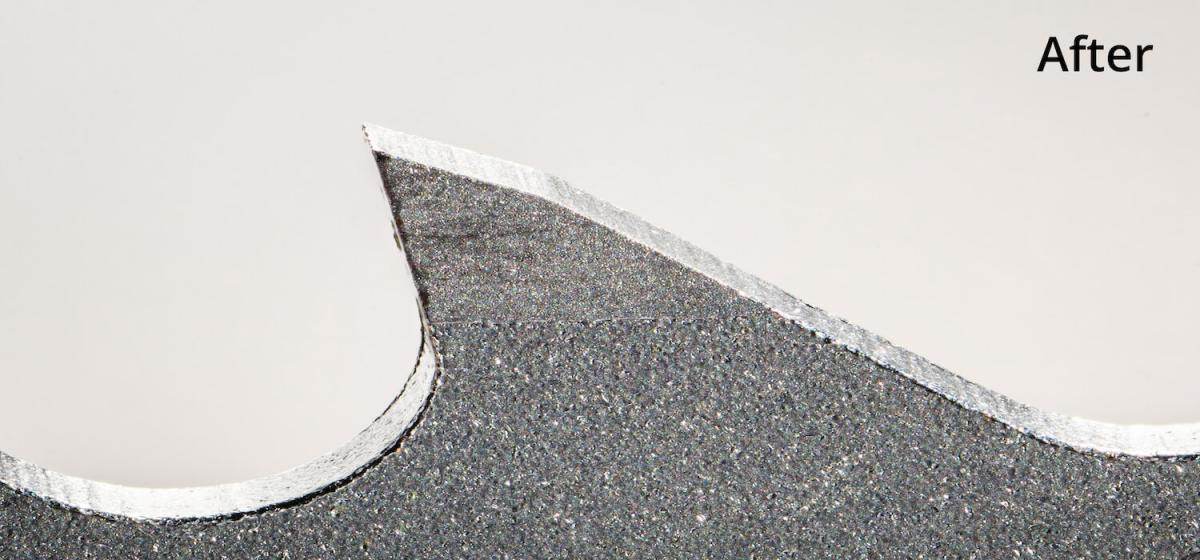
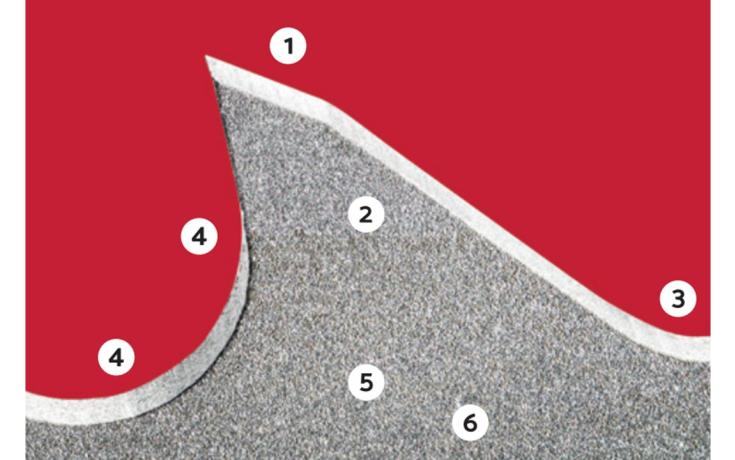
1. Carbide tooth honing
A freshly formed carbide tooth is sharp but fragile. Without a controlled edge radius, it chips under load. With wet blasting, a defined hone is applied to each tooth, reducing the risk tooth breakage and chipping from the first cut. Edge radius increases from approximately 3µm to 20µm in a single pass. The blade cuts at full speed from installation, with no break-in period absorbing your customer's production capacity.
2, 3, 5, 6. Surface cleaning, deburring and coating preparation
Wet blasting removes burrs, heat marks, heat scale and machining notches in a single pass. It creates a clean, cosmetic finish with a surface roughness that improves oil retention significantly compared to dry blasting. Blades arrive at downstream processing clean, dried, reactive, and ready for coating, painting, branding and anti-rust treatments.
4. Micro-nozzle gullet and teeth braze point peening
The gullet is the weakest point in any bandsaw blade under cyclic load. Punching can leve tensile residual stresses in the surface layer of up to +1,000 MPa, stress that accelerates fatigue crack initiation under repeated flexing. Peening reverses that. A large European bandsaw blade manufacturer and Vapormatt customer achieved compressive residual stresses of approximately -1,500 MPa at the surface layer: a shift of 2,500 MPa from the tensile baseline left by punching. Wet peening also increases the compressive stress of bandsaw tooth braze points.
Cracks do not propagate in a surface under compression. Vapormatt's micro-nozzle configuration delivers that compressive stress state specifically to the gullet, where fatigue failure begins.
Read the bandsaw blade white paper

"Our old dry blasting machine was a bottleneck in the production process."
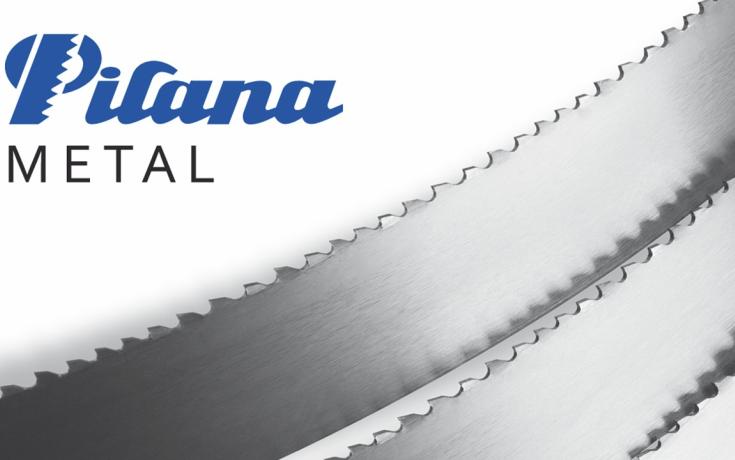
Vapormatt has been engineering wet blasting systems for bandsaw blade manufacturers since 1998, with systems running in production lines globally. Pilana Metal switched from dry blasting to an in-line Vapormatt system, increasing line speed from 1.5m per minute to 8m per minute and permanently discontinuing dry blasting as a result.
Read the Pilana Metal case study
Two things distinguish our approach:
The Vapormatt Promise: the machine meets the agreed specification, or we make it right.
A blade that cuts hard from the first stroke, without chipping, without forcing your customer through a break-in period, and with a surface that retains oil through storage, commands a premium price and earns repeat orders. Without in-line wet blasting, that finish is not consistently achievable. With it, it is engineered in.
Wet blasting systems for bandsaw blades use a slurry of water and abrasive media, but the specific media grade is engineered to each blade specification. Common media types used in wet blasting include glass beads, aluminium oxide, and silicon carbide, each offering different surface energy outcomes. The correct media selection depends on the blade material, tooth geometry, and the target edge radius or surface Ra required.
Wet blasting creates a reactive surface with a consistent Ra profile that significantly improves the bonding of anti-rust treatments, lubricant coatings, and brand markings compared to surfaces produced by dry blasting. The process removes oxide layers, heat scale, and machining contaminants that would otherwise act as a barrier between the blade steel and the applied coating, reducing delamination and improving coating longevity in service.
Wet blasting is applicable to both bi-metal and carbide-tipped bandsaw blade constructions. The key advantage is the ability to control impact energy precisely through slurry concentration, nozzle angle, and media grade. This makes it possible to hone carbide teeth without fracturing the cutting edge, while simultaneously peening the gullet and cleaning the blade body, regardless of whether the tooth material is brazed carbide or a bi-metal strip.
Wet blasting systems can be integrated inline at production speeds that comfortably exceed those achievable with dry blasting equipment. Published case study data shows line speed increases from 1.5 metres per minute with legacy dry blasting to 8 metres per minute with an inline wet blast system, making wet blasting a throughput-positive investment rather than a bottleneck process.
Compressive residual stress levels achieved through wet blast peening, such as the approximately -1,500 MPa surface stress confirmed in independent measurement, are maintained through controlled process parameters including nozzle geometry, blast pressure, media grade, and slurry concentration. Process control systems monitor and log these variables continuously, enabling consistent results across multi-shift, high-volume production runs and providing traceable process records for quality assurance purposes.