
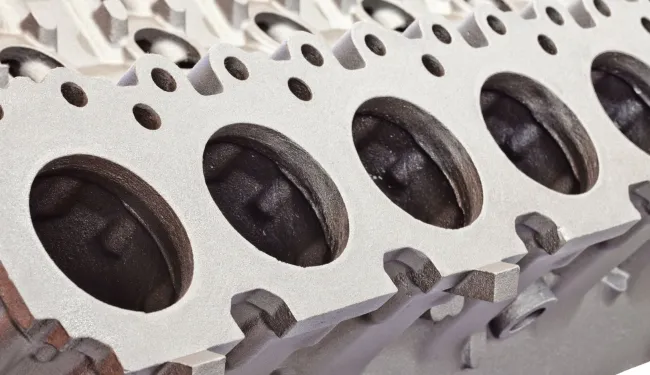
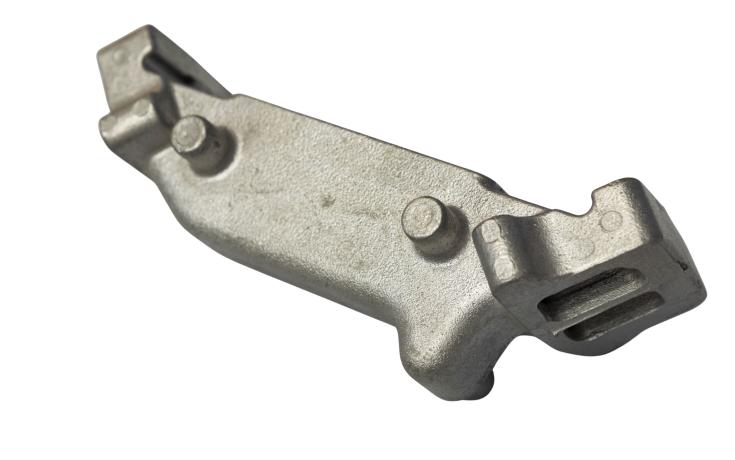
Ceramic left in a blind hole or recessed feature after knockout means the part is scrap before it reaches finishing.
Wet blasting removes investment casting (also known as lost wax casting) shell and plaster residue in a single controlled pass, reaching recesses and internal geometries that dry blasting struggles to address without risking substrate damage. The slurry cushions the abrasive, so material removal stops at the cast surface rather than biting into it. The result is consistent surface finish across the whole component, not just the exposed faces.
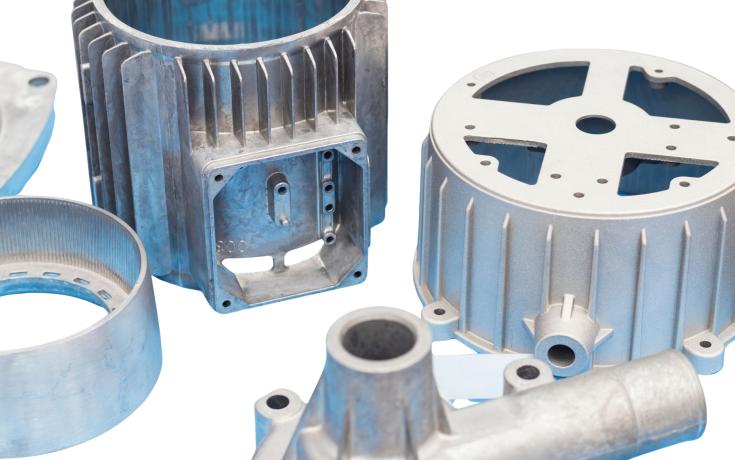
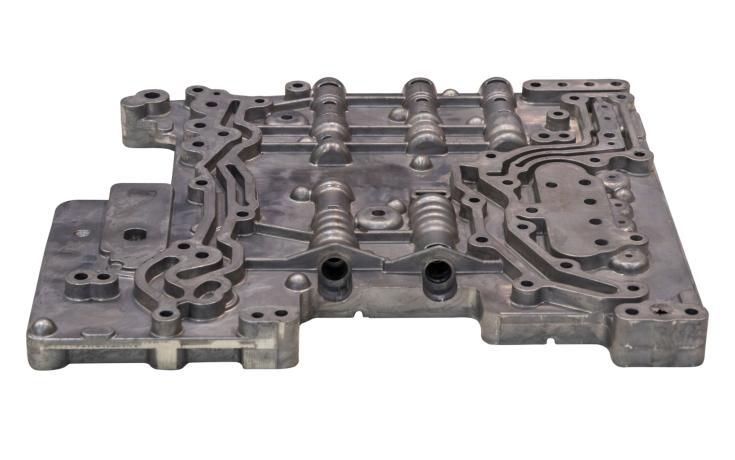
How wet blasting investment casting mould removal works in practice
A recirculating slurry of abrasive and water is propelled through one or more blast guns at controlled pressure. The water film acts as a lubricant between abrasive particles and the cast surface, preventing the abrasive from embedding and allowing it to dislodge ceramic shell or plaster without altering the underlying geometry. Pressure, abrasive grade, and gun angle are adjusted to suit the alloy and the complexity of the part, giving the operator repeatable control over both removal rate and final surface roughness.
Typical setup: investment casting mould removal
- Abrasive: Aluminium oxide, 46 to 120 mesh (coarser grades for initial shell break-down; finer grades for surface finish refinement)
- Pressure: 3 to 6 bar (44 to 87 psi)
- Guns: Manual or automatic, component dependent
- Minimum recommended control: Basic process control is sufficient for entry-level applications
- Variables: Harder alloys and thicker shell require higher pressure and coarser abrasive. Delicate or thin-walled parts require lower pressure and finer abrasive. In automatic processes, gun positioning is modified to ensure full coverage of shadowed features.
Investment casting mould removal capability: what wet blasting achieves
The process handles the range of components shown below; parameters are indicative and confirmed for the component types listed.
| Component type | Typical size or weight | Process mode | Achievable outcome | Minimum control |
|---|---|---|---|---|
| Cast aerospace components | 175 mm x 75 mm x 15 mm | Manual | 2.5 µm Ra | Basic manual machine |
| Trees of cast jewellery pieces | 400 g to 1,200 g (trees of many parts) | Automatic | Complete removal of plaster; bright surface finish | Basic manual machine |
| Cast super alloy turbine wheels on trees | Ø70 mm x 100 mm long (trees of many parts) | Automatic | Complete ceramic shell removal; 1.2 to 3 µm Ra | Basic manual machine |
Proof point
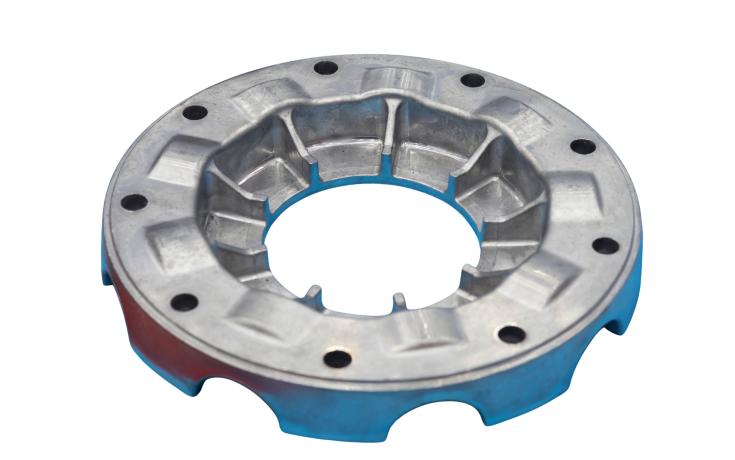
Investment cast nickel alloy turbine wheels required complete ceramic shell removal with a maximum surface roughness of 3 µm Ra. In Vapormatt sample processing trials, individual turbine wheels were processed in a Vapormate using a rotating jig and APA 46 or APA 120 abrasive at 5 to 6 bar. Complete shell removal was achieved with Ra values of 1.2 to 2.7 µm depending on abrasive grade, with individual wheels processed in under 15 seconds per part.
The right machine for your investment casting mould removal
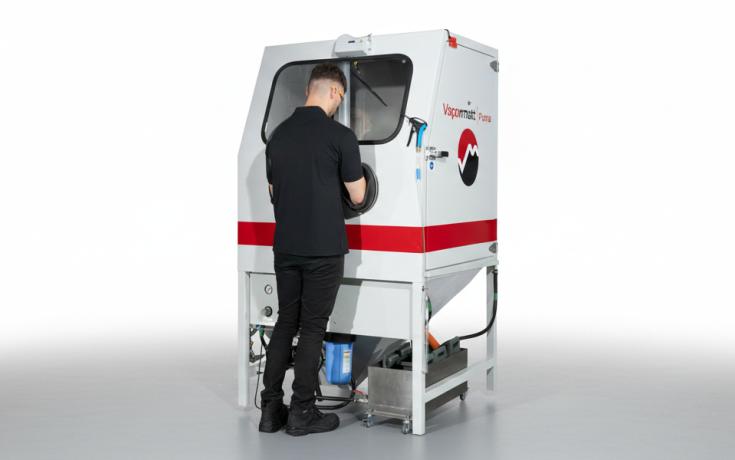
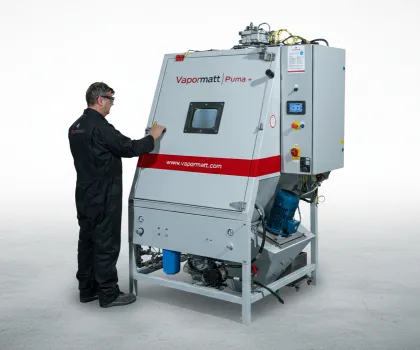
Vapormate / Puma — handles the widest range of component sizes and geometries at low throughput, with basic process control.
Puma with vertical spinner hanger — suited to small and medium parts without complex control.
Puma with barrel - optimised for small parts in high volumes where throughput is the primary requirement.
Related machines
FAQs
Will wet blasting damage thin-walled or intricate investment cast features?
Not when the process is set up correctly. Lower pressure and finer abrasive grades are used for delicate geometries. The water film in the slurry cushions the abrasive at the surface, so material removal is controlled rather than aggressive. Process parameters are adjusted to match the alloy and wall thickness before production begins.
How do you deal with shadowing on complex trees of parts?
Shadowing is the main challenge when blasting parts still on a tree. Gun angle and positioning are modified in automatic processes to improve coverage. In Vapormatt sample processing trials with nickel alloy turbine trees, the most reliable complete removal was achieved by cutting individual wheels free from the tree post-knockout and mounting them in a rotating jig in front of fixed blast guns, giving full circumferential coverage without shadow.
What surface finish can I expect after mould removal?
For investment cast nickel alloy turbine wheels, Ra values of 1.2 to 2.7 µm were achieved in Vapormatt sample processing trials, depending on abrasive grade. Coarser abrasive removes shell faster; finer abrasive refines the surface in a second pass if required.
How do I verify the process is working consistently between shifts?
Basic process control is sufficient for most investment casting mould removal applications. The key variables to monitor are abrasive concentration, pressure, and blast time. A simple slurry density check at shift start, combined with a reference test piece, gives the operator confidence that results are consistent without requiring complex instrumentation.
Can the same machine handle both manual and automatic mould removal?
Yes. Vapormatt machines can be configured for both manual gun operation and automatic blast programmes. Component size, geometry, and production volume determine which mode is most efficient. Manual operation suits low volumes and complex one-off parts; automatic suits repetitive production runs where cycle time and consistency matter.