
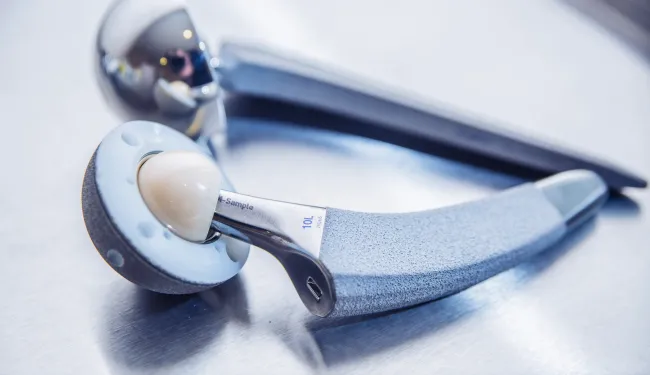
An implant that fails to osseointegrate doesn't just mean a revision surgery, it means a patient outcome you cannot take back.
Wet blasting gives implant manufacturers precise, repeatable control over surface texture, removing contaminants and machining residues while creating the micro-roughened profile that encourages bone cells to attach and grow. The process is gentle on base material, produces a consistent result across every component in a batch, and is compatible with fully biocompatible media where specifications require it.
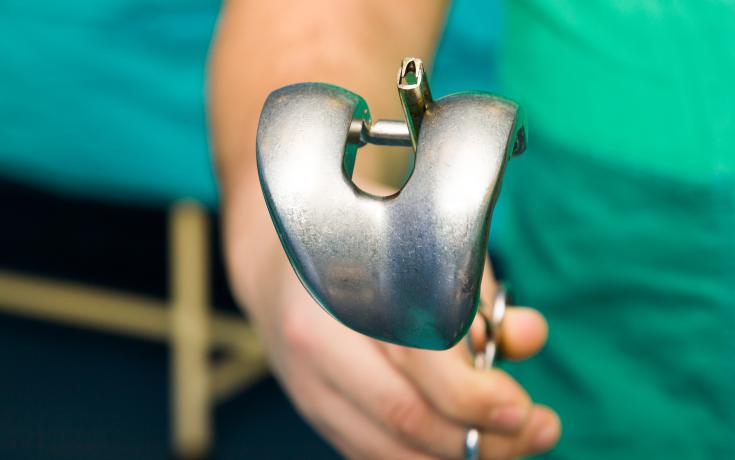
How wet blasting implant surface finishing works in practice
A slurry of water and abrasive media strikes the implant surface at controlled pressure, abrading away contaminants and manufacturing residues while modifying surface topography to a defined Ra target. The water cushions the abrasive impact, preventing the heat build-up and subsurface stress that could compromise the implant's structural integrity. Because pressure, media type, and media size are all independently adjustable, the process can be tuned to hit a specific roughness and held there repeatably across a full production run.
Typical setup: implant biocompatibility surface finishing
- Abrasive: Aluminium oxide or glass beads; grade selected to achieve the target surface finish (finer media produces lower Ra, coarser media produces higher Ra). Biocompatible media such as calcium phosphate available where implant specifications require it.
- Pressure: 2-5 bar (29-73 psi); harder titanium alloys and larger geometry typically require the upper end of the range
- Guns: Manual or automatic; in automatic processes, gun positioning is adjusted to ensure full surface coverage across the component geometry
- Minimum recommended control: Basic process control, sufficient for entry-level manual machines
- Variables: Harder material requires higher pressure and/or coarser abrasive; complex geometry requires adjusted gun positioning to maintain uniform coverage across all surfaces
Implant finishing capability: what wet blasting achieves
The process handles the component types shown below. Parameters are indicative and confirmed for the component types listed, sourced from Vapormatt sample processing trials.
| Component type | Typical size | Process mode | Achievable outcome | Minimum control |
|---|---|---|---|---|
| Dental implants (titanium, threaded) | Ø5.5mm x 15mm | Manual | 0.12-1.033µm Ra; range determined by media grade and pressure selection | Basic manual machine |
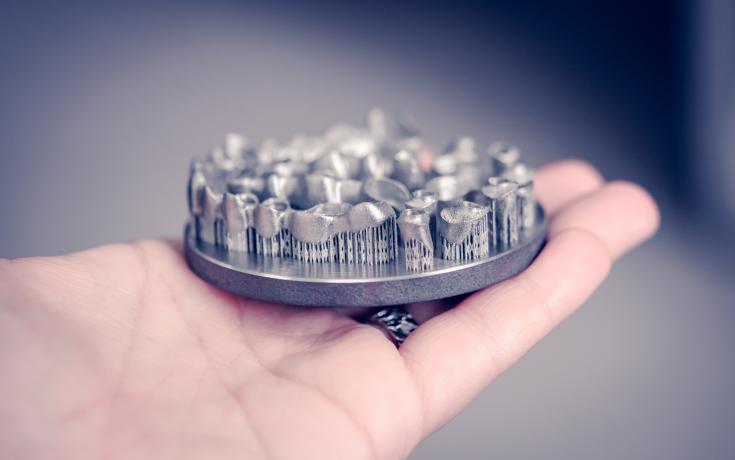
| 3D printed titanium AM implants | 60mm x 20mm x 5mm | Manual | Residual powder fully removed; 2.55-2.73µm Ra with calcium phosphate media at 4 bar | Basic manual machine |
| Tibial base plates (titanium) | approx. 60mm x 40mm | Manual | 0.236µm Ra; CNC marks removed, homogeneous surface achieved in 15 seconds | Basic manual machine |
In Vapormatt sample processing trials, a tibial base plate was processed manually on a Vapormate using fine aluminium oxide at 3.6 bar with restricted slurry flow. The aim was to remove CNC machining marks and create a homogeneous surface finish suitable for osseointegration, eliminating a separate drag-finishing stage. The best result achieved 0.236µm Ra in 15 seconds of processing time.
For manufacturers working with additive manufactured implants, the challenge of residual powder on complex AM geometries is covered in more detail on the additive manufacturing industry page. The broader requirements for implant biocompatibility, including coating adhesion and sterilisation surface targets, are set out on the medical implants industry page.
The right machine for your implant finishing
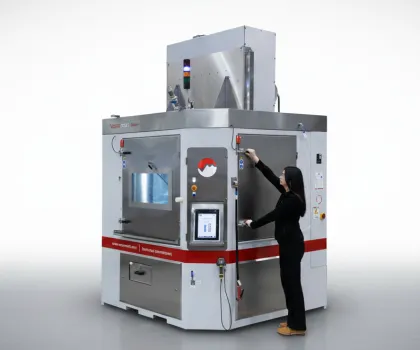
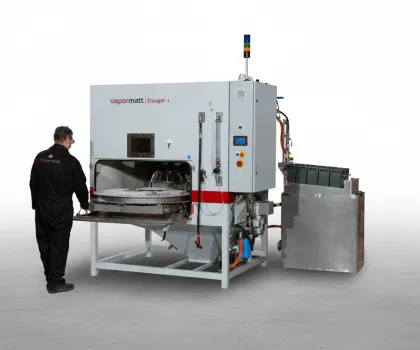
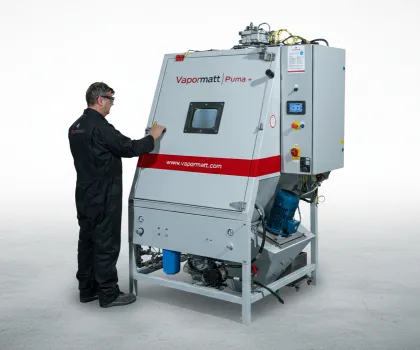
Vapormate or Puma: manual processing for the widest range of implant types and geometries, lower throughput. Puma with barrel attachment: high-throughput batch processing suited to small parts such as screws and pins. Puma+ with vertical and satellite fixture: medium throughput with more consistent surface coverage for components requiring controlled uniformity.
Related machines
FAQs
Can wet blasting hit the specific surface roughness value in our implant design specification?
Yes. Media grade is the primary lever for targeting a specific surface roughness, with pressure used to fine-tune. In Vapormatt sample processing trials, dental implants processed with different aluminium oxide grades and glass beads produced Ra values ranging from 0.12µm to over 1.0µm from the same machine, demonstrating the range available without changing equipment.
We use a multi-stage finishing process for our implants. Can wet blasting replace any of those stages?
It can. In a Vapormatt sample processing trial on titanium tibial base plates, wet blasting replaced a separate drag-finishing stage entirely, removing CNC machining marks and producing a homogeneous surface in 15 seconds. Consolidating process stages reduces handling risk and the opportunity for contamination between steps.
How do we verify that the surface finish is consistent from part to part?
Wet blasting delivers media to the surface at controlled, repeatable pressure, which is what produces a consistent surfacer finish across a batch. For implant finishing, basic process control is sufficient to hold surface finish within a defined range. If your quality regime requires documented process traceability, Vapormatt can advise on the appropriate control specification for your production environment.
Is the blast media itself safe for implants that will be implanted in the body?
Standard media for this application are aluminium oxide and glass beads. Where implant specifications require it, fully biocompatible media such as calcium phosphate compounds can be used instead. The wet process also flushes media residues from the surface during processing rather than embedding them, which is a significant advantage for implant cleanliness.
What is the risk of damaging a precision titanium implant during processing?
The water in the slurry cushions the abrasive impact, reducing the energy transferred to the surface. This makes the process suitable for precision-tolerance and thin-walled implant geometries. Pressure is selected for the component being processed, and media size is reduced for the most delicate parts.