Image


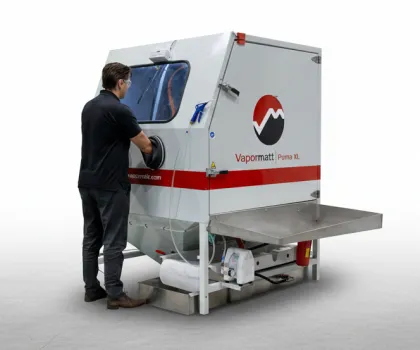
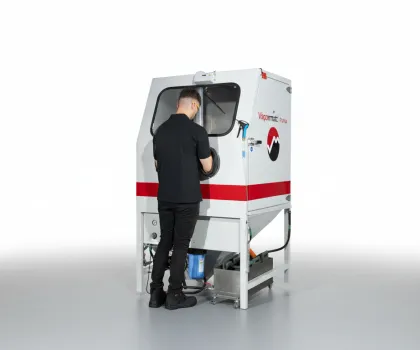
The enclosed cabinet shields operators from biohazardous material throughout the process
Simultaneous removal of scale, urine salts, waste residue, and biological films in one operation
The modified surface texture reduces re-soiling and extends intervals between overhaul visits
Multiple cleaning and finishing steps consolidated into a single operation
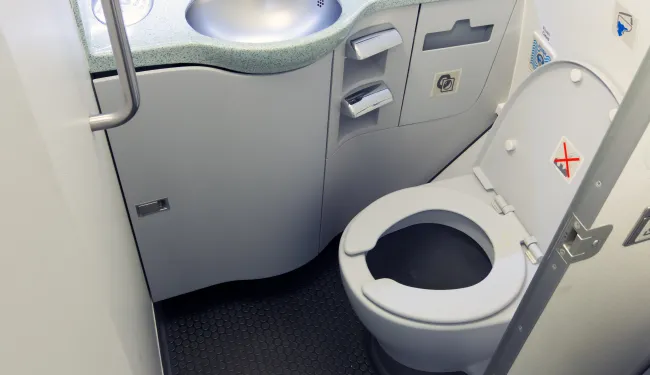
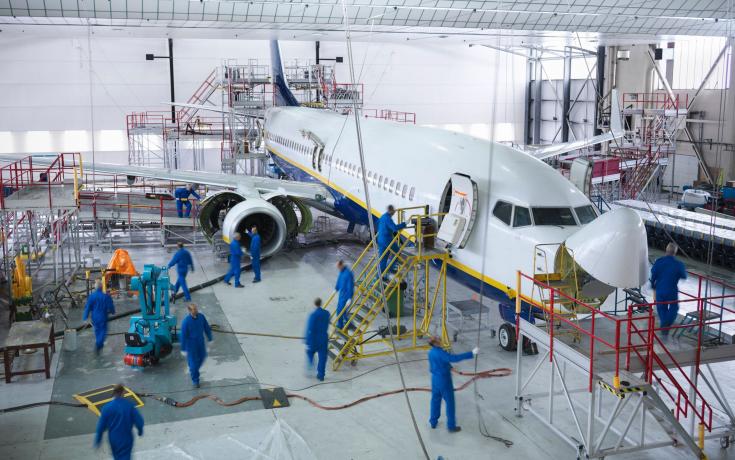
Aircraft toilet systems are among the most maintenance-intensive components on any commercial airframe. Vacuum toilet pans, waste holding tanks, pipework, pumps, and associated fittings accumulate hard-water scale, urine salts, and biological waste deposits that corrode surfaces and reduce flow capacity in 2-inch diameter waste lines. When a blocked line grounds an aircraft, the AOG (aircraft on ground) cost runs far higher than the cost of the cleaning process that could have prevented it.
For component-level overhaul, manual scrubbing and chemical soaking are slow, inconsistent, and expose technicians to biohazardous material. In a regulated MRO environment, that exposure risk is not a minor inconvenience. It is a compliance liability.
vs. chemical soaking alone: Acid-based descalers dissolve hard-water scale and urine salt deposits from accessible surfaces. They do not address the microscopic surface texture of stainless steel pans and fittings. A chemically cleaned surface that retains a rough, pitted profile re-soils faster, accumulates deposits at the same rate as before, and requires the same intervention cycle again within months. The root cause is not treated.
vs. manual scrubbing: Effective on loose contamination. Ineffective on compacted scale inside complex geometries, valve seats, pump housings, and the internal surfaces of waste tanks. Manual processes are also the highest-risk method for technician biohazard exposure, particularly when components are partially disassembled. At scale, the labour cost is prohibitive.
vs. high-pressure water jetting: Adequate for flushing waste lines in-situ. Not appropriate for component overhaul work requiring controlled surface preparation. High-pressure jetting does not deliver the surface profile modification needed to reduce re-soiling, and it provides no operator containment.
Find out how wet blasting compares with other finishing processes
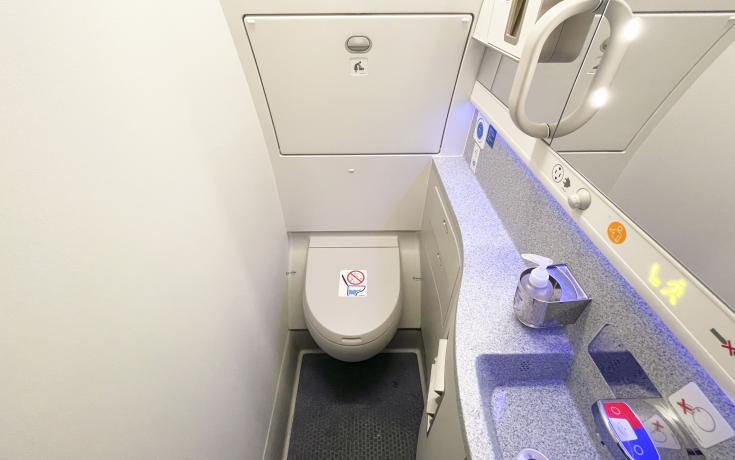
The wet blasting process delivers simultaneous cleaning, descaling, and controlled surface modification in a single enclosed operation. The slurry of water, abrasive media, and compressed air removes scale and biological contamination while leaving a clean consistent finish.
That modified surface texture is the functional difference. By smoothing the micro-profile of stainless steel pans, tanks, and fittings, wet blasting reduces the mechanical adhesion sites that allow scale and biological films to take hold. Components cleaned and surface-finished by wet blasting stay cleaner for longer between service intervals.
Three outcomes, consistently achieved across aircraft toilet MRO applications:
Vapormatt's closed-loop filtration systems remove contaminated water from the process circuit continuously, enabling safe, documented disposal of waste as a solid rather than as a liquid biohazard.
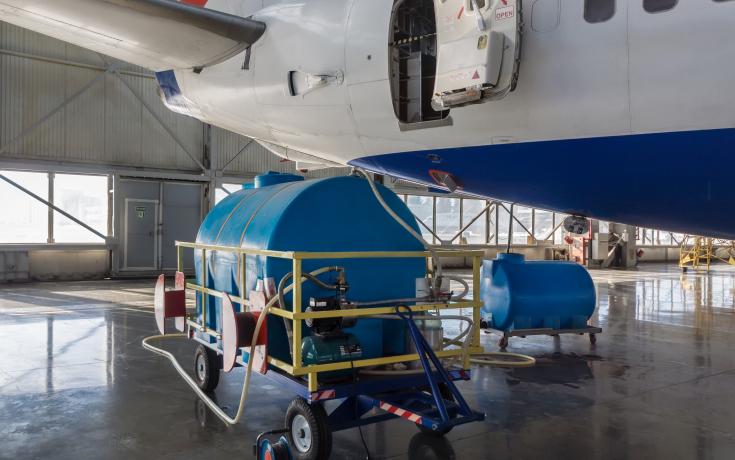
Wet blasting is applicable to all removable toilet system components across commercial, regional, and general aviation fleets, supporting Boeing, Airbus, and business jet lavatory systems.
Components regularly processed include:
Discover the wet blasting machines suited to aircraft toilet MRO
The enclosed cabinet design that makes wet blasting safe for biohazardous component cleaning was not developed for this application in isolation. It was developed over decades of working with aerospace MRO facilities processing contaminated engine components, wheels and brakes, and undercarriage assemblies where containment removal, repeatability, and audit traceability are non-negotiable.
That containment infrastructure is what makes wet blasting the appropriate choice for toilet component overhaul specifically. Unlike manual cleaning, the enclosed cabinet keeps operators fully shielded from biohazardous material throughout the process. Contaminated slurry is captured in the water stream, filtered continuously, and recovered as a manageable solid for safe, documented disposal. Operators are not exposed to airborne contamination at any point.
A clogged aircraft waste line causes an AOG event. An AOG event on a commercial aircraft costs thousands per hour. The cleaning process that prevents it costs a fraction of that, and it only delivers consistent value if it removes the conditions that allow blockage to develop, not just the blockage itself.
Wet blasting removes those conditions: the scale, the surface roughness, and the biological residue that chemical cleaning alone leaves behind. It does so in a contained, auditable, repeatable process that protects the technicians who operate it.
The alternative is the same manual cycle, the same chemical exposure, and the same re-soiling interval, compounded over every overhaul visit for the life of the airframe.
Media selection and blast pressure are adjusted for the material in question. For thermoplastic-lined components, softer plastic media at lower pressures removes contamination without marking or degrading the liner surface. Vapormatt's application engineers specify the correct formula for each component type before processing begins. Note: that we do not sell blast media, but we can advise on the best blast media choice for your requirements.
The enclosed cabinet contains all contamination within the water stream throughout the process. Contaminated slurry passes through Vapormatt's closed-loop filtration system, which separates solid waste from the water circuit. Solid waste is recovered as a dry, manageable material for safe disposal. Operators are not exposed to airborne contamination at any point.
Cycle times depend on component geometry, contamination level, and the surface finish required. Vapormatt's R&D team can process sample components before any machine investment is recommended, providing documented process parameters and verifiable before-and-after results specific to the components in question.