


Edge honing (Edge radiusing) for cutting tools: consistent edge geometry, every cycle

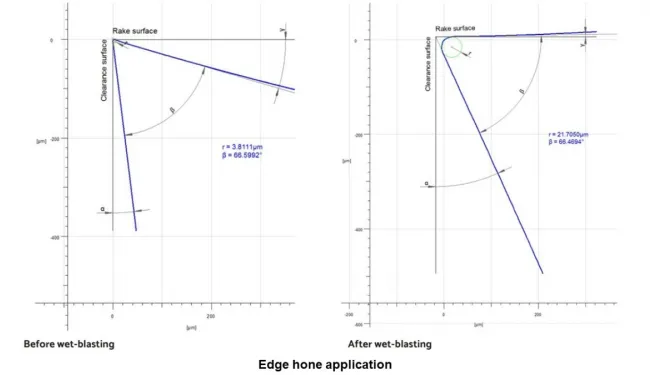
Before and after edge honing diagram
Trusted by

Edge honing (also called edge preparation or edge radiusing) removes the fragile, micro-chipped edge left by grinding and replaces it with a defined radius, typically 5 to 70µm. A controlled hone prevents early chipping, extends tool life and gives PVD and CVD coatings a stable edge to adhere to.

Wet blasting delivers a controlled, repeatable edge radius across the full cutting edge geometry in a single cycle. The slurry cushions the abrasive, preventing the micro-chipping that dry processes risk on carbide and HSS edges. Because pressure, abrasive grade, and media flow are independently adjustable, the process can be dialled to a specific target radius and held there across a production run. Radii are held to ±2µm on round shank tools and ±5µm on inserts, with the hone split between rake and clearance faces (K-factor) set to suit the application. Vapormatt built the first edge honing machines in the 1980s and holds the patent for K-factor edge control (GB2590936B).
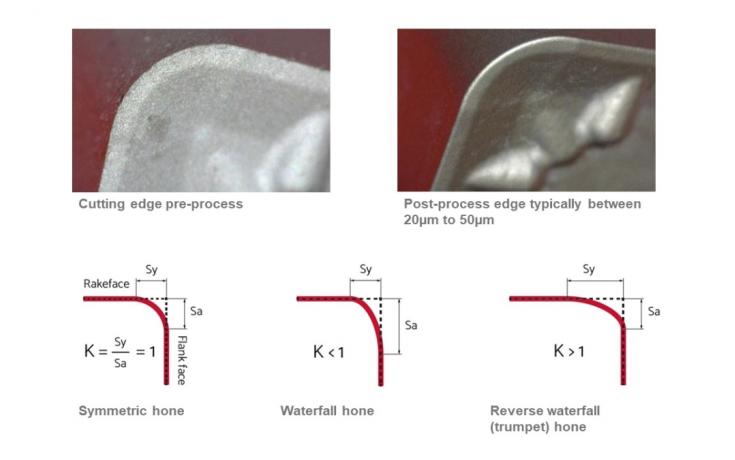
Edge honing images and diagrams

How wet blasting edge honing works in practice

The slurry stream combines abrasive, water, and air to deliver a consistent, dampened cutting action across every surface it reaches. On a cutting edge, this produces a controlled radius by removing the fragile edge and micro-fractures left by grinding. Air pressure, oscillation speed and abrasive size can all be adjusted to control the edge radius.

Typical setup: edge honing

  • Abrasive: Aluminium oxide, 150 to 320 mesh (coarser grade for larger target radius; finer grade for tighter, more delicate edges)
  • Pressure: 2 to 3 bar (29 to 44 psi); 2.7 bar as the preferred baseline with speed and abrasive adjusted to achieve target radius
  • Guns: 8-gun crown for inserts; vertical oscillation with satellite drive for round shank tools; gantry-mounted for bandsaw blade
  • Minimum recommended control: Automatic motion with air pressure control
  • Variables: Required edge radius is the primary target. Larger abrasive at higher pressure produces a larger radius. Oscillation or conveyor speed adjusts dwell time to fine-tune consistency without changing target radius.

How Vapormatt controls the wet blasting process

Edge honing capability: what wet blasting achieves

The parameters below are indicative and confirmed for the component types listed. The process handles the range of parts shown from small carbide inserts through to continuous bandsaw blade.

Component typeTypical size or weightProcess modeAchievable edge radiusMinimum control
Cutting inserts (e.g. replaceable tungsten carbide inserts)~15 x 15 x 8 mmAutomatic (radial or X-Y)5 to 70 µmAutomatic motion, air pressure control
Round shank tools (RSTs, e.g. solid carbide end mills, drills)~Ø15 mm x 70 mmAutomatic (vertical oscillation with satellite drive)5 to 40 µmAutomatic motion, air pressure control
Bandsaw blade (bi-metal or carbide tipped)34 to 41 mm wide, continuousAutomatic (Profelis conveyor)5 to 50 µmAir pressure control

In Vapormatt R&D trials, SP91-type tungsten carbide inserts (~15mm) were processed with 180 mesh aluminium oxide at a 45° gun angle, targeting a 40µm edge radius on single-sided inserts. Measured average radius was 42 to 46µm, with K-factor within specification throughout. 

In production, a 10–15µm hone on round shank tools was held to Six Sigma, with up to 50% better cutting performance. Read the case study.

Wet blasting edge honing is used across the cutting tool industry and the precision engineering sector. For tool-specific detail, see edge honing for cutting tool inserts, solid carbide tools and bandsaw blades.

The accuracy of edge prep applied to the tools was excellent with little to no error present. Vapormatt achieved the highest level of edge prep accuracy against all of the competition.
Kyocera
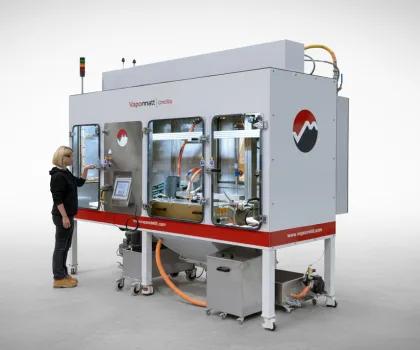
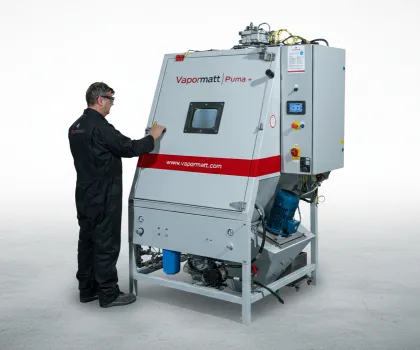
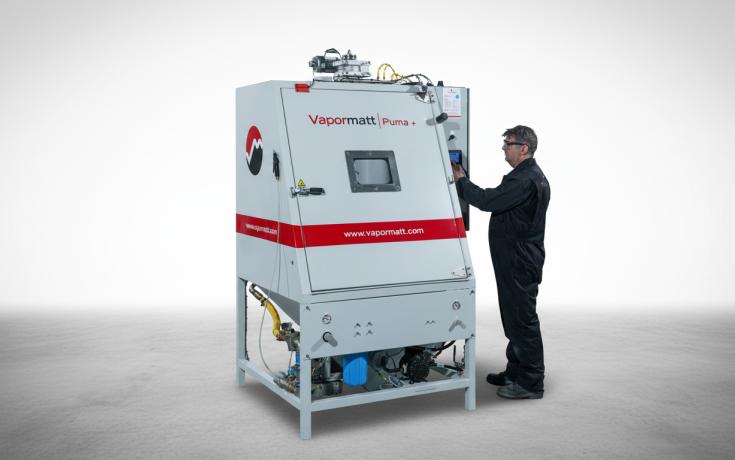
Vapormatt Puma+ automatic wet blasting machine

The right machine for your application

Edge honing at this application is always automatic” → “Edge honing is always an automatic process; the choice of machine depends on throughput and the level of control you need.

  • Puma+ with vertical oscillation: RSTs at low to medium throughput, MVP process control
  • Sabre: RSTs and cutting inserts at medium throughput, high process control
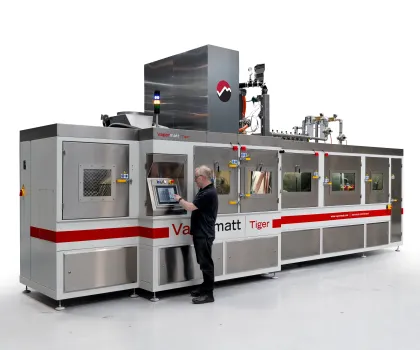
  • Tiger: Very high throughput for inserts or RSTs, high process control
  • Oncilla / Oncilla Cub: dedicated machine for solid carbide RSTs, combining cleaning, K-factor edge honing and coating prep in one cycle.
  • Profelis: in-line honing of continuous bandsaw blade.

Compare all edge honing machines for cutting tools

Contact us

end us sample inserts, drills or blades. We’ll process them in our R&D lab and return measured edge radius and K-factor data for every edge.

Related machines

Vapormatt Tiger automatic wet blasting machine
Automatic machines

Tiger automatic wet blasting machine

High-volume in-line machine for carbide insert edge preparation, cleaning, peening and coating preparation, with integrated washing and drying as standard. More details
Sabre wide
Automatic machines

Sabre automatic wet blasting machine

Five-axis CNC precision cell for high-value components with complex geometries, where conventional automatic blasting cannot deliver the required control. More details
Vapormatt Puma+ automatic wet blasting machine
Automatic machines

Puma+ automatic wet blasting machine

Compact with four configurations, suited to smaller component runs, solid tools, and factories that need consistent automated processing. More details

FAQs

What is edge honing, and why do cutting tools need it?

Edge honing, also called edge preparation or edge radiusing, replaces the sharp, micro-chipped edge left by grinding with a small, controlled radius, typically [5 to 70 µm]. An unprepared edge concentrates stress and chips early in the cut. A honed edge is stronger, lasts longer and gives PVD and CVD coatings a stable base to adhere to.

Learn about prep for PVD and CVD coating by wet blasting

What edge radius can wet blasting achieve, and which should I specify?

  • Wet blasting (also known as vapor blasting) produces edge radii of [5 to 70 µm] on inserts, [5 to 40 µm] on round shank tools and [5 to 50 µm] on bandsaw blade.
  • Radius is held to [±2 µm] on round shank tools and [±5 µm] on inserts.
  • The right radius depends on the tool and the cut. Roughing and interrupted cuts generally need a larger hone; finishing and sharp-cutting applications need a smaller one.
  • Vapormatt confirms the target on your own tools during a sample trial.

Contact us to organise a sample trial

What is K-factor, and can wet blasting control it?

K-factor describes how the hone is split between the rake face and the clearance face of the cutting edge.

  • K = 1: a symmetrical hone.
  • Above 1: a trumpet profile.
  • Below 1: a waterfall profile.

Wet blasting holds a defined K-factor, typically 0.8 to 1.2, across a full production run. Vapormatt holds the patent for K-factor edge control (GB2590936B).

How does wet blasting compare with brush honing, dry blasting and drag finishing?

Wet blasting holds both a defined edge radius and a defined K-factor in production.

  • Brush honing: can reach radii of around 50 µm but cannot hold a set K-factor.
  • Dry blasting: risks micro-chipping on carbide and HSS edges, and leaves a rougher surface (Sa 0.11 µm against 0.05 µm for wet blasting in Vapormatt measurements).
  • Drag finishing: gives less control over the rake and clearance faces than a programmable wet blast nozzle.

Learn more about wet blasting vs. other finishing processes

Should edge honing be done before or after coating?

Before. Honing before PVD or CVD coating means the coating forms on a stable, defined edge. The same wet blasting process removes the cobalt smear and grinding residue that weaken adhesion, often in the same cycle. After coating, a lighter wet blast can remove PVD droplets and, on inserts, peen the coating to leave compressive rather than tensile stress.

Will wet blasting edge honing change my tool geometry or length?

No.

  • The process removes material only at the cutting edge, not from the rake or clearance faces.
  • In Vapormatt trials on carbide inserts with a 40 µm target radius, tool length either did not change or stayed within the customer’s specified tolerance.
  • Gun angle, pressure and fixturing are set to protect geometry.
  • Small or irregular inserts are held at blast angle in bespoke pocket trays with 3D-printed holders.

How do I know the edge radius will be consistent across a full production batch?

The process runs on fixed air pressure and automatic motion, not operator feel.

  • A recipe is set on sample pieces and verified by measurement (Alicona EdgeMaster or equivalent), then runs unchanged in production.
  • Radius is held to [±2 µm] on round shank tools.
  • Any pressure drift shows in the process data before it reaches the component.
  • In one production case study, a 10–15 µm hone was held to Six Sigma.

Read the Six Sigma case study

What performance improvement can we expect from wet blast edge honing?

The gain depends on the tool and application. One round shank tool manufacturer reported 50% better tool performance than with their previous blasting-only process, and 100% when wet blasting was combined with a new coating. Compared with manual honing, the main gain is consistency: results no longer vary by operator, shift or fatigue.
How do we verify the process is working before we commit to full production?

Vapormatt runs sample processing trials on your own tools in its R&D lab before any machine is specified. You receive measured data, not just a visual assessment, including edge radius per cutting edge and K-factor where relevant. That way the decision rests on confirmed figures. 

Request a sample trial