Image


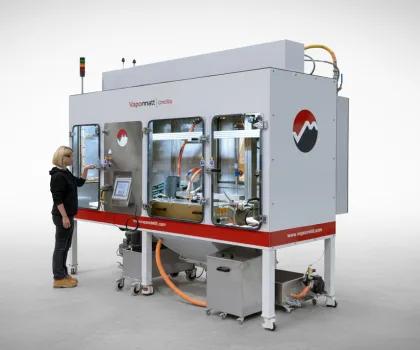
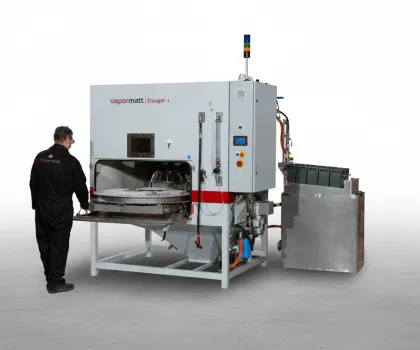
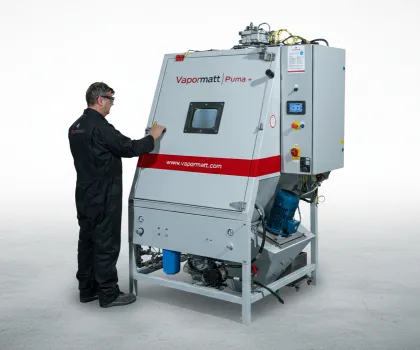
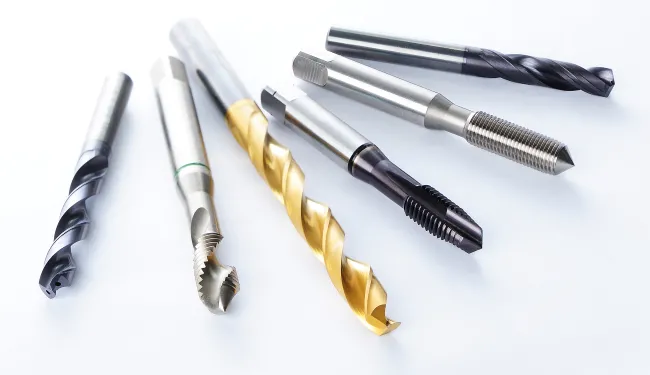
Vapormatt wet blasting machines hone solid carbide drills, end mills, taps and thread mills to a defined edge radius and K-factor, held to ±2µm across the batch. The same process removes cobalt smear and grinding residue before PVD coating, achieving HF1 adhesion, and removes PVD droplets afterwards. It is used by tool manufacturers and regrinders.
Talk to an applications engineer about your tool finishing requirements


Edge radius held to ±2µm tolerance across the entire batch
HF1 coating adhesion - the top rating in the Rockwell C indentation test (VDI 3198)
Rake and clearance faces treated independently via programmable nozzle parameters
Uniform hone along the full tool length, eliminating batch variation
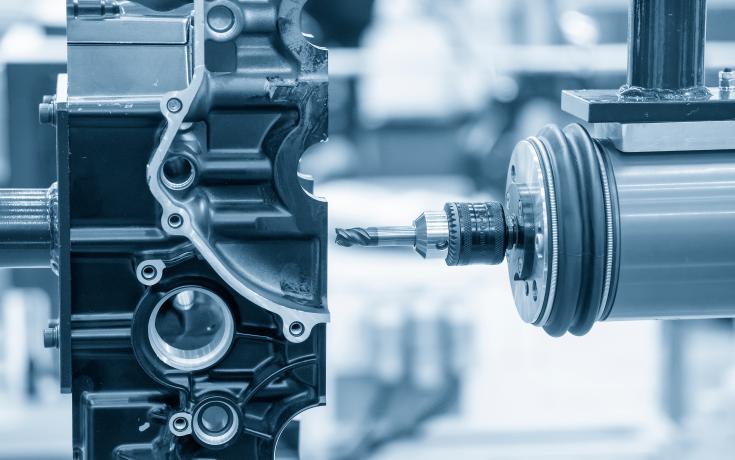
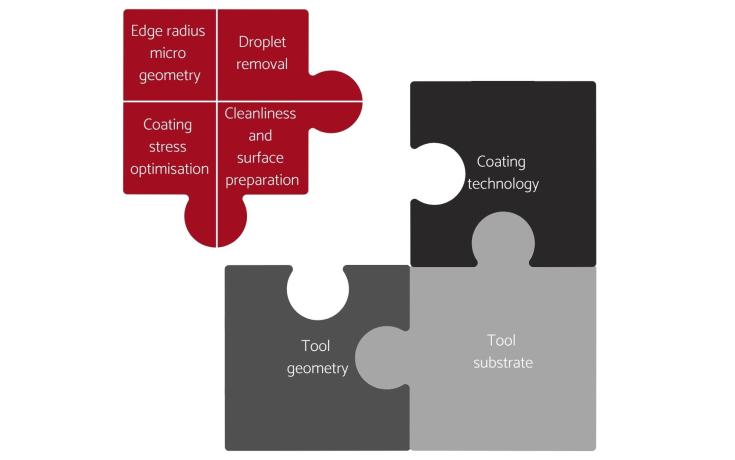
Four variables determine how a cutting tool performs: substrate, geometry, coating, and edge preparation. The first three attract the engineering time and the capital investment. The fourth is where quality variation most often lives. An edge radius that drifts across a production batch, a surface that doesn't activate cleanly before coating, a post-coat finish that leaves PVD droplets in the flute: these are the problems that come back as customer complaints, returns, and tools that underperform their specification.
Wet blasting solves all three. A single process platform handles edge honing, pre-coat surface activation, and post-coat polishing, with parameters independently controllable at each stage. Vapormatt's K-factor edge honing process is protected by patent (GB2590936B), and our machines handle the complete finishing sequence from blank through to post-coat treatment.
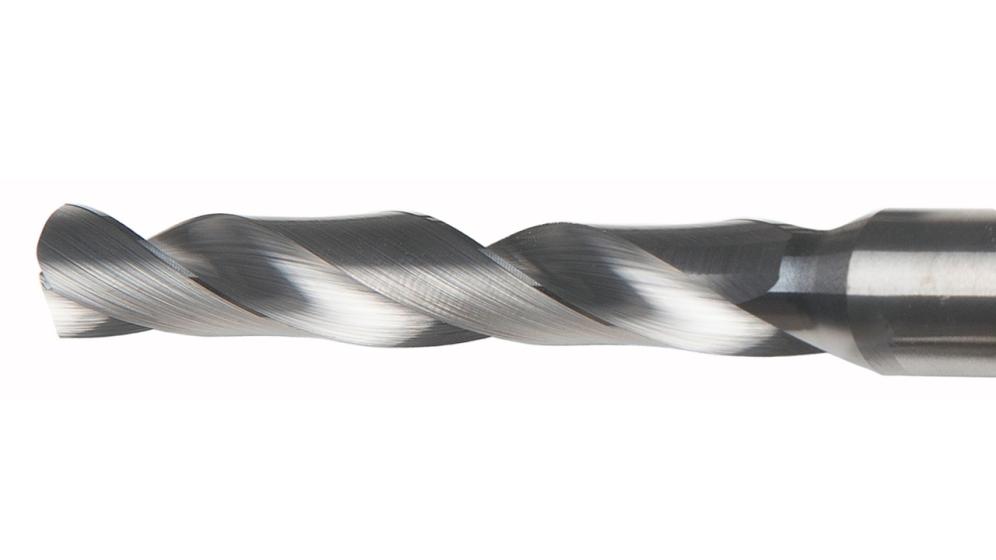
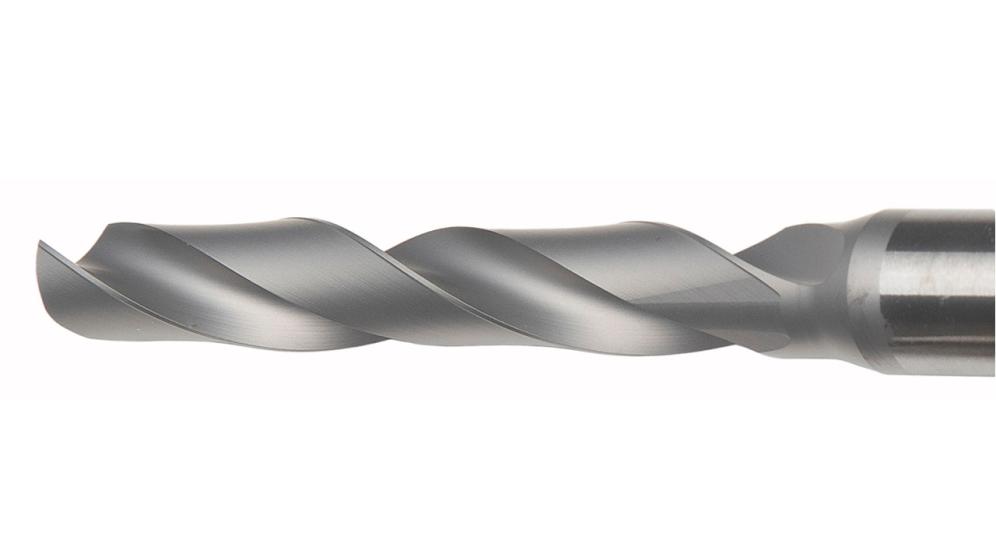
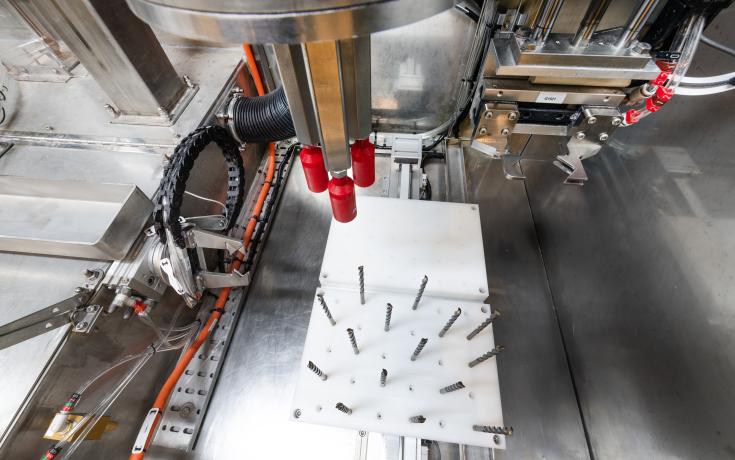
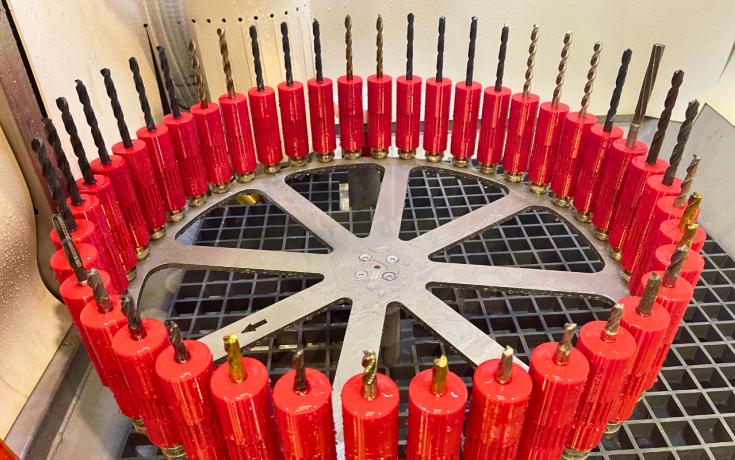
After grinding, the cutting edge has three problems simultaneously. The size of the edge radius is unstable. The shape across the rake and clearance faces is uncontrolled. And the surface finish on both faces carries grinding damage that undermines coating adhesion.
Each affects tool performance independently. Together, they determine whether the coating bonds, whether the edge survives the first cut at rated speed, and whether performance is consistent across the batch.
The challenge is that size, shape, and finish all need to be controlled at the same time, to tight tolerances, across production volumes. A process that controls radius but not profile produces a tool that performs differently depending on the material it cuts. A process that achieves the right profile on short tools but loses consistency along the length of longer geometries creates batch variation that is difficult to diagnose and expensive to correct.
Drag and stream finishing machines rotate tools through a drum of abrasive media. Media density varies with depth in the drum, so tools experience different abrasive contact along their length. The edge radius at the tip of a long end mill or drill will differ from the shank end. These processes also contact the full tool profile simultaneously, which limits independent control of rake face and clearance face removal.
Wet blasting directs a programmable nozzle at the tool. Blast angle, pressure, media selection, nozzle distance, and gun velocity are all independently set per recipe. The rake and clearance faces receive the treatment the process specifies. The result is a defined edge radius, at a defined K-factor profile, held to ±2µm tolerance across the batch. K-factor describes how the hone is split between the rake and clearance faces: K = 1 is a symmetrical hone, above 1 a trumpet profile, below 1 a waterfall.
| Tool type | Key challenge | What wet blasting delivers |
|---|---|---|
| End mills and thread mills | Consistent radius and K-factor profile; pre-coat surface condition | Defined hone with independent rake/clearance control; HF1 coating adhesion achievable |
| Drills | Radius consistency along tool length; cobalt smear removal | Uniform hone along full flute length; deburring and surface activation in one pass |
| Taps | Complete burr removal post-grind; pre-coat cleanliness across thread geometry | Uniform deburring across flanks and reliefs; degreasing in the same operation |
| Micro tools | Minimal hone required; risk of breakage or over-cutting in other processes | Fine media at controlled, low energy; precise small-radius hone without risk to the tool |
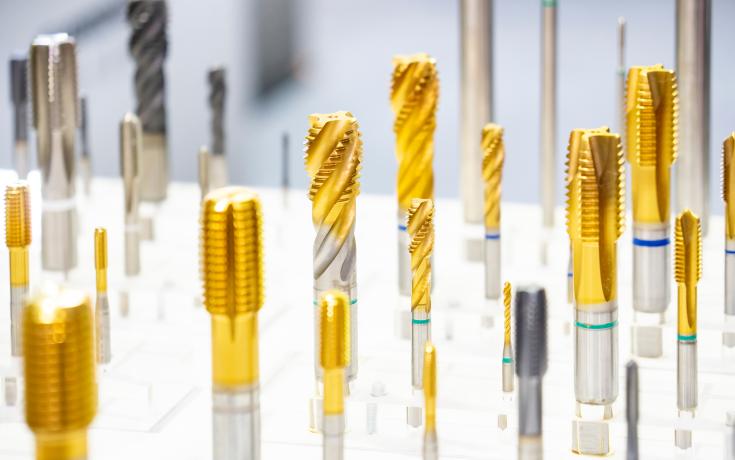
The surface condition immediately before PVD or CVD coating determines how well that coating bonds. Published research confirms wet blasting achieves HF1 coating adhesion, the best result on the standard scale. The mechanism is specific: wet blasting removes cobalt smear and grinding residues without the static charge or surface debris that dry processes leave behind. The substrate arrives at the coating stage clean, reactive, and ready to bond.
With fine media, the pre-coat activation and edge honing steps can run as one operation, delivering the edge radius and reactive surface condition the coating process requires.
After coating, PVD deposition leaves droplets proud on the surface. These increase friction, disrupt chip flow, and shorten the working life of the coating. Post-coat wet blasting removes them using abrasive to treat the coating surface without removing it, leaving a measurably lower Ra and a coating that performs as designed.
Read the edge radiusing, deburring, and coating preparation case study

The accuracy of edge prep applied to the tools was excellent with little to no error present. Vapormatt achieved the highest level of edge prep accuracy against all of the competition.
Vapormatt's K-factor edge honing patent is the product of decades of process development in this application. No other wet blasting machine builder holds an equivalent. That depth of process knowledge informs every recipe we develop, from the first application trial through to production commissioning.
Our machines are specified to the output requirement. K-factor control, ±2µm tolerance, and full application engineering support are available to manufacturers running tens of tools a day as much as those running thousands.
Edge preparation is not a finishing step that happens after the real engineering is done. It is the variable that determines whether the coating bond holds, whether the tool runs at rated performance from new, and whether the batch is consistent enough to carry your quality mark.
The tools that come back are rarely the ones that failed on substrate or geometry.
Wet blasting hones solid carbide tools to a defined edge radius of 2 to 40µm, held to ±2µm across a production batch, with the K-factor controlled as well as the radius. The achievable range depends on the machine and the tool. The Oncilla machine, for example, delivers 2 to 30µm at ±2µm and has micro nozzles for tools under 6mm. Vapormatt confirms the results with measured edge radius and K-factor data from a sample trial on your own tools before any machine is specified.
Wet blasting is equally effective for reground solid carbide tools as it is for new production. After regrinding, tools present the same edge quality challenges as after initial grinding: unstable edge radius, uncontrolled profile, and surface damage from the grinding process. Wet blasting restores a defined edge radius to tight tolerances, removes grinding residues, and prepares the surface for recoating, making it a core process for re-grinders looking to deliver tools that perform to their original specification.
The choice of blasting media depends on the stage of the finishing process and the tool geometry being treated. Aluminium oxide is the standard abrasive, typically 150 to 320 mesh for edge honing and 320 to 500 mesh for pre-coat activation. Finer grades are used for micro tools and pre-coat activation, where minimal material removal and a clean, reactive surface are the priorities. Coarser grades may be selected for deburring. [Engineering to confirm the media used for post-coat polishing.] Because wet blasting suspends the abrasive in water, media selection can be precisely matched to the required edge radius and surface finish without the risk of embedded particles or static charge that dry blasting processes introduce.
Drag finishing and wet blasting differ fundamentally in how abrasive contact is applied to the tool. In drag finishing, tools rotate through a drum of loose media, meaning abrasive contact varies with depth in the drum and cannot be independently directed at the rake and clearance faces. Wet blasting uses a programmable nozzle directed at the tool surface, allowing blast angle, pressure, and media flow to be set independently for each face. This gives wet blasting a significant advantage for long tools such as end mills and drills, where maintaining a consistent edge radius along the full flute length is critical to batch quality.
An Oncilla automatic wet blasting cell processes over 2,000 solid carbide tools per 24 hours, including mixed batches of drills, end mills, taps and thread mills without changeover. Exact cycle times depend on tool type, batch size, the number of finishing stages required, and the machine configuration. Machines can be specified for low-volume specialist production as well as high-throughput manufacturing. Because pre-coat surface activation and edge honing can be combined into a single operation with fine media, wet blasting can reduce the number of process steps compared to using separate finishing methods, which has a direct impact on throughput and floor-to-floor time.
Wet blasting is well suited to complex tool geometries because the process parameters, including nozzle angle, gun velocity, blast pressure, and nozzle distance, are programmable and repeatable per recipe. This means treatment can be adapted to reach reliefs, flanks, and thread geometries that present difficulty for immersive media-based processes. For tools with multiple diameters or stepped profiles, individual zones can be targeted with parameters appropriate to each feature, providing consistent edge preparation and surface activation across the full geometry rather than a compromise setting applied to the whole tool.