Image


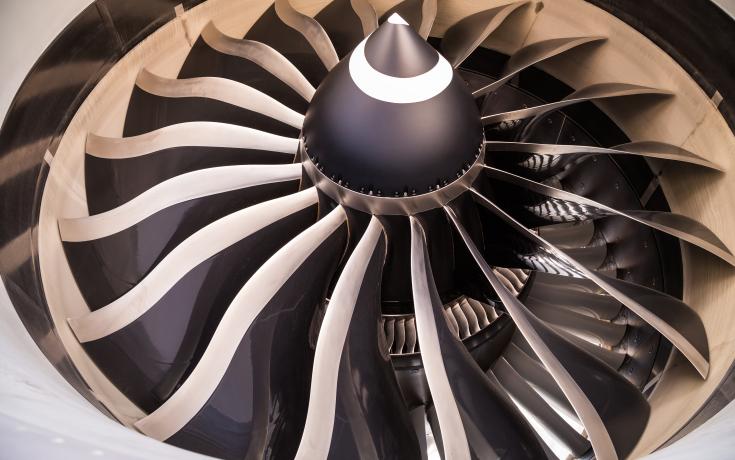
You chose composites for their strength-to-weight ratio. Every bonded joint that fails undermines that choice. Inconsistent surface preparation introduces risk you carry silently: rework on high-value carbon fibre assemblies, bond failures that escape inspection until service, and compliance exposure on safety-critical structures. If your preparation process depends on manual sanding, peel ply, or dry grit blasting, the variability is built in. Wet blasting helps eliminate variability and significantly improves adhesion.


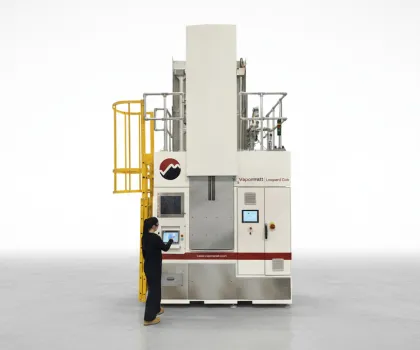
Vapormatt has engineered wet blasting machines for composite bonding preparation since the technology was first adopted for thermoset composite preparation in aerospace. Our machines prepare carbon fibre and CFRP assemblies for bonding in Formula One manufacturing facilities, leading aerospace OEMs, and the UK's National Composites Centre.
Creates the ideal surface for maximum bond strength
Wet blasting protects composite fibres from damage
Contaminants are removed at the same time as surface prep.
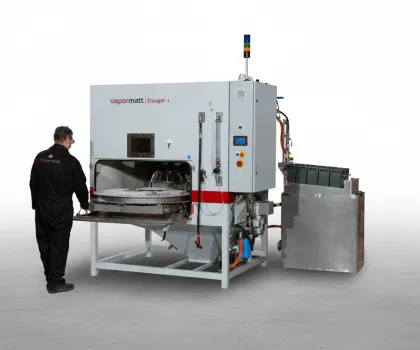
Our automatic machines ensure consistent surface finishing
Independent research from NASA, the FAA, and aerospace OEMs confirms that preparation method directly controls surface energy, bond strength, and long-term durability. Carbon fibre leaves the autoclave with a hydrophobic resin surface. Release agents and waxy residues cause adhesives to bead rather than wet out. Removing these contaminants without damaging reinforcing fibres is the central challenge, and the choice of method produces measurably different outcomes.
Read our composites industry case studies
| Wet blasting | Dry grit blasting | Manual sanding | Peel ply | |
|---|---|---|---|---|
| Water contact angle | 43-48°¹ | 86°² | 88°² | 76-83°² |
| Fracture toughness (GIC) | 757 J/m²³ | 385-578 J/m²⁴ | ~788 J/m²⁴ | ~735 J/m²⁴ |
| Fibre damage | None: water buffer prevents media impregnation | Fibre fracture confirmed by microscopy² | Cuts fibres on low-resin prepregs | Low |
| Surface stability | Contact angle stable at 43-54° for over two weeks¹ | Recontamination via static charge | Requires immediate cleaning | Degrades on exposure to atmosphere |
¹ Vapormatt internal testing (water contact angle measured by goniometry; surface stability measured over 17 days post-blast)
² Belcher et al., NASA/National Institute of Aerospace, 14th European Conference on Composite Materials, 2010
³ Vapormatt testing for a major European airframe OEM (minimum requirement 450 J/m²; average achieved 757 J/m²) ⁴ Pothakamuri and Smith, Washington State University/FAA Joint Advanced Materials and Structures Center of Excellence
Lower contact angle indicates higher surface energy and better adhesive wetting. Higher fracture toughness indicates stronger bond performance. A presentation to the CAA/FAA Bonded Structures Workshop by Westland Helicopters listed vapour-blast as the preferred surface preparation method for thermoset composites, ahead of manual abrasion and tear ply.
Read our composite industry brochure and white paper
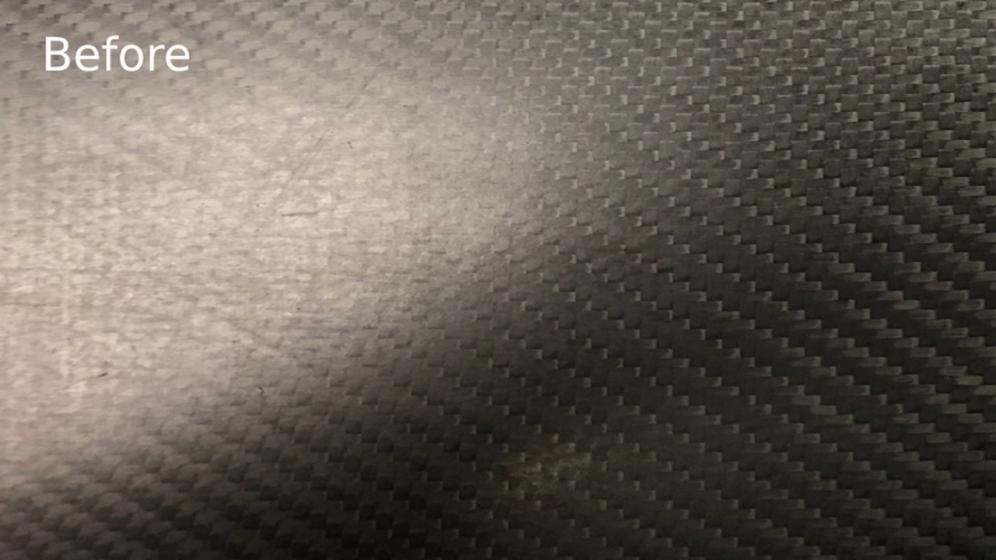
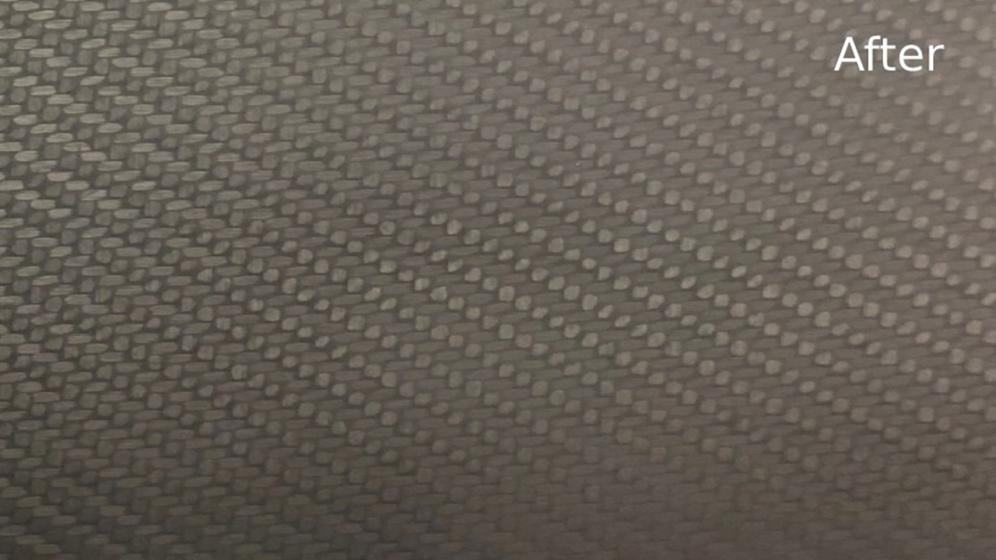
Wet blasting suspends fine abrasive media in water and accelerates the slurry through a blast gun using compressed air. The water cushions the abrasive to prevent fibre damage, continuously washes the surface to remove contaminants, and eliminates static charge that would otherwise attract recontamination. The result is a hydrophilic surface with a controlled Ra roughness profile. In aerospace composite testing, our machines increased surface roughness from Ra 0.28µm to Ra 1.45µm in a single controlled pass, precisely matching the structural bonding specification.
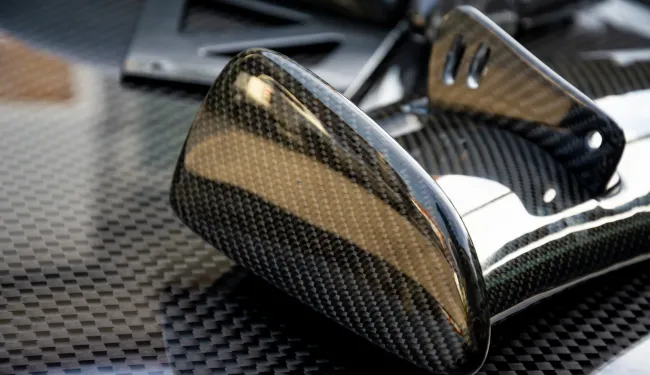
Carbon fibre bonding applications prepared by wet blasting

"Our Vapormate has without doubt stood the test of time and saves us a lot of man hours. It is also very consistent and reliable."

Vapormatt's wet blasting machine, installed at the National Composites Centre in Bristol, is transforming composite bonding performance by delivering clean, precision-abraded surfaces on materials like carbon fibre and GRP - without causing fibre damage.
Wet blasting achieves the lowest contact angle, competitive fracture toughness, and zero fibre damage in a single dust-free operation. The surface stays bond-ready for over two weeks. Every alternative method requires compromise: on repeatability, on fibre integrity, on cleanliness, or on all three. The cost of that compromise is measured in scrap, rework, and risk.
The choice of abrasive media in wet blasting for composites depends on the substrate, resin system, and target surface roughness. Fine-grade media such as glass beads or aluminium oxide are commonly used because they create a controlled Ra profile without fracturing reinforcing fibres. The water-suspended slurry cushions the impact, so even harder media can be used safely compared to dry grit blasting. A Vapormatt applications engineer can specify the optimal media type and grit size for your bonding specification.
Laser ablation is an emerging method for composite surface preparation that uses focused energy to remove resin from the surface. While it offers non-contact processing, it requires significant capital investment, careful control to avoid thermal damage to fibres, and is typically slower than wet blasting for larger surface areas. Wet blasting delivers comparable surface energy results at lower cost, higher throughput, and with an established track record across aerospace and motorsport production environments.
Wet blasting is well established for thermoset composite preparation, including carbon fibre reinforced polymers (CFRP) cured in an autoclave. Its suitability for thermoplastic composites such as PEEK or PEKK matrix systems depends on the surface hardness, fibre architecture, and the adhesive or welding process being used downstream. As thermoplastic composites grow in aerospace and automotive applications, wet blasting parameters can be adapted to meet the specific surface energy requirements of these materials.
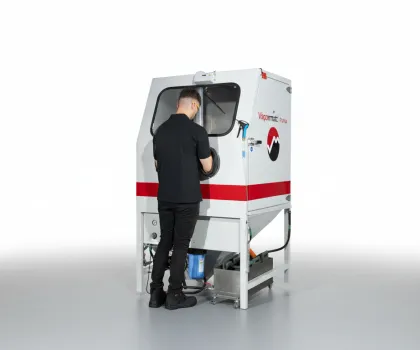
Throughput depends on component geometry, surface area, the required Ra profile, and the number of blast guns configured on the machine. Automatic wet blasting machines, such as the Oncilla, can be engineered with conveyorised or rotary indexing systems to process components continuously in a production line environment. Cycle times are significantly shorter than manual sanding and more consistent than hand-operated blast cabinets, making automatic wet blasting suitable for both low-volume aerospace parts and higher-volume motorsport or sporting goods production.
Wet blasting is inherently safer than dry grit blasting because the water suppresses airborne dust, eliminating the silica dust inhalation risk associated with dry abrasive methods. The process generates a slurry waste stream rather than dry particulate, which simplifies containment. Closed-loop water recycling systems can be incorporated into Vapormatt machines to minimise water consumption and manage abrasive media reclamation, supporting both environmental compliance and reduced running costs.