Image


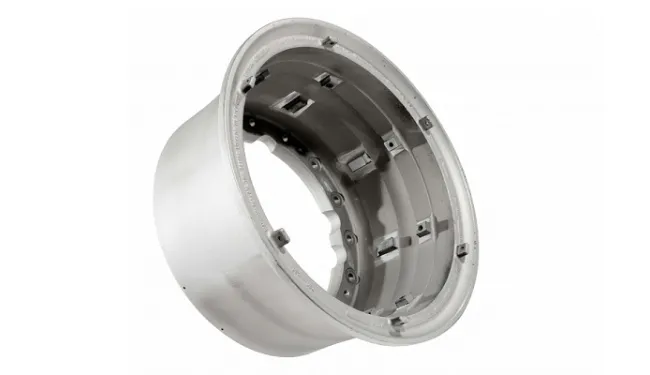

Wet blasting removes paint completely and consistently, including from complex geometry, recesses, and threaded features, leaving a surface that is genuinely clean rather than visually clean. Thanks to the slurry cushioning the abrasive, the substrate is not attacked, and the surface that emerges is ready for NDT, primer, or coating without further preparation.
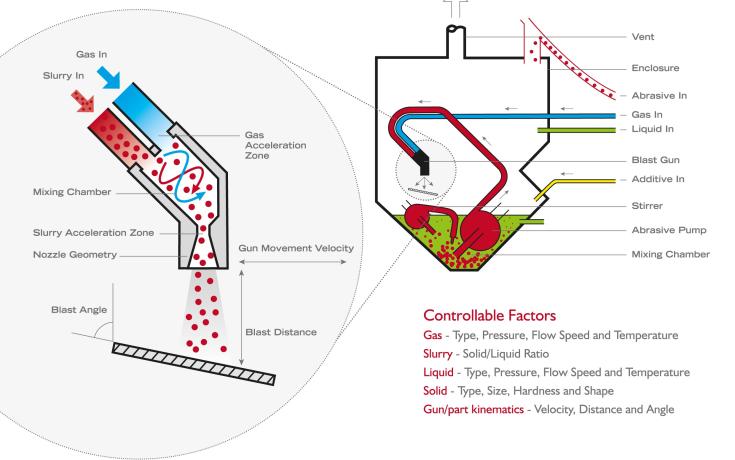
The slurry carries abrasive at controlled velocity into every surface the gun reaches, including geometry that defeats dry blasting or chemical strip. Water in the mix moderates the impact, so paint lifts cleanly without the substrate being cut or stressed. Pressure, media grade, and blast angle are independently adjustable, which means the process can be dialled to strip a single topcoat or work through multiple layers without changing equipment.
Typical setup: paint stripping
The parameters below are indicative and confirmed for the component types listed.
| Component type | Typical size or weight | Process mode | Achievable outcome | Minimum control |
|---|---|---|---|---|
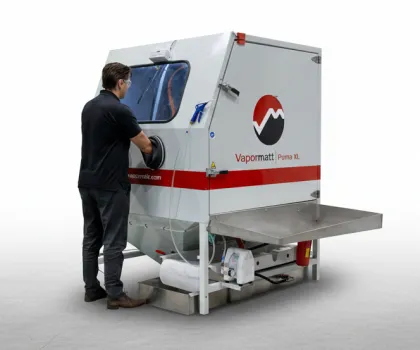
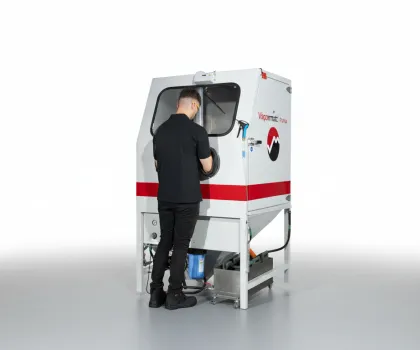
| Aircraft wheel | Ø600mm x 265mm | Manual | Full paint removal from all surfaces including recesses | Heater |
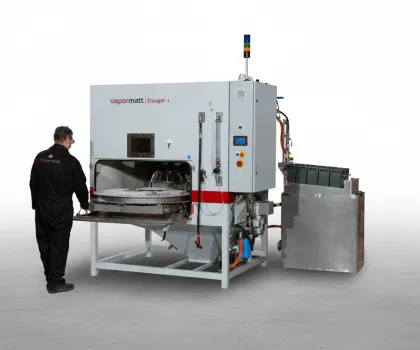
| Aircraft wheel | Ø600mm x 265mm | Automatic (wet wheel) | Full paint removal; 5 to 10 minutes processing per side, depending on wheel geometry | Heater, automatic motion |
In Vapormatt sample processing trials, a 600mm aircraft wheel was fully stripped of paint using plastic media in the WASP process on an R&D Lynx machine. Manual processing of the complete wheel took 30 to 40 minutes. Using a two-gun automatic machine, cycle time was projected at approximately 20 minutes per wheel. The trial was conducted for a US aviation MRO operator.
Wet blasting paint stripping is used across the aviation MRO sector and in defence overhaul operations; see the relevant pages.
Not if set up correctly. Plastic media at paint-stripping pressures is selected to lift the coating without cutting into aluminium or aerospace alloys. Pressure, blast angle, and water content all moderate impact energy. The substrate emerges intact and ready for the next operation.
In Vapormatt sample processing trials, a 600mm aircraft wheel took 30 to 40 minutes to fully strip manually. A two-gun automatic machine is projected at approximately 20 minutes. Actual time depends on paint system, layer count, and wheel geometry.
Yes. Media grade and pressure are selected for the paint system. Tougher or multi-layer coatings use coarser media or higher pressure; single topcoats use finer media at lower pressure. The recipe is adjusted to the job.
Visually, immediately after processing. Wet blasting removes paint uniformly from recesses as well as flat faces, so NDT is presented with genuinely bare metal throughout. For repainting, the surface profile promotes adhesion without additional preparation.
No. A basic manual machine needs only standard operator training. For consistent results across shifts, temperature control and an enricher are recommended to maintain recipe stability between parts.