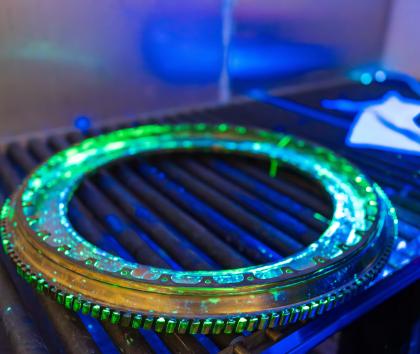
For jet engine manufacturers, the surface you send to non-destructive testing (NDT) decides how far you can trust the result.
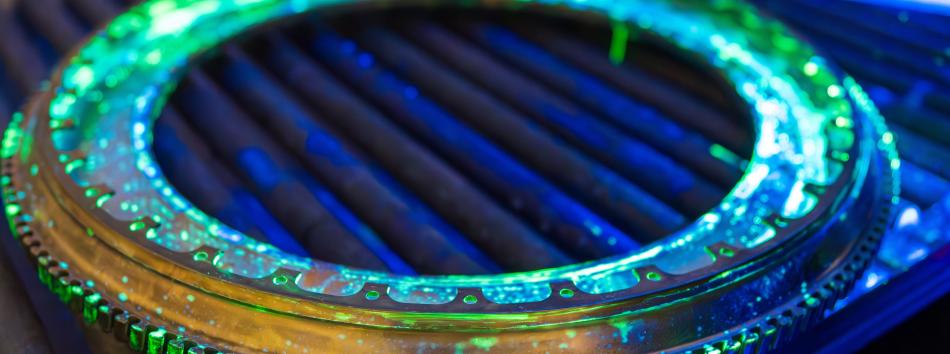
Machining oil or heat-treatment scale left in a fir tree slot can stop penetrant reaching a defect during fluorescent penetrant inspection (FPI), or cause background fluorescence and false calls. Dry blasting can peen or smear metal over the defects you need to find.
Wet blasting, also known as vapor blasting, uses a slurry of blast media and water that flows over the surface rather than hammering it. It reaches fir tree slots, blade roots and cooling holes, flushing contamination clear without a separate degreasing stage, dust or harmful chemicals.
On a production line, consistency matters as much as cleanliness. Our machines monitor and record blast pressure, slurry concentration and travel speed on every cycle, so the first part and the thousandth receive identical preparation, with data to support Nadcap and your process approvals.
The results hold up in production. At one engine OEM, an automatic Vapormatt Leopard Cub cut stage one compressor hub preparation from up to 3 hours of manual blasting to 20 minutes per hub.
Send us your component, material and specification. We’ll process samples at our UK test facility and return documented results before you commit.