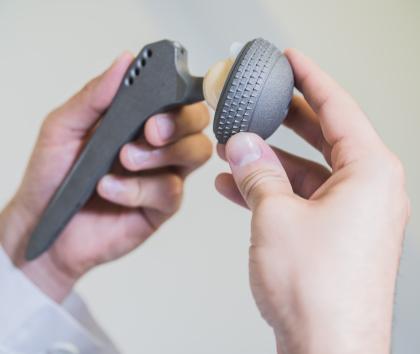
The surface finish on an implant is more than cosmetic.
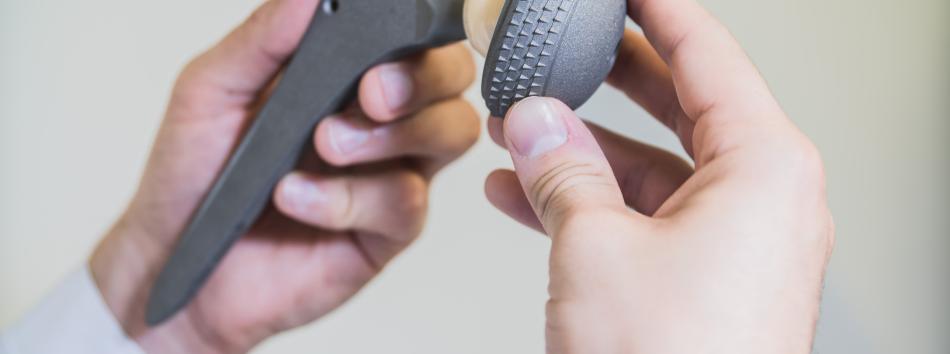
The surface finish on an implant is more than cosmetic. It affects how well bone grows into it, how well coatings bond to it and whether it passes a regulatory audit.
Dry blasting drives abrasive into titanium and cobalt-chrome, where it can embed. Wet blasting cushions every impact with water, so abrasive stays out of the substrate. Use calcium-phosphate biocompatible media and there's no foreign residue to justify in a biocompatibility assessment.
Wet blasting also gives you control. Adjust pressure, media and cycle time to create surfaces for good osseointegration, hitting 1.0 to 4.0µm Ra (average surface roughness) batch after batch. On additively manufactured (AM) implants, it refines as-built surfaces and flushes powder from internal channels in one cycle.
The automatic Vapormatt Puma + wet blasting machine brings that control into a medium-sized footprint. Select a saved recipe on the HMI and every batch runs through the same cycle.
Configurations include Radial for general parts, Vertical for tall parts such as hip stems and Barrel for batches of small components like AM dental screws.
Adjustable blast pressure protects delicate components.
Every machine is tested before it leaves us, usually using your own implants, with a dedicated project leader from order to installation.