
The technical challenge
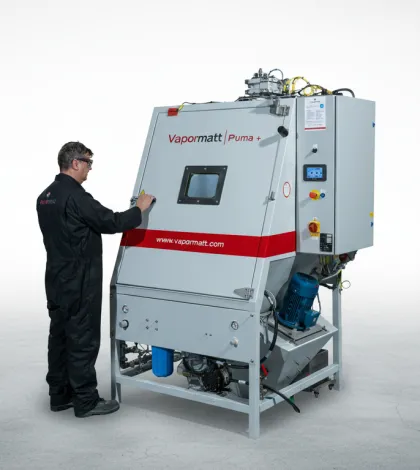
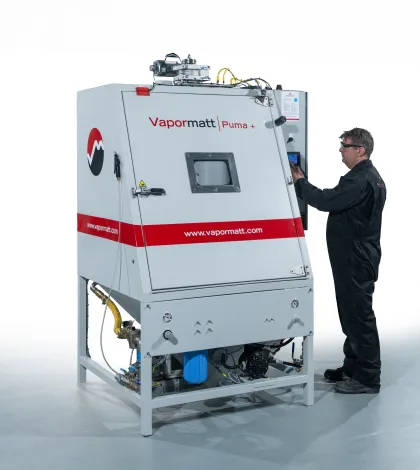
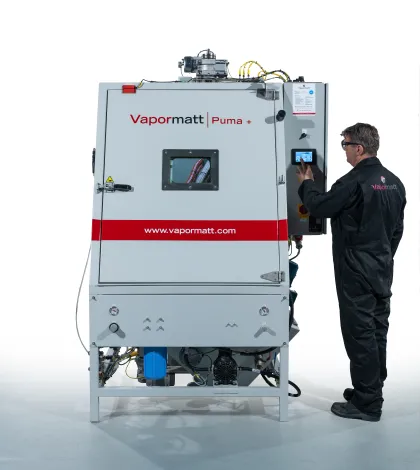
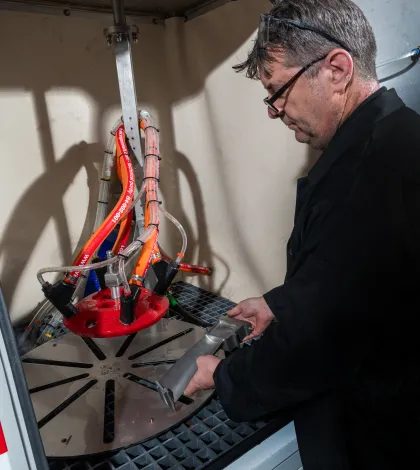
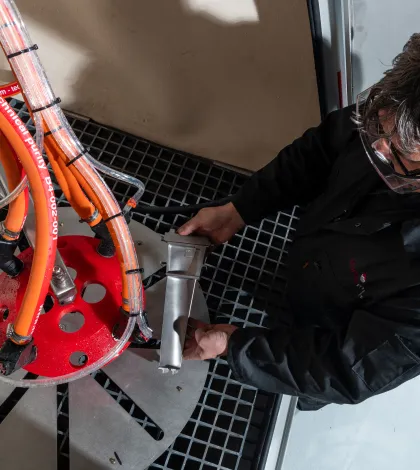
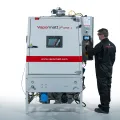
The Puma+ is built for production and operations managers who need wet blasting to be repeatable and automated. Every configuration uses the full Vapormatt process architecture: up to four Mk3 blast guns, independent pressure control and recipe-based cycle management. Choose the configuration that fits your parts:
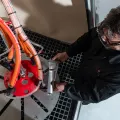
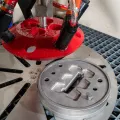
- Radial (horizontal): up to four guns traverse a Ø700mm (28") driven turntable. For general components up to 150kg (330lb) per load.
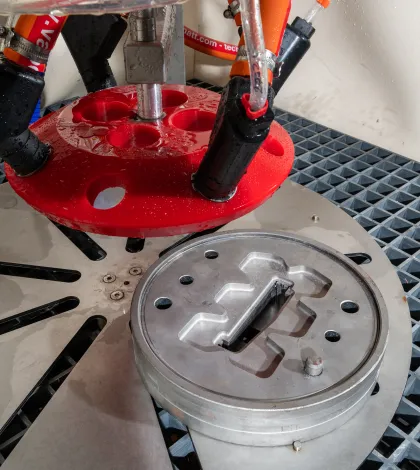
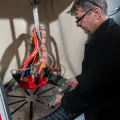
- Vertical: two guns on a vertical oscillation arm. For taller components on bespoke holders or fixtures.
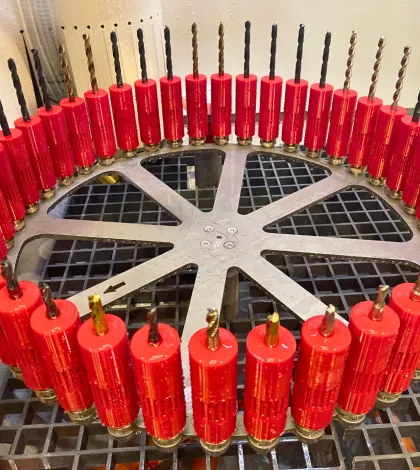
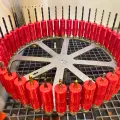
- Vertical with satellites: holds 42 round-shank tools, 3–25.4mm (0.12"–1") diameter and up to 300mm (12") long. For batch edge honing, cleaning and coating prep.
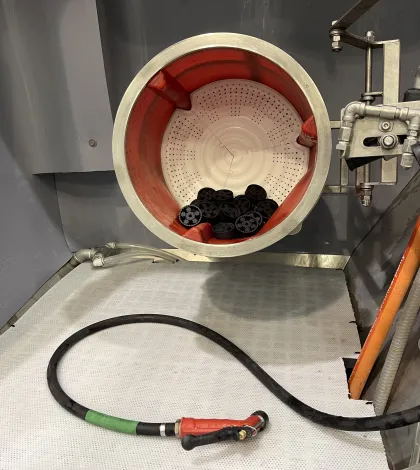
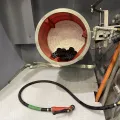
- Barrel: a bi-directional barrel with up to four guns, holding 20kg (44lb) standard or 50kg (110lb) large. For bulk small parts, including metal and polymer additive manufactured parts.
Process control and repeatability
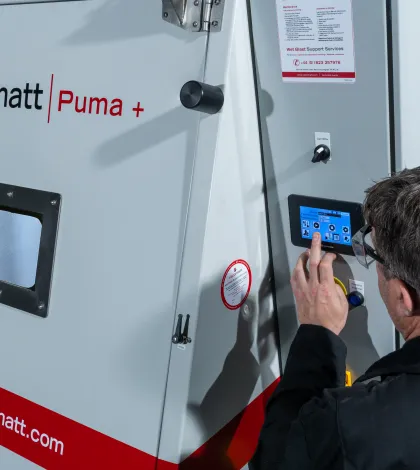
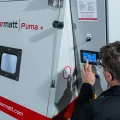
Selectable recipes store cycle time and blast pressure, plus rotation speed and Z-axis traverse rate on the Barrel and Vertical configurations. Vapormatt 4.0 is included, so our engineers can diagnose faults, change parameters and identify issues remotely, without a site visit.
Why Vapormatt
Vapormatt pioneered wet blasting and has been refining automated surface finishing systems since 1978. The Puma + carries that depth in a machine your team can operate from day one.
- One platform, four configurations: Radial, Vertical, Vertical with satellites and Barrel share one architecture, with optional automatic index loading for higher throughput.
- Factory Acceptance Testing: we test your machine at our Bridgwater site before it ships, often on your own components.
- Built for production loads: industrial polyurethane pumps, Mk3 blast guns and stainless steel construction, designed for a working life of 20+ years, with a 24-month warranty as standard.
The Vapormatt Promise: your machine meets the agreed specification, or we put it right.
The bottom line
Budget automation bolts a motor and controller onto a manual cabinet; the Puma+ was designed automation-first, for higher uptime, more consistent finishes and longer service life.
Technical specifications
| Parameter | Specification |
|---|---|
| Cabinet construction | Stainless steel |
| Footprint | 1.47m × 1.38m (58" × 55"); height 2.07m (82") |
| Turntable | Ø700mm (28") driven, fixed speed 10 RPM; loading height 875mm (34") |
| Turntable load capacity | 150kg (330lb) |
| Blast guns | Up to 4 × Vapormatt Mk3, 10mm (0.39") nozzle. Radial: 4. Vertical: 2. Vertical with satellites: 2. Barrel: up to 2 (standard barrel) or 4 (large barrel) |
| Water supply | ½" BSP (Rp ½, DN15) or ½" hose; max 7 bar (100 psi); 13 L/min (2.9 US gpm) intermittent |
| Weight | Approx. 350kg (772lb) including filter unit |
| Standard barrel | 350mm (14") OD; internal Ø338mm (13") × 260mm (10") deep; up to 20kg (44lb) load |
| Large barrel | 500mm (20") OD; internal Ø488mm (19") × 260mm (10") deep; up to 50kg (110lb) load |
| Satellite capacity: Vertical with satellites | 42 tool holders; round shank tools 3mm to 25.4mm (0.12" to 1") diameter; up to 300mm (12") length |
| Electrical supply | 400/480V AC, 3-phase, 50/60Hz, 25A; RCD and isolation switch required |
| Air supply | 1" BSP (Rp 1, DN25) connection; 2–7 bar (30–100 psi); 1.13 Nm³/min (40 SCFM) per gun, max 4.53 Nm³/min (160 SCFM) with four guns; air quality DIN ISO 8573-1 class 5.6.4 |
| HMI translation | Non-English translation of HMI, manual and labels (optional) |
Full technical specifications are available in the downloadable Puma+ machine brochure