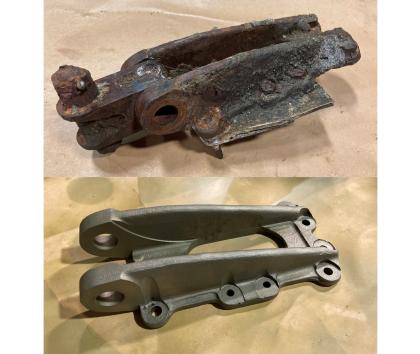
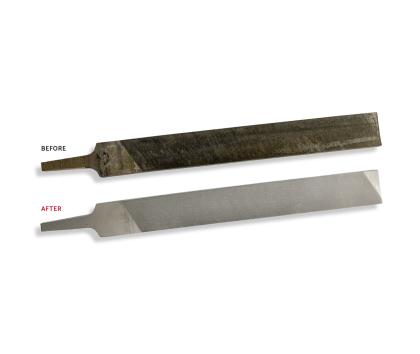
Rust removal doesn’t get much tougher than this: a Second World War aircraft fitting that spent decades at the bottom of The Solent, now back to its original condition.
There isn’t a single Fairey Barracuda left anywhere in the world. The British carrier-borne torpedo bomber flew missions against the battleship Tirpitz and supported the Allied invasion of Italy. Today, the Royal Navy Fleet Air Arm Museum at Yeovilton is recreating one from wreckage gathered across several crash sites.
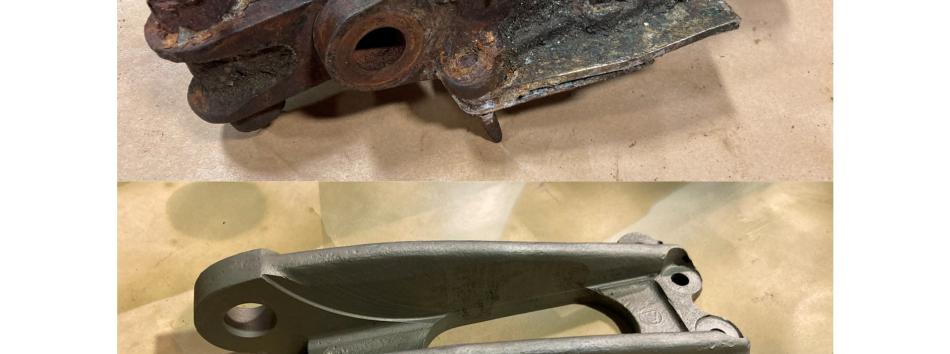
The biggest obstacle is rust. This steel fitting comes from a Barracuda that plunged into The Solent moments after take-off from HMS Daedalus in 1943. The pilot swam 500m back to shore, but the wreckage stayed on the seabed, where seawater took its toll for decades.
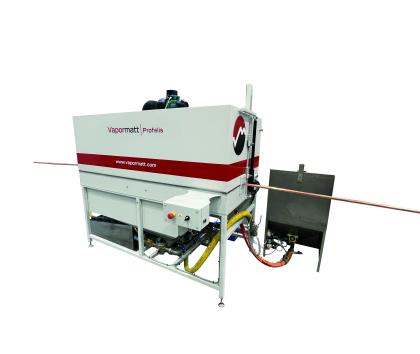
Using their Vapormatt Puma manual wet blasting machine, the museum team has stripped away the heavy corrosion and returned the fitting to its original condition.
Why wet blasting works for rust removal:
- Water cushions the media, so corrosion comes off without eroding the sound metal underneath.
- Fine detail and original dimensions are preserved.
- The process is dust-free and leaves a clean, uniform finish.