How wet blasting produces surfaces perfect for sterilisation...

In sectors where sterility is absolutely critical, such as medical technology, pharmaceuticals and food processing, the way surfaces are finished has a huge impact on how effectively and efficiently they can be sterilised.
Wet blasting excels at creating surfaces that require sterlisation.
Here’s why it stands out:
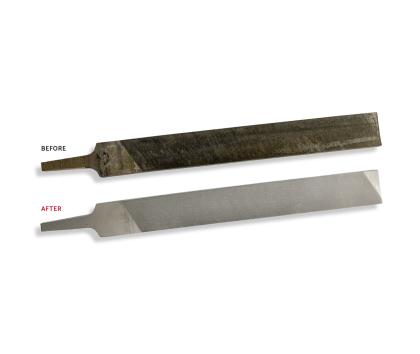
• Thorough cleaning: Wet blasting removes grease, oxides, rust, scale and even stubborn biofilms, leaving a surface ready for sterilisation.
• The right surface roughness: With glass bead media, it produces a finish of around 0.25 to 0.6 µm Ra, widely recognised as the “sweet spot” for sterilisation. Any rougher and bacteria can hide; any smoother and they adhere more easily.
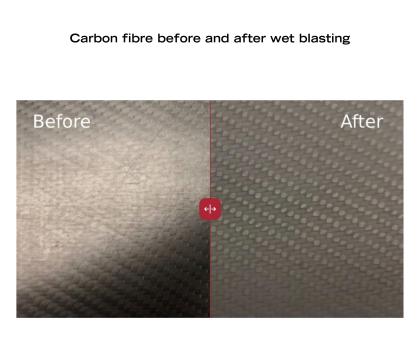
• Consistency and uniformity: The process delivers highly even finishes, ensuring sterilising agents can reach every part of the surface effectively and repeatably.
• Gentle yet effective: Because the abrasive particles are cushioned by water, the process avoids heat build-up, dust and surface damage, reducing the risk of micro-traps for contaminants.
• Controlled and repeatable: Parameters such as pressure, blast slurry mix, media type and nozzle angle can be finely adjusted, making the results highly consistent across components and batches.
• Cleaner and safer: With no dust or airborne particles, wet blasting improves workplace safety and has a lower environmental footprint than many alternatives.
In short, wet blasting creates smooth, uniform and hygienic surfaces with the ideal texture for sterility. Helping critical industries meet the highest standards of safety and cleanliness.