
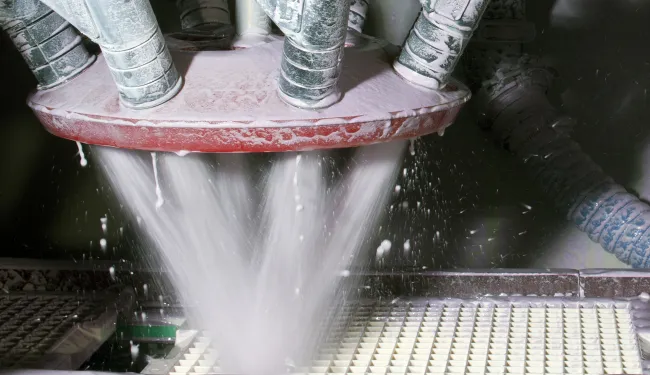
Liquid honing is a surface finishing process in which fine abrasive media is suspended in water and projected at a component with compressed air. The water cushions each particle, so the part is cleaned, degreased and finished in one pass without embedded media, heat distortion or airborne dust. It is the original name for wet blasting, given to the process by its inventor, Norman Ives Ashworth, in the late 1940s. Three generations of Ashworths later, the name has largely been replaced in general use by 'wet blasting.'
Liquid honing at a glance
| What it is | A surface finishing process using fine abrasive media suspended in water and projected by compressed air |
| Modern name | Wet blasting |
| Also known as | Vapour blasting, vapor blasting, vapor honing, aqua blasting, wet abrasive blasting, slurry blasting |
| Named by | Norman Ives Ashworth, UK, late 1940s |
| Why "honing" | The water-cushioned abrasive laps across the surface in a controlled action rather than striking it |
| What it does | Cleans, degreases and finishes in a single pass, with no embedded media, heat distortion or airborne dust |
| Typical results | Surface roughness down to 0.2µm Ra; edge hones held to ±2µm |
| Common media | Glass bead, aluminium oxide, plastic, ceramic, stainless steel |
| Used for | Cleaning, deburring, edge honing, coating preparation, peening, paint stripping, restoration of castings |
| Where the term is still used | North America, automotive and motorcycle restoration, and technical and patent literature |
Why 'honing' was the right word
Norman Ives Ashworth didn't call it 'wet spraying' or 'water blasting.' He called it honing, because that's what the water-cushioned abrasive stream actually did to a surface: not a series of blunt impacts, but a controlled, flowing, lapping action - the same principle behind mechanical honing, just delivered through a liquid medium instead. Suspend fine abrasive in water, drive that suspension at a component with compressed air, and the part comes off the machine cleaned, degreased and finished in a single pass - nothing lodged in the substrate, nothing thrown into the air.
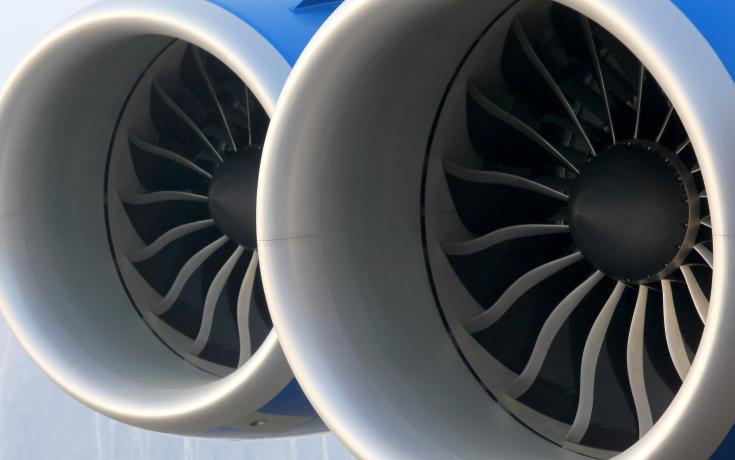
That naming choice is also why the process was adopted so quickly by the jet engine industry: aerospace components needed a finish that improved fatigue life and surface integrity, not one that damaged it. Liquid honing did both.
From liquid honing to wet blasting
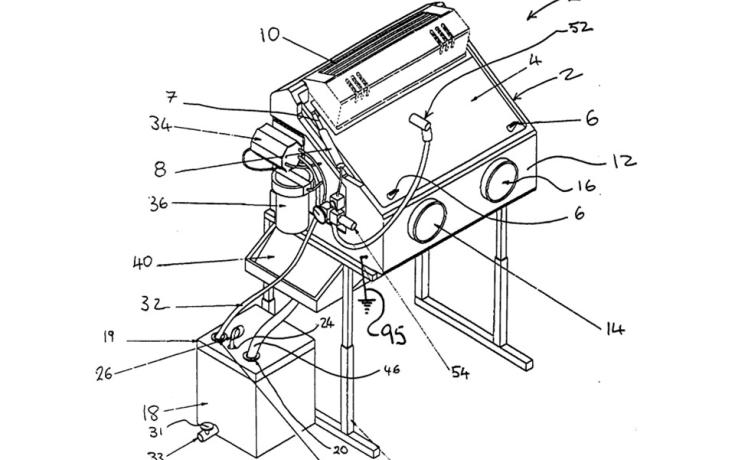
The process has been known by several names since, for example vapor blasting, vapour blasting, aqua blasting, and wet abrasive blasting, but 'liquid honing' remains the term closest to Ashworth's original engineering intent, and it's still used today, particularly in North America and in technical and patent literature. Vapormatt's own R&D has continued in the same direction Norman Ashworth set: engineering the process for repeatability rather than treating it as a manual skill.
See how that engineering legacy continues in Vapormatt's R&D and patents
What liquid honing is used for today
Liquid honing does the same job today that it did on Sir Frank Whittle's turbine blades, it produces a controlled, repeatable surface without damaging the part underneath. Manufacturers use it for cleaning and deburring precision components, edge honing carbide cutting tools to a defined K-factor, preparing surfaces for coating, peening jet engine blades, and stripping paint without harming the substrate. On a Vapormatt liquid honing machine, those results are repeatable to 0.2µm Ra and edge hones to ±2µm, part after part, in industries from aerospace to medical devices.
Send us your component. We'll wet blast it at our R&D Centre and send you the results
How liquid honing compares to vapor honing and wet blasting
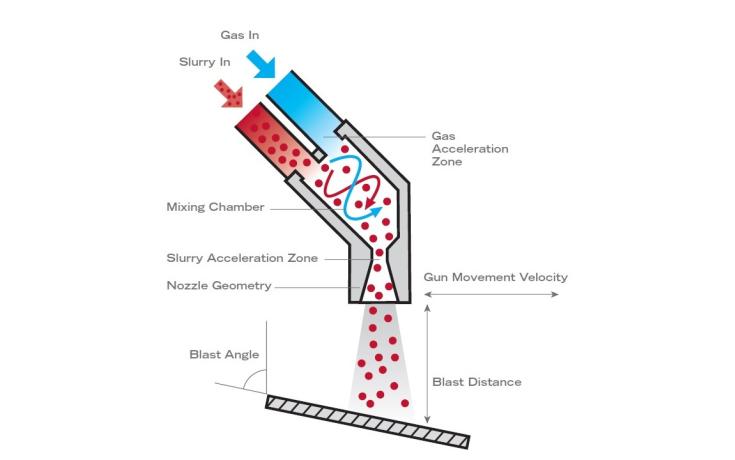
Three names, one mechanism, three different reasons to reach for one over another. 'Wet blasting' is the general term for the whole process - cleaning, finishing, or preparing a surface with a water-cushioned abrasive slurry. 'Vapor honing' describes that same process used specifically for tolerance-critical work: honing a cutting edge to a defined K-factor, or holding a surface roughness within a set band, where the outcome is measured in microns rather than judged by eye.
'Liquid honing' sits underneath both. It's Norman Ives Ashworth's original term for the mechanism itself - the water-cushioned, lapping action that makes the whole category possible - and it's the name still most likely to appear in patent literature, technical papers, and North American engineering documentation. Reach for 'wet blasting' in general conversation, 'vapor honing' when precision is the point, and 'liquid honing' when the engineering lineage matters.
A company still run by the family that invented the process
Norman Ives Ashworth's son, Stewart, founded Vapormatt in 1978 to keep developing the process his father invented, and the Ashworth family still runs the company today. That continuity shows in the engineering. The closed-loop, recycled, precision-controlled machines Vapormatt builds now, backed by twelve patents covering blast guns, slurry feed and particle separation, are a direct development of the liquid honing process Norman created in the 1940s. It also means you're working with people whose whole business has only ever been wet blasting.
FAQs
Is liquid honing different from wet blasting?
No. Liquid honing was the original name given to the process by its inventor, Norman Ashworth, in the late 1940s. Wet blasting is the same process under its more commonly used modern name.
Who invented liquid honing?
Norman Ives Ashworth, while working alongside Sir Frank Whittle on jet engine development in the late 1940s. He went on to found Abrasive Developments Ltd, and in 1978 his son Stewart founded Vapormatt, which is still run by the Ashworth family.
Is liquid honing still used as a term today?
Yes, particularly in North America and in technical literature, though 'wet blasting' and 'vapor blasting' are now the more commonly searched terms for the same process.
What is liquid honing used for?
Liquid honing is used to clean, deburr, edge hone, prepare surfaces for coating, peen and strip paint, often in a single pass. Manufacturers use it on aerospace components, carbide cutting tools and medical devices, and restorers use it to bring engine castings and alloy wheels back to a clean satin finish.
Does liquid honing remove metal?
Very little, and only in a controlled way. The water cushions each abrasive particle, so the process removes contamination, coatings and burrs rather than cutting into the substrate. Where some material removal is wanted, such as honing a cutting edge, the media and pressure are set to remove a precise amount and no more.
Is liquid honing the same as vapour honing?
Yes, it's the same process. "Vapour honing" (spelt "vapor honing" in the US) is usually used for precision work, where the result is measured in microns rather than judged by eye. "Liquid honing" is the original name Norman Ives Ashworth gave the process in the late 1940s.
Can you trial liquid honing on my parts?
Yes. Tell us about your components and the finish you need, then send us samples. Our applications engineers will process them at our R&D Centre and send you the results, along with a recommendation for the right process and machine, before you commit to anything.