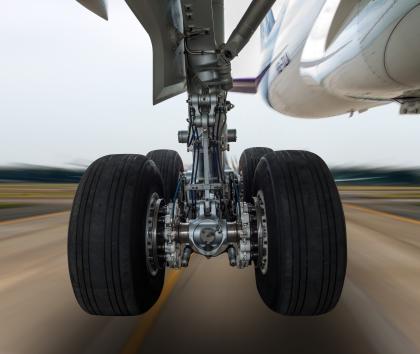
Think about the last aircraft wheel that came into your shop.
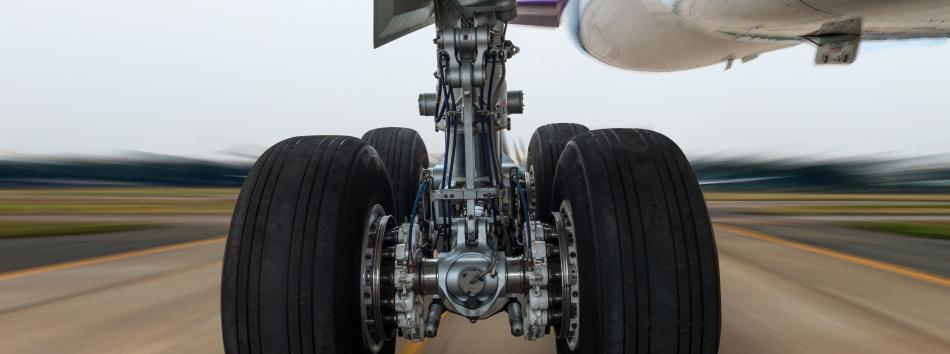
- How long did it really take to strip?
- How much dust was in the air?
- And how sure were you that it came out clean?
For most wheel and brake shops, paint stripping is a necessary evil. Degrease. Chemical bath. Dry. Blast. Clean off the dust. At every handoff the wheel sits, the clock runs and margin leaks away.
Dry plastic media blasting is often the first choice because it’s familiar. But familiar isn’t the same as best.
- It’s clean, until the dust settles.
- It’s fast, until the media breaks and the filters block.
- It can be safe, until the next environmental audit.
That dust is more than a nuisance. It carries carcinogens from the paint, microplastics from the blasting media and metallic residues from the wheel. Your operators breathe it in with every wheel, every shift, every year.
A large European MRO came to us stripping A350 inner wheel halves with a chemical bath followed by dry blasting. Their main goal wasn’t speed. They wanted to cut out chemical disposal costs, reduce compressed air demand and remove the dust.
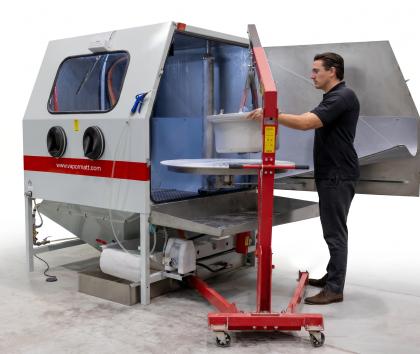
We ran a controlled test on our Puma XL WASP wet blasting system. We followed Safran SPM 32-09-01, Section 70, in full, on OEM paint with no chemical pre-treatment.
The result:
→ 58 minutes, against their current 120
→ 52% less time per wheel
→ No chemical pre-treatment, no dust
→ Anodised layer intact, confirmed by continuity reading
At 30 wheels a week, that’s more than 30 hours of capacity back. Every week.
And speed was only meant to be the bonus.
We believe the wheel and brake shops that are most competitive in five years will be the ones that make process decisions in the next two.
So here’s our offer: send us one of your aircraft wheels. We’ll run it through the machine at our UK test facility and send you the data.
No obligation. Just evidence.
Learn more about the advantages of wet blasting for wheel and brake shops