Improving the surface quality of metal additive manufactured (AM) dental crowns with wet blasting...
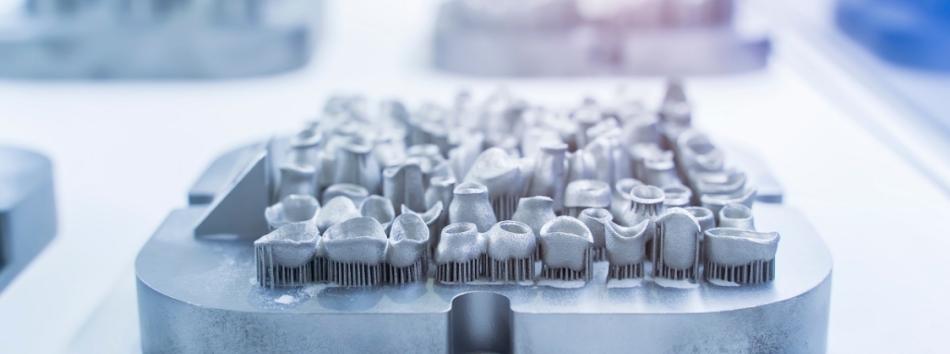
For dental crown manufacturers leveraging metal additive manufacturing technologies like DMLS, achieving repeatable, high-quality surface finishes is essential.
This is where wet blasting offers clear advantages in post-processing cobalt-chrome (Co-Cr) and titanium restorations, particularly for porcelain fused to metal framework (PFM) and full-metal crowns.
Key benefits for crown manufacturers:
✅ Consistent, controlled surface finishing: Wet blasting ensures uniform roughness and removes partially sintered particles without degrading margins or anatomical detail.
✅ Optimised bonding interface for ceramics: Produces an ideal surface profile for porcelain adhesion in PFM systems — enhancing prosthetic durability and aesthetics.
✅ Scalable and repeatable: Easily integrated into automated production lines with standardised parameters, ensuring batch-to-batch consistency.
✅ Reduced thermal and mechanical stress: The fluid medium cools and cushions the process, preserving material integrity — especially important in thin-walled or high-precision restorations.
✅ Biocompatible cleanliness: Unlike dry blasting, wet blasting reduces dust, static buildup, and contamination risk—supporting compliance with medical standards.
If you’re scaling production of AM metal dental restorations, incorporating wet blasting can significantly improve post-processing efficiency, surface quality, and long-term product performance.