
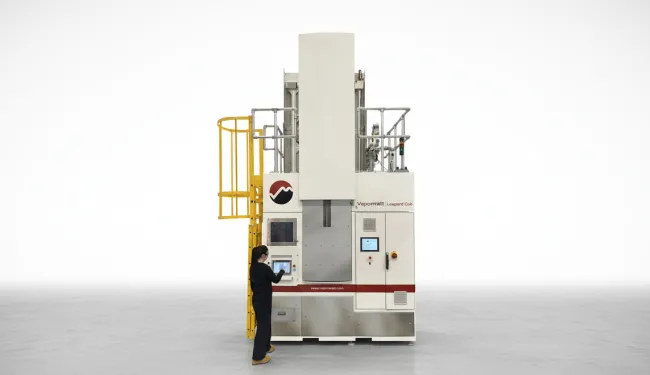
A wet abrasive blasting machine takes the same abrasive media used in dry blast cabinets and suspends it in water before it's projected at a component. That single change, adding water into the mix, is what defines the entire category: no embedded grit, no airborne dust, and a finish that's controlled rather than incidental to how hard the media hits the part.
Wet abrasive blasting machines vs dry blast cabinets
| Dry blast cabinet | Wet abrasive blasting machine | |
|---|---|---|
| Media on impact | Fired directly at the part | Cushioned in a film of water |
| Dust | Airborne, requires extraction | None |
| Embedded media | Common, especially on soft substrates | Avoided by the water cushion |
| Heat generation | Can distort thin sections | Carried away by the water |
| Finish consistency | Depends on operator technique | Repeatable when process parameters are controlled |
What to look for in a wet abrasive blasting machine
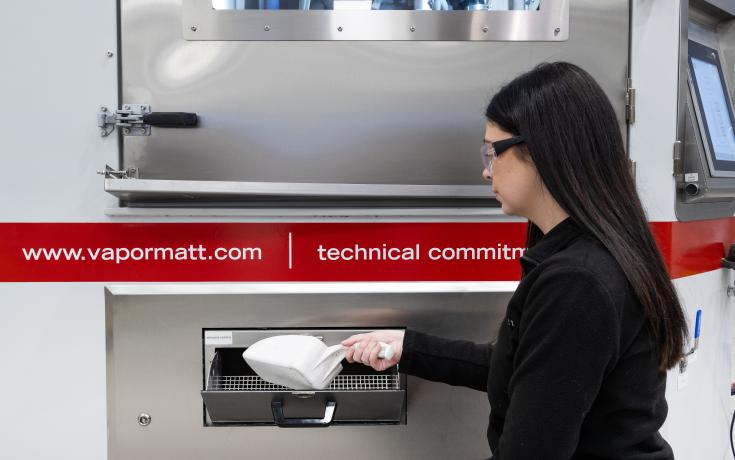
- Media compatibility - the machine needs to handle the abrasive type your application requires, from fine glass bead to coarser aluminium oxide.
- Slurry recycling and filtration, so media concentration stays constant rather than degrading through a shift.
- Consistent pressure and flow delivery, part after part.
- Build quality suited to an abrasive slurry environment, since pumps, seals and internal surfaces wear faster than in a dry system if under-specified.
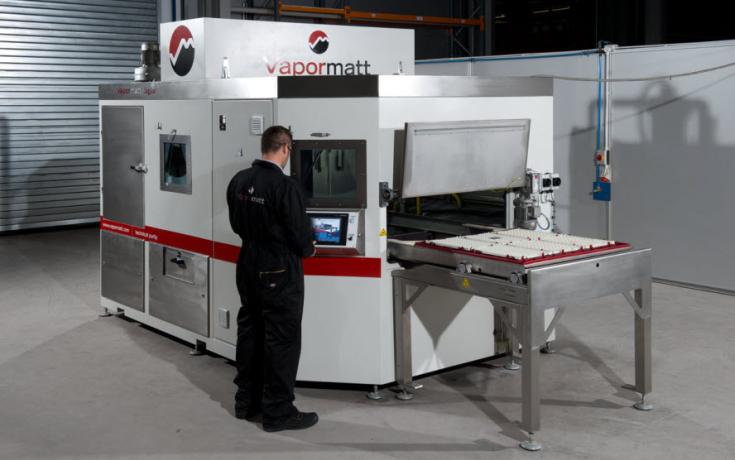
The Vapormatt wet abrasive blasting machine range
- Automatic machines for high-volume, repeatable production
- Manual machines for lower volumes and varied part geometry
Where wet abrasive blasting machines replace dry blasting
Aerospace component finishing, cutting tool preparation, industrial cleaning and deburring, and any application where dry blasting's dust, embedded media, or heat generation has been a problem.
FAQs
What is a wet abrasive blasting machine?
A wet abrasive blasting machine suspends abrasive media in water and projects that slurry at a component using compressed air, cleaning, finishing or preparing the surface without the dust and embedded media associated with dry blasting.
Why would I choose a wet abrasive blasting machine over a dry blast cabinet?
Where dust extraction, embedded media, heat distortion, or finish consistency are a problem with dry blasting, a wet abrasive blasting machine addresses all four by cushioning the abrasive in water before impact.
Can a wet abrasive blasting machine use the same media as a dry cabinet?
In many cases, yes - most common abrasive media types can be used wet as well as dry, though concentration and delivery settings need to be engineered for the slurry format rather than simply transferred from a dry system.
Are wet abrasive blasting machines more expensive to run than dry blast cabinets?
Not necessarily. Media and water are typically recycled and filtered rather than discarded, and a well-specified machine's lower air and media consumption can offset any additional running cost from managing the slurry. Read our buying guide for the full running-cost picture.