Cleaning the internal channels of additive manufactured components with confidence.
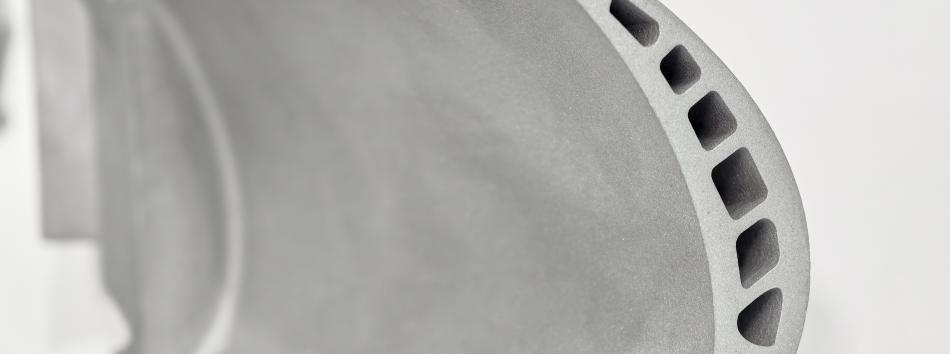
The additive manufacturing industry relies heavily on inspection, and NDT preparation is a standard part of the workflow for aerospace AM components. So it's worth noticing a finishing process where proof of quality is built into the mechanism itself, rather than added as a separate step afterward.
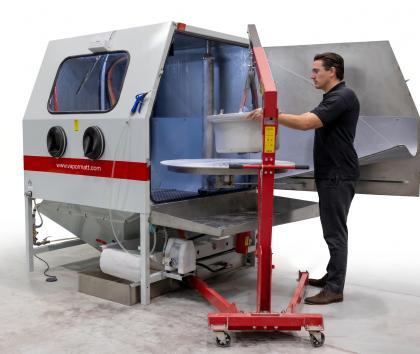
Wet blasting clears internal channels using a pressurised slurry of water and abrasive media. When that slurry exits a cleared channel, it's visible. The proof of clearance isn't a downstream inspection step. It's part of the process itself.
Dry blasting on the same geometry doesn't offer that. It cannot reliably clear internal channels, and it's possible for dry media to compact loose powder further into a channel rather than remove it, creating a blockage with no visible indication of the problem.
That's the real risk. Not that dry blasting sometimes fails to clear a channel, but that when it fails, there's no visible sign it happened. The part looks finished either way.
For AM components where internal geometry is often the entire point (conformal cooling channels, lattice structures, complex flow paths) that lack of a failure signal matters. A finishing process that shows you clearance at the point it happens is a different proposition to one that leaves you to find out later.
Learn more about wet blasting for additive manufacturers