
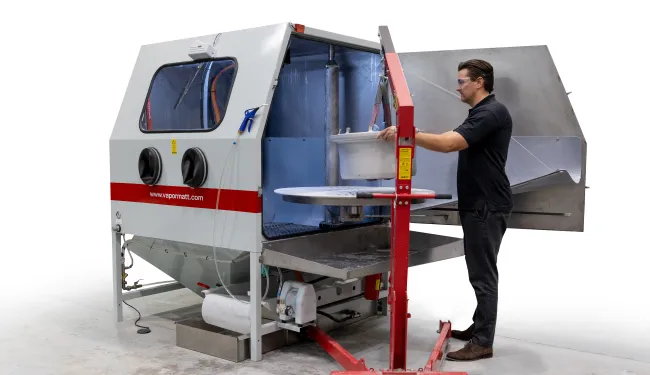
A hydro abrasive blasting machine suspends abrasive media in water and drives that slurry at a component under compressed air - the same mechanism used across wet blasting, vapor blasting and liquid honing, described here in the more literal, technical terms often used for descaling, decoating and heavy corrosion-removal applications. The water does two jobs at once: it cushions the abrasive on impact, and it carries heat and debris away as the machine works.
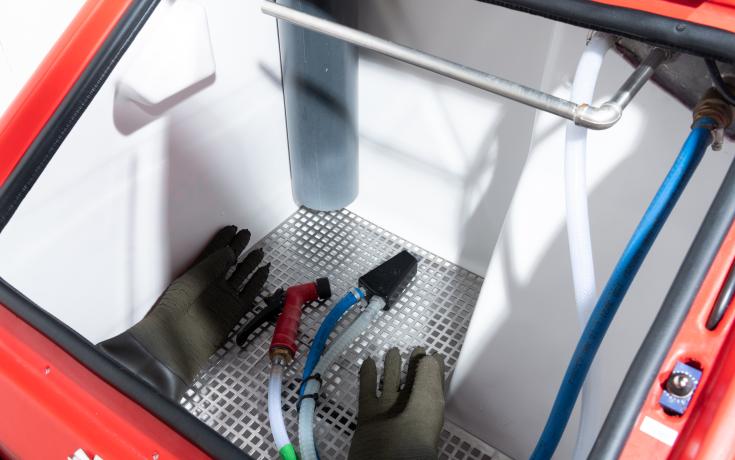
Why hydro abrasive blasting machines are specified for demanding descaling work
- No heat build-up. Water carries heat away as it works, which matters on components where dry blasting risks distortion or surface damage.
- No re-embedded contamination. Mill scale, corrosion products and old coatings are removed and carried out of the process with the slurry, rather than re-deposited on the surface.
- Aggressive removal without substrate damage. Media type and concentration can be tuned for heavy material removal while keeping the water cushioning effect that protects the base metal.
- No dust extraction infrastructure required, which matters for heavier descaling operations where dry blasting dust volumes are significant.
What to look for in a hydro abrasive blasting machine
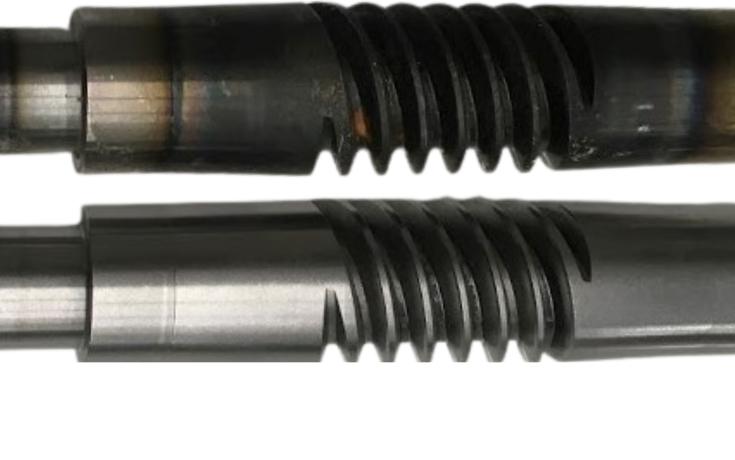
Heavy descaling and decoating work puts more strain on a machine than light finishing work does - higher media loads, more debris in the recycled slurry, and longer cycle times. A machine specified for this needs robust filtration and recycling, wear-resistant internal geometry, and pump and seal specifications matched to the abrasive being used.
Where hydro abrasive blasting machines are used
Corrosion and scale removal ahead of recoating or inspection, coating and paint stripping back to bare substrate, and general descaling in industrial maintenance and refurbishment.
FAQs
What is a hydro abrasive blasting machine?
A hydro abrasive blasting machine mixes abrasive media with water into a slurry, then projects it at a component with compressed air, removing scale, corrosion or coatings while cushioning the impact to protect the base material.
Is hydro abrasive blasting the same as wet blasting?
Yes. "Hydro abrasive blasting" is a more literal, descriptive name for the same process the industry generally calls wet blasting or vapor blasting - water and abrasive combined into a slurry and projected under compressed air.
Can a hydro abrasive blasting machine remove heavy corrosion without damaging the substrate?
Yes, when media type, concentration and pressure are set correctly for the application. The water-cushioned impact removes corrosion and scale aggressively while avoiding the material loss and heat generation associated with dry blasting methods.
Do hydro abrasive blasting machines need dust extraction?
No. Because the abrasive is suspended in water rather than propelled dry, there's no airborne dust to extract, which removes a significant compliance and infrastructure requirement compared with dry abrasive blasting.