
Tell us about your components and applications and we can recommend the right blast media
Media selection is one of the most consequential decisions in a wet blasting process. The same machine, the same pressure, the same cycle time and two different media produce surfaces with fundamentally different functional properties. Getting it right before production starts avoids rework, failed qualification tests, and scrapped components.
The decision comes down to three physical properties: size (and density), shape, and hardness. A fourth, toughness, decides how long the media lasts and what it costs to run.
Size, shape and hardness: the framework for every media decision
- Size and density control the energy of each particle impact and the resulting surface roughness. Larger, heavier particles create deeper impact craters and higher surface roughness values; finer, lighter particles produce smoother surfaces. For any given media type, grit size is the primary lever used to hit a target surface roughness.
- Shape governs the type of action the media delivers. Angular media cuts into the surface on impact, creating the peaks and valleys that coatings and bonds rely on for mechanical adhesion. Spherical media peens, compressing the surface rather than scoring it, which produces a smooth finish and introduces compressive stress into the substrate. Spherical media is also highly effective for cleaning. This distinction matters more than hardness alone.
- Hardness determines how aggressively the media interacts with the substrate. The governing principle is that the abrasive must be harder than the contaminant being removed, and no harder than necessary relative to the substrate. Excessive hardness introduces dimensional risk; insufficient hardness simply extends cycle time without achieving the required profile.
- Toughness does not change the finish, but it decides the running cost. Tough media such as ceramic beads and stainless steel shot resist fracture and keep working through many cycles in a recirculating wet blasting system. More friable media such as glass beads and plastic break down faster and need topping up or replacing more often. Some media are friable by design: silicon carbide fractures to expose fresh cutting edges. Factor breakdown rate into cost per part, not just the price per kilo.
Aluminium oxide: the standard for defined surface profiles
When a specific surface roughness value is a process specification requirement, aluminium oxide is Vapormatt's default recommendation and is first choice when preparing surfaces for coatings, bonding or cleaning, and is increasingly popular for tooling applications where edge honing is critical.
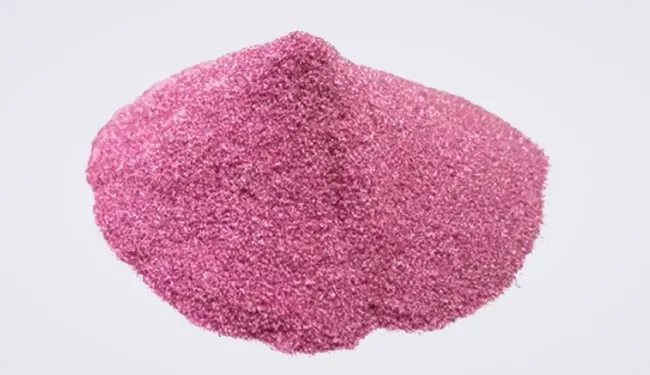
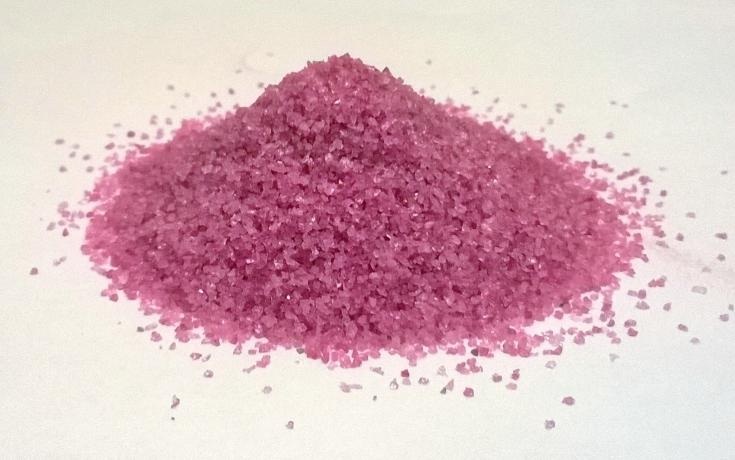
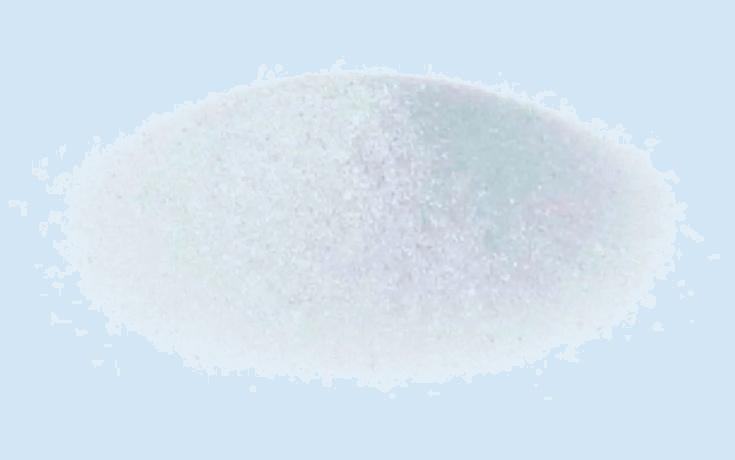
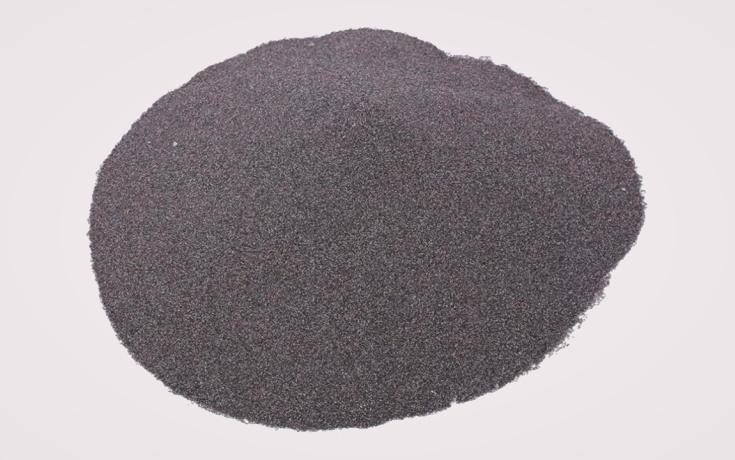
Fine grades achieve surface roughness values below 0.4 µm Ra with coarser grades easily producing up to 3.0 µm Ra finishes. Pink fused aluminium oxide is the industry standard, combining the toughness of brown with the sharpness of white for high-volume production. White fused is preferred where contamination cannot be tolerated, and brown fused is the toughest and most economical grade for heavy-duty cleaning and general surface preparation.
For edge honing cutting tools, a typical Vapormatt setup uses 150 to 320 mesh aluminium oxide at 2 to 3 bar (29 to 44 psi): coarser grades for a larger edge radius, finer grades for tighter, more delicate edges.
Peening and cleaning media: spherical, dense, and specification-grade
Peening and cleaning media shares one defining characteristic - spherical geometry. It introduces compressive stress that resists fatigue crack initiation, produces a smooth finish, and leaves substrate dimensions effectively unchanged. This is why peening media dominates aerospace component finishing, including turbine blade preparation, where fatigue life is a certification requirement.
The choice between glass beads, ceramic beads, and stainless steel shot comes down to density. All three are spherical. All three peen. But denser particles carry more kinetic energy at equivalent pressure, producing a more pronounced compressive effect without extending cycle time or increasing blast pressure.
Glass beads (6 Mohs) are the standard starting point, widely available, iron-free, and effective across a broad range of peening and cleaning applications. Ceramic beads (Mohs approximately 9) and stainless steel shot step up in density and durability, delivering greater peening intensity and significantly longer service life in high-volume production environments. Stainless steel shot is preferred over carbon steel shot where rust or iron oxide contamination of the substrate cannot be tolerated.
Vapormatt wet blast machines comfortably achieve up to 39N and 38A Almen intensity using ceramic or stainless steel media, confirming that wet peening is a full-specification process, not a lower-intensity alternative to dry peening.
The outcome advantage is measurable. At equivalent Almen intensity, wet peening produces significantly better surface finishes than dry processes, smooth enough in many applications to eliminate subsequent finishing operations entirely.
Running high-density media reliably requires machinery built to handle the slurry without accelerated pump or nozzle wear. Vapormatt machines are AMS 2432 compliant and engineered for peening, which means the performance advantages of ceramic and stainless shot are accessible without compromising machine life.
Plastic media: coating removal without substrate damage
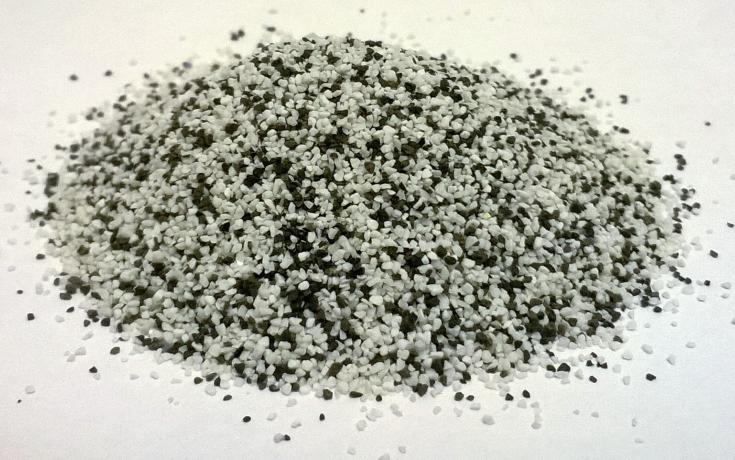
Plastic media has an irregular shape and is soft enough to create a scrubbing action that removes paint, coatings, and surface contamination without affecting the substrate beneath. Its low hardness (Mohs 3 to 4) means it abrades the coating faster than it can abrade the underlying metal, composite, or polymer, making it the standard choice for aerospace depainting and composite cleaning where any dimensional change triggers an engineering review.
Vapormatt machines work with two MIL-P-85891A grades: Type II (urea formaldehyde), the dominant choice for aerospace aluminium depainting and general coating removal; and Type III (melamine formaldehyde), harder and faster-cutting, used where Type II strip rates are insufficient on catalysed epoxies, powder coat, and heavy primer systems.
Type V acrylic is not compatible with wet blasting. Being a thermoplastic it floats in the slurry and cannot be pumped consistently. Type II and Type III thermoset grades deliver reliable, repeatable performance in wet systems. Type V does not.
Silicon carbide: maximum sharpness for fast edge honing
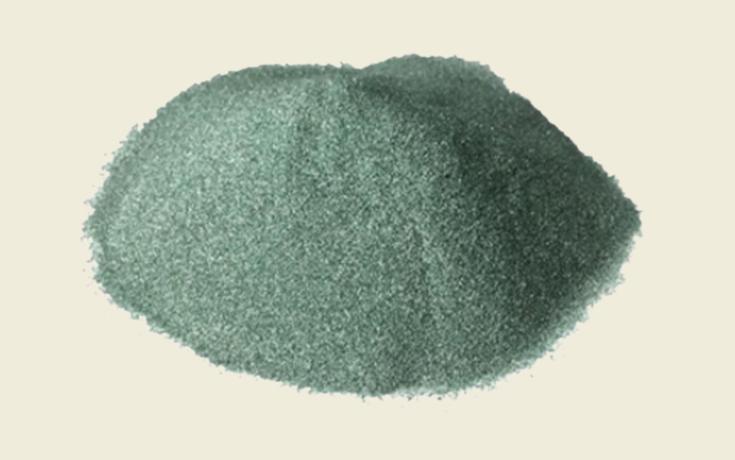
Silicon carbide is the sharpest abrasive media available for wet blasting, sitting at Mohs 9 to 9.5, and that sharpness makes it an excellent choice for edge honing and radiusing applications - aluminium oxide is another favoured blast media for edge honing due to its lower cost. Silicon carbide consistently produces a controlled, uniform radius on cutting tool edges such as drills, end mills, and inserts without altering the surrounding surface geometry. Its fracture behaviour continuously exposes fresh cutting faces during the blast cycle, delivering efficient edge breakdown at finer grades and lower pressures than aluminium oxide would require for the same result. The main drawback is cost: silicon carbide carries a significant price premium over other blast media, so it tends to be specified only where the application genuinely demands maximum sharpness rather than as a general-purpose abrasive.
Wet blasting media comparison chart
| Media | Shape | Hardness | Density (g/cm³) | Particle size range | Primary action |
|---|---|---|---|---|---|
| Aluminium oxide (brown) | Angular | 9 Mohs¹ | 3.9 to 4.1¹ | F016 to F1200 (3 to 1,400 µm)¹² | Cutting, cleaning, honing |
| Aluminium oxide (white) | |||||
| Aluminium oxide (pink) | F016 to F220 (45 to 1,400 µm)¹² | ||||
| Glass beads | Spherical | 6 Mohs¹ | 2.5¹ | 50 to 800 µm¹ | Peening and cleaning |
| Ceramic beads | ~9 Mohs¹ | 3.8¹ | 63 to 1,180 µm¹ | High intensity peening | |
| Stainless steel shot | 45 HRC¹ | 7.0¹ | 0.1 to 3.2 mm¹ | ||
| Plastic media (Type II) | Angular | 3.5 Mohs¹ | 1.5¹ | 0.12 to 2.40 mm¹ | Stripping, scrubbing, degreasing |
| Plastic media (Type III) | 4.0 Mohs¹ | ||||
| Silicon carbide | Angular | 9 to 9.5 Mohs | 3.2 | F016 to F1200 (3 to 1,400 µm) | Honing |
Sources
- Kuhmichel Abrasiv product specifications - Hardness, density, and particle size data
- FEPA F grain standard - Federation of European Producers of Abrasives - aluminium oxide grit sizing
Note: stainless steel shot hardness is expressed in Rockwell C (HRC), the standard measure for metallic media. All other hardness values use the Mohs scale.
The bottom line
The right media is defined by what the surface needs to do after blasting, not by convention or availability. Vapormatt's process engineers have developed and validated media specifications since 1978.
FAQs
Does Vapormatt sell abrasive media for wet blasting?
Vapormatt does not sell abrasive media directly. Our expertise lies in wet blasting machine design, process engineering, and application development rather than media supply. That said, media selection is one of the most consequential decisions in any wet blasting process, and our engineers have built up application knowledge since 1978 across a wide range of industries, substrates, and surface finish requirements. If you are unsure which media type, grade, or grit size is right for your application, we are happy to advise and can validate recommendations through sample processing trials on your actual components. Contact us to discuss your requirements.
How often should abrasive media be replaced in a wet blasting system?
Media replacement frequency depends on the type of media, the volume of parts processed, and the hardness of the substrate being blasted. Harder, denser media such as ceramic beads and stainless steel shot have significantly longer service lives than softer options like glass beads or plastic media. A quick check is to look for fine sediment at the top of the settled abrasive in the sight glass fitted to most Vapormatt machines. Vapormatt invented the sight glass. Regular sieve analysis of the slurry is the most reliable way to monitor media breakdown and determine when replacement is needed to maintain consistent surface finish results.
Can different abrasive media types be mixed together in wet blasting?
Mixing media types is generally not recommended, as each media type is engineered to deliver a specific surface action. If a process requires both cleaning and peening, it is better to run sequential stages with dedicated media than to blend them in a single slurry. A mix of aluminium oxide and glass beads can be useful when a satin finish is required, but there is more residue to remove than with glass beads alone.
What abrasive media is best for titanium components in wet blasting?
Titanium is sensitive to both contamination and dimensional change, so media selection starts with iron content. Iron-free media such as white aluminium oxide, glass beads and ceramic beads are the usual first choice, because iron particles left on or embedded in the surface can cause corrosion and may fail aerospace material specifications. Where a higher peening intensity is needed, stainless steel shot can be used. It is preferred over carbon steel shot because it does not rust or leave iron oxide on the part, but it is still iron-based, so check whether your specification requires decontamination after peening. Beyond that, the media type and grit size depend on whether the goal is surface preparation, edge honing or peening for fatigue life.
How does wet blasting affect media consumption compared to dry blasting?
Wet blasting generally reduces media consumption compared to dry blasting because the water cushion surrounding each particle absorbs some of the impact energy, reducing the rate of particle breakdown. This is particularly beneficial when running expensive media such as ceramic beads or stainless steel shot. The water also helps keep particles in suspension, ensuring more consistent delivery to the surface and reducing wastage.
What media should be used for wet blasting additive manufactured or 3D printed parts?
Additive manufactured parts often require post-process surface finishing to reduce roughness, remove partially sintered particles, and improve fatigue performance. Fine grade aluminium oxide is commonly used where a defined Ra target must be achieved, while ceramic or glass bead media is preferred when the goal is surface smoothing and compressive stress introduction without removing material. The correct choice depends on the substrate material, whether the part is metallic or polymer-based, and the functional requirements of the finished surface.
What grit size do I need to achieve a specific surface roughness (Ra)?
Grit size is the main lever for surface roughness, but it is not the only one. With aluminium oxide, fine grades achieve values below 0.4 µm Ra and coarser grades produce up to 3.0 µm Ra. Where your result falls within that range also depends on blast pressure, gun angle and stand-off distance, and the hardness of the substrate, so the same grit can give different Ra values on aluminium and on hardened steel. The reliable way to fix a grit size against a target Ra is to process sample parts and measure them. Vapormatt's process engineers can run a sample trial on your components and report the measured Ra before you commit to a specification.
Can I use my dry blasting media in a wet blasting machine?
Many common dry blasting media work well in wet blasting, including aluminium oxide, glass beads, ceramic beads, stainless steel shot, and Type II and Type III plastic media. Some do not:
- Media that floats or absorbs water, such as Type V acrylic and organic media like walnut shell, cannot be held consistently in the slurry.
- Water-soluble media such as sodium bicarbonate dissolves in the slurry.
- Carbon steel shot and grit will rust in water.
Grade matters too: wet blasting generally runs finer grades than dry blasting, and the water cushion changes how the media acts on the surface, so a dry-process recipe rarely transfers directly. If you are switching from dry to wet blasting, talk to a Vapormatt process engineer about matching or improving your current finish.