Why wet blasting sets the standard for jet engine NDT preparation...
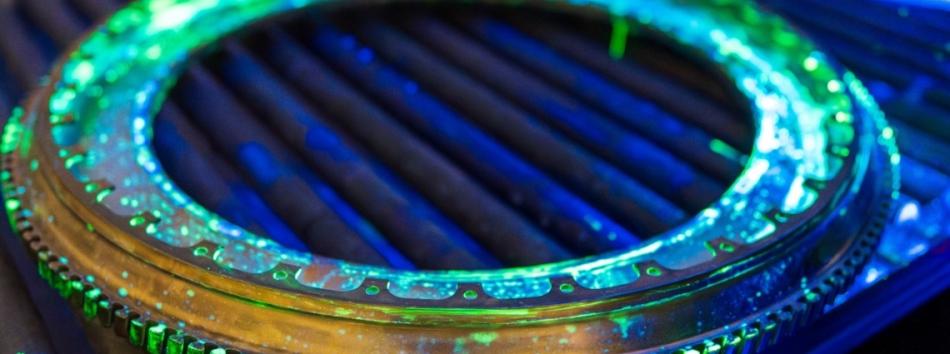
When reliability depends on what you can't see, surface preparation becomes critical.
Wet blasting is a trusted method for preparing jet engine components for non-destructive testing (NDT), delivering inspection-ready surfaces without the risks associated with aggressive dry blasting.
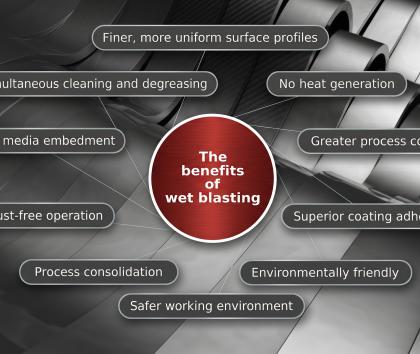
Why teams choose wet blasting for jet engine component NDT preparation:
• Cleans and prepares components in a single, controlled step
• Removes oils, grease, carbon, corrosion, oxides and heat scale
• Does not smear or peen over cracks, improving defect detectability
• Avoids media embedment that can interfere with inspection results
• Produces a clean, uniform matte finish for reliable inspection
• Provides a low-dust, safer working environment
• Delivers repeatable results through automation and process control
This makes it well suited for preparing fan blades, compressor and turbine blades, discs, blisks, shafts and casings ahead of:
• FPI / LPI / penetrant testing
• MPI
• Eddy current, ultrasonic and radiographic inspection
• Visual inspection
Used worldwide by MROs, OEMs and manufacturers, our wet blasting machines help teams achieve consistent inspection quality, reduce rework, and maintain compliance with aerospace quality frameworks.
As an example one of our customers reported cycle times reduced from ~ 3 hours when manually preparing disks to ~20 minutes using one of our Leopard cub automated wet blasting machines. They also eliminated the risk of operator variation and errors that could result in very expensive components being scrapped.