Image

We supply wet blasting systems trusted by aerospace OEMs and MROs for controlled, repeatable surface finishing. Our equipment prepares jet engine components for NDT by removing scale, resist and in-service contamination to deliver inspection-ready surfaces. It also supports engine peening workflows where surface condition influences fatigue life and crack resistance. For wheels, our systems strip coatings, and clean and prepare surfaces for NDT.
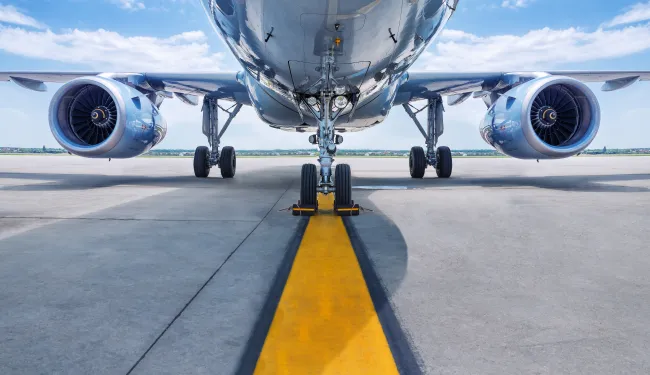
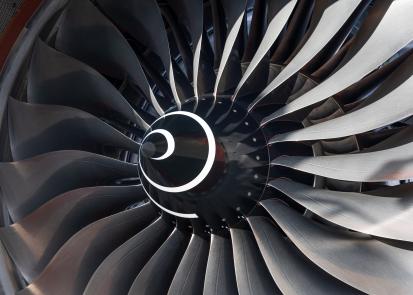
Jet engine component cleaning and surface conditioning for NDT - for both MRO operations and OEMs.
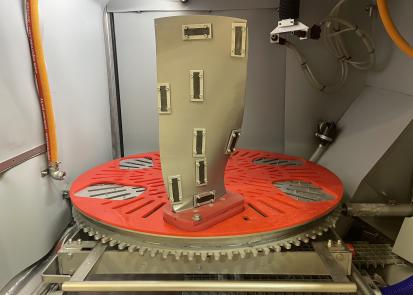
Jet engine blades, discs and other engine component peening for MRO operations and OEMs.
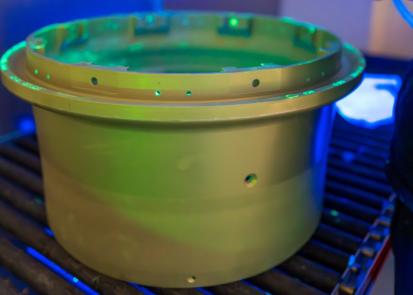
Aircraft wheel cleaning and paint stripping for NDT - for MRO and OEM operations.
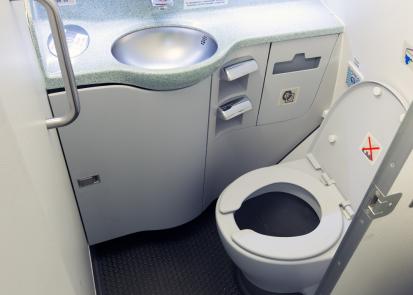
Safe and hygienic MRO aircraft toilet component cleaning and reconditioning.
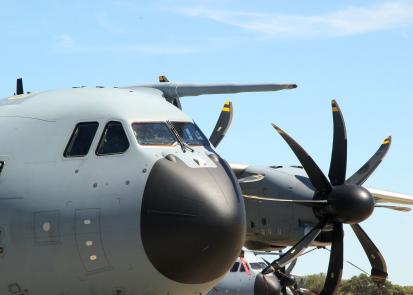
Rapid and thorough paint stripping and cleaning of propeller and helicopter blades for NDT and re-coating.
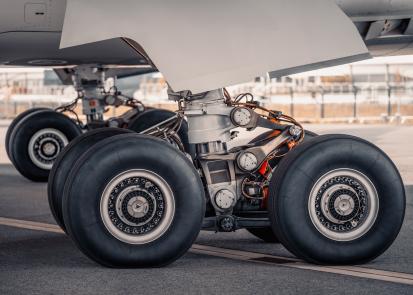
Undercarriage component cleaning and surface preparation for MRO operations and OEMs.
Aerospace MRO shops and OEMs use wet blasting to clean jet engine components for NDT, wet shot peen blades and discs, and strip paint from wheels, brakes, landing gear, propellers and helicopter rotor blades. It is also used to descale and recondition aircraft lavatory components. One machine can often handle several of these jobs by changing the media and process recipe.
Wet blasting was developed in the late 1940s by Norman Ashworth, working alongside Sir Frank Whittle during the development of the jet engine. The process was created specifically to meet the surface quality demands of jet engine components. Vapormatt grew from that origin and has been developing the technology for aerospace ever since.
Yes. Wet blasting is referenced in process specifications from Rolls-Royce (RPS386, RRP56001, RPS428), Pratt & Whitney (SPOP16, POP315-AC, POP317-N), GE (P11TF8) and Airbus (AIPS02-02-003, which names wet blasting directly). Vapormatt's automatic peening machines comply with SAE AMS 2432 for computer-monitored shot peening.
Wet blasting combines cleaning, degreasing and paint stripping in a single pass, which removes separate chemical and drying stages. Because the abrasive is carried in water, it produces no airborne dust and removes the ATEX requirement when processing titanium. It also leaves surfaces clean and open for NDT. Every process parameter can be controlled and logged, which supports audit and traceability requirements.
Learn more about wet blasting vs other surface finishing processes
Vapormatt holds NATO NCAGE code U5895, recognising it as a supplier to civil and military aerospace programmes. Its machines are used by engine OEMs, airlines, air forces and MRO organisations worldwide. The Vapormatt 4.0 monitoring system records process data that customers use within their AS9100, Nadcap, EASA Part 145 and FAA Part 43 quality systems.
The price depends on component size, throughput, level of automation and compliance requirements. A manual machine for MRO work costs considerably less than an automatic, AMS 2432 compliant peening cell with full cycle logging. Vapormatt quotes each machine against your components and specifications. Our guide to buying a wet blasting machine explains the main cost factors.
Tell us:
Our application engineers can then process sample components at our UK test facility and return documented results before you commit to a machine.
Vapormatt designs and builds its machines in the UK. The company has more than 2,000 machines installed in over 50 countries. Customers get parts, servicing and upgrades from Vapormatt directly and through its global partner network, and existing machines can be retrofitted with Vapormatt 4.0 remote monitoring.