Vapormatt white paper shows way to better composite manufacture

Global wet blasting specialist Vapormatt has launched a new, free white paper in its ongoing series that offers tips and advice to a range of industries. The latest paper, entitled Enhancing Composite Performance, looks at the challenges facing composite manufacturers and highlights the ways in which wet blasting helps to improve performance. The paper will provide useful insight for anyone involved in composite manufacture.
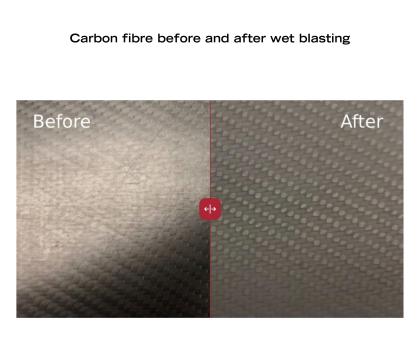
The paper offers an overview of the wet blasting process, explaining how the quality of surface preparation assists the bonding of the GRP (Glass Reinforced Plastic) and carbon fibre materials used in composite manufacture. The wet blasting process involves an abrasive media suspended in water, which is accelerated through a blast nozzle using compressed air and a slurry pump. The action of the liquid borne abrasive gently abrades the surface leaving a thoroughly clean and lightly abraded result, while the water creates a buffer between the abrasive particles and the surface being processed that prevents fibre damage.
The new white paper also explains specifically why wet blasting offers excellent results in composite manufacture, even where adhesive joints are between dissimilar materials or when bonding areas are small. For example, resinous material can be removed without damaging the fibres of the material, while the lightly matted surface is very “wettable” and retains the evenly spread adhesive.
The white paper is available to download for free from the Vapormatt website