The role of wet blasting in composite propeller blade performance...
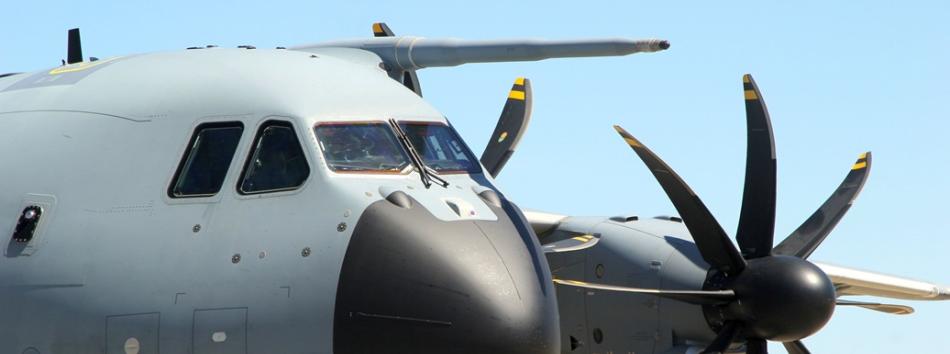
Composite propeller blades require surface treatments that are precise, repeatable, and material-safe. Wet blasting is the perfect solution for achieving this balance.
Here's how wet blasting is applied, and why it delivers clear advantages.
Key applications
• Surface preparation prior to painting, coating, or bonding
• Removal of old coatings, oxidation, and light contamination
• Uniform surface texturing to improve adhesion
• Cleaning complex geometries without damaging fibres or resin systems
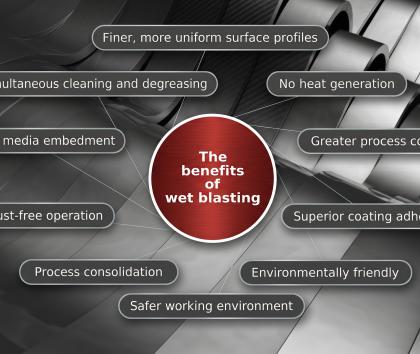
Advantages over dry blasting
• Reduced aggressiveness - The water cushions the abrasive, minimising fibre exposure and resin damage.
• Consistent surface finish - Produces a smooth, even texture across the blade, including leading edges and tight radii.
• Improved process control - Lower heat generation and reduced static make results more predictable.
• Cleaner and safer operation - Dust is suppressed, improving visibility, operator safety, and environmental control.
• Longer component life - Less material removal helps preserve structural integrity and aerodynamic performance.
For composite propeller blades, wet blasting supports both quality and longevity.