
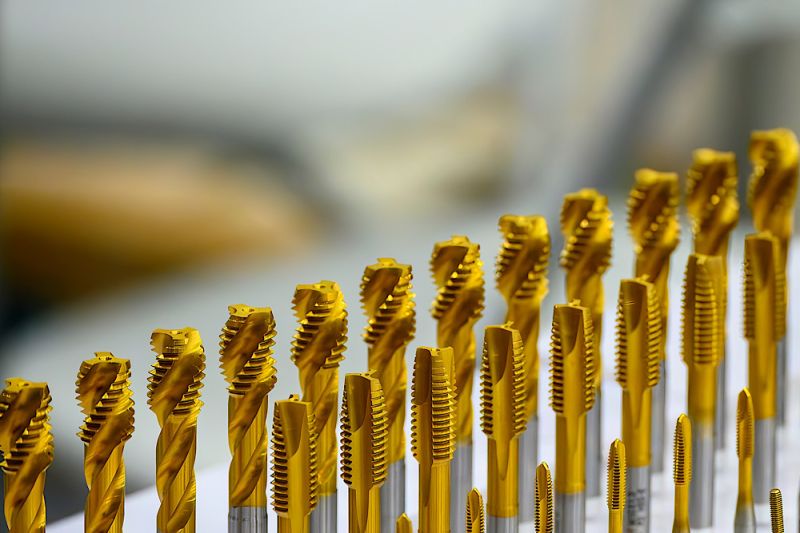
That’s where wet blasting and edge honing make a real difference.
Wet blasting is used to:
• Deburr – remove weak burrs left from grinding on chamfer teeth and thread crests
• Edge hone – create a tiny, consistent micro-radius on the cutting edge
• Refine the surface – smooth out grinding marks and micro-cracks on the flanks
• Prepare for coating – give PVD/CVD coatings a surface they can properly anchor to
By adjusting parameters like…
• Abrasive type and grit
• Slurry concentration
• Pressure and nozzle angle
• Distance and exposure time
It’s possible to dial in a precise edge radius and even bias the hone slightly towards the rake or relief side, i.e. adjust the K-Factor, depending on whether you want a sharper cutting action or maximum edge strength.
Why this matters for threading taps…
• Less edge chipping
• Lower risk of sudden tap breakage, especially in blind holes
• More consistent torque and thread quality
• Longer, more predictable tool life
• Coatings that actually perform as intended in the cut
It’s a microscopic radius you’ll never see with the naked eye, but you’ll notice it in scrap rates, tool life and overall process stability.
If you’re dealing with inconsistent tap life or “mystery” breakages, it may not be the substrate or the coating at fault.
It may simply be the edge preparation.