How to prepare a metal surfaces for optimum sterilisation
To start with, we need a recognised standard for metal surfaces, which the European Hygienic Engineering and Design Group (EHEDG) provide.
They recommend a surface roughness (Ra) of less than 0.8 micrometres for optimum sterilisation.
The next step is to identify a suitable finishing process that can deliver the surface roughness required.
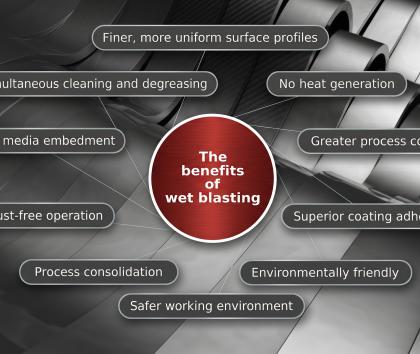
Dry blasting typically creates a surface of about 1.3 micrometres, outside the recommended parameters. However, wet blasting (or vapor blasting to give it its other name) is capable of producing a surface roughness between 0.25 and 0.6 micrometres, optimum for sterilisation.
We then need the right abrasive media. When it comes to wet blasting, glass beads produce the desired result.
Finally, we need to reliably and repeatedly finish the metal surface within the specific Ra parameters mentioned above. Wet blasting is more controllable than other finishing processes, which allows the manufacturer to achieve the desired finish well within parameters.
Automation ensures that desired finish is delivered to the entire surface every time.
To learn more about the controllable factors of wet blasting visit our wet blasting education page.