Image


Don't let your peening process be the weakest link in your quality chain
Selecting the wrong wet peening equipment supplier means running a process that is technically compliant on paper and non-conforming in production. For rotating engine components processed to OEM specifications, the margin for process drift is zero. Every cycle must be traceable, every Almen strip result within tolerance, every parameter logged and auditable.


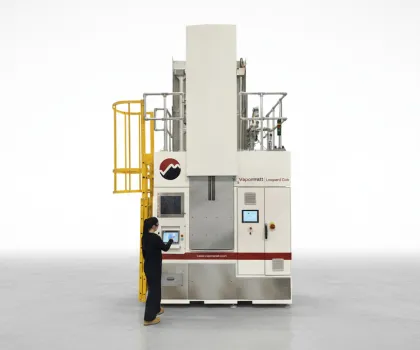
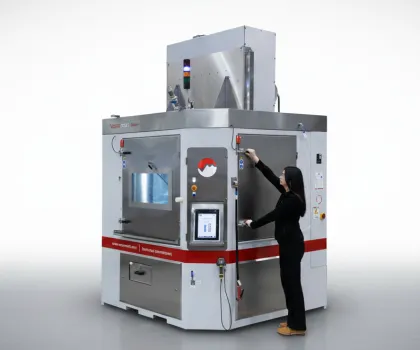
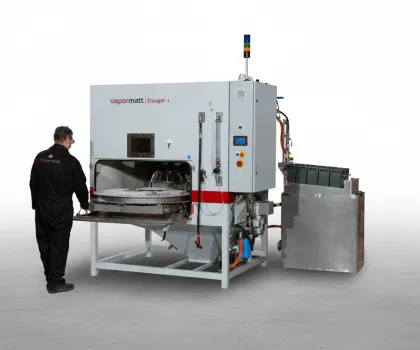
Vapormatt builds machines specifically for that requirement. If your procedures specify wet shot peening, or give you the choice of peening method, this page sets out our credentials, our approvals, and the six operational reasons our machines have become the preferred choice for leading aerospace engine manufacturers.
Peens to the same intensity as dry shot peening
Produces a higher quality surface finish than dry shot peening
More controllable than any other peening process
Produces the same uniform results every time
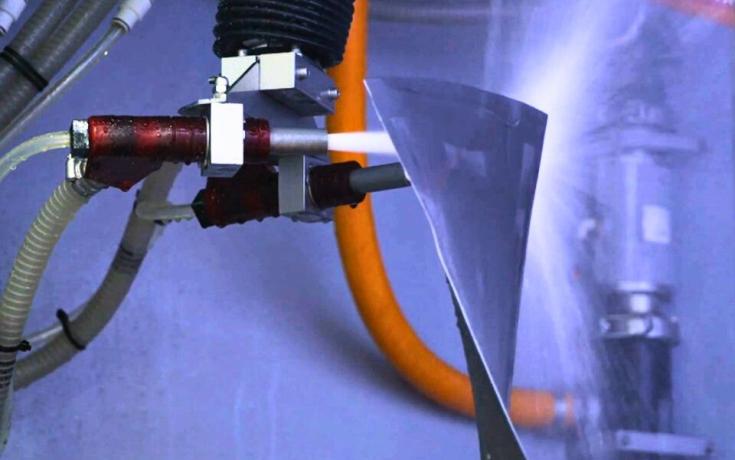
Vapormatt has been designing and supplying wet peening machines for jet engine components since the 1980s, with experience in wet blasting as far back as the 1940s. That depth of understanding, built across four generations of the founding family, distinguishes our application knowledge from every other supplier in this market.
In the early 1990s, in conjunction with The Shot Peener, Vapormatt authored the first technical paper on wet shot peening, establishing the process and equipment framework the aerospace sector subsequently adopted.
Download the original article
Our automatic machines comply with AMS 2432 (Shot Peening, Computer Monitored) and our installed base includes MRO operations processing components to Rolls-Royce, GE, and Pratt and Whitney specifications.
Read our aerospace MRO and OEM industry brochures
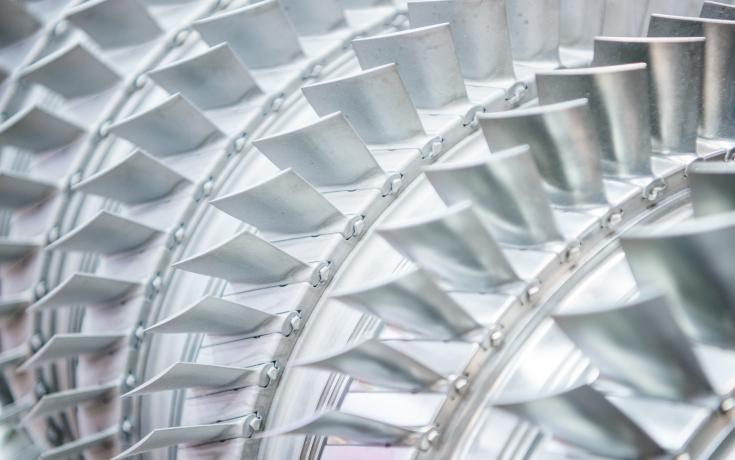
The fundamental challenge in wet shot peening is one that generic wet blast equipment is not designed to solve. Peening media, ceramic or stainless-steel shot, is significantly denser than blasting abrasives. At operational concentrations it settles rapidly, stratifies in feed lines, and pulses at the nozzle. The result is inconsistent slurry concentration, variable impact energy, and Almen intensity readings that drift across a batch.
Vapormatt addresses this through high-powered vortex pumps engineered specifically for dense media, patented non-blocking elutriation towers, and inline concentration measurement that monitors and adjusts slurry consistency throughout the cycle. The Rolls-Royce RPS428 specification requires bead-to-water ratio to be maintained to a maximum of 45% by volume. Vapormatt systems hold that ratio within declared limits continuously, with shot flow, air pressure, nozzle position, and cycle time all monitored in real time with automatic shutdown on deviation.
Vapormatt systems peen the full range of rotating and structural engine components across OEM manufacture and MRO overhaul:

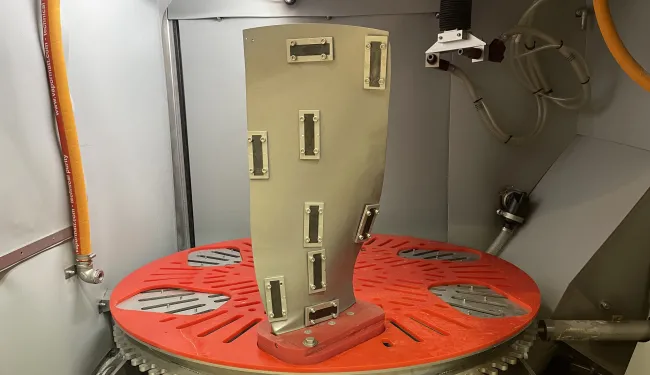
Internal and complex geometry peening. Disc fir-tree slots, blade root bores, and other confined features present a coverage challenge that conventional wet nozzles cannot reliably solve. Vapormatt's patented micro nozzles deliver a controlled, targeted blast stream into restricted geometries with the precision OEM component drawings require. No other wet peening supplier has an equivalent patented solution.
Media management that doesn’t block. Sieve-based classification, standard in dry systems, blocks under production conditions. Vapormatt's patented elutriation towers remove broken and undersized media continuously without sieves, maintaining consistent slurry concentration across long production runs.

No ATEX requirement for titanium and reactive alloys. Titanium and nickel superalloys generate airborne particulate requiring ATEX-rated extraction and certified hazardous zone classification. Wet peening eliminates dust within the slurry, removing the requirement and its associated capital and compliance cost entirely.
No pre-cleaning required. Components enter the process carrying oil or grease, which is removed during peening and filtered out automatically. The separate pre-cleaning step mandated by dry shot peening specifications is eliminated altogether.
Superior surface finish at equivalent intensity. The flow of media in the water slurry produces a smoother, more consistent finish than dry peening, achieving Almen intensities to 39N and 38A, often eliminating downstream polishing operations on aerofoil surfaces.
If your SPM specifies wet peening, the supplier you choose determines whether your process is audit-ready, traceable, and cost-efficient at production volume. With AMS 2432 compliant machines, OEM approval, patented nozzle and media management technology, and over four decades of process knowledge applied to jet engine components, Vapormatt is the supplier with the longest and most thoroughly documented track record in wet peening for jet engine components.
The lifespan of peening media depends on factors including media type, component hardness, cycle frequency, and slurry concentration. Ceramic shot generally fractures more readily than stainless-steel shot, meaning replacement intervals are shorter. As media degrades, particle size distribution shifts, reducing impact energy and compressive residual stress depth. This directly undermines fatigue life improvements in rotating components such as fan blades and compressor discs. A properly engineered wet peening system continuously classifies and replenishes media to maintain a consistent size distribution throughout production runs.
Laser shock peening (LSP) induces compressive residual stresses to greater depths than wet shot peening, making it the preferred choice for applications where subsurface fatigue crack initiation is the primary concern, such as foreign object damage repair zones on fan blades. However, wet shot peening offers significantly lower capital and operating costs, shorter cycle times, and broader OEM approval across MRO and new manufacture workflows. For the majority of rotating engine component applications processed to Rolls-Royce, GE, and Pratt and Whitney specifications, wet shot peening delivers sufficient compressive stress depth at a production-viable cost.
A: AMS 2432 requires intensity to be established via a saturation curve using Almen strips of the appropriate type (N, A, or C) selected according to the target intensity range for the component. For nickel superalloy turbine discs, N-type strips are typically used where intensities fall in the lower range, while A-type strips cover the mid-range intensities common in disc fir-tree slot and bore region peening. The saturation curve must demonstrate that doubling the exposure time produces no more than a 10% increase in arc height, confirming saturation has been reached. Strip placement, holder design, and accessibility within complex disc geometry are critical variables that must be validated during process qualification.
Wet shot peening is generally performed prior to the application of thermal barrier coatings (TBCs) or erosion-resistant coatings, as the process is intended to introduce compressive residual stress into the substrate before any coating is deposited. Peening after coating risks coating delamination or cracking. Where selective peening of uncoated regions on partially coated components is required, masking must be applied to OEM-specified standards, typically defined within the relevant process specification or engineering order. Masking materials must withstand slurry impingement without contaminating the slurry or leaving residue on component surfaces, and their removal must be verified as part of the post-process inspection sequence.
Before a new component geometry enters serial production, a full process qualification is required under the governing specification, typically including saturation curve generation, coverage verification, surface roughness measurement, and residual stress confirmation via X-ray diffraction (XRD) or similar technique. First-article inspection (FAI) documentation must demonstrate that all monitored parameters, including slurry concentration, air pressure, nozzle standoff, and cycle time, were held within specification throughout the qualification run. For AMS 2432 compliant systems, the computer monitoring records form part of the auditable FAI package. OEM-specific requirements from Rolls-Royce, GE, or Pratt and Whitney may impose additional witness testing, laboratory analysis, or approved supplier list (ASL) registration steps before production release.