Why wet blasting is the winning finishing process for motorsport composites...
In the relentless pursuit of performance and reliability in motorsport, every detail matters — especially when it comes to how composite components are finished.
Unlike traditional dry blasting or hand finishing, wet blasting offers a gentle yet highly effective process that preserves the integrity of carbon, glass, and aramid fibre components while delivering a consistent, high-quality finish.
Here’s a quick summary of the advantages:
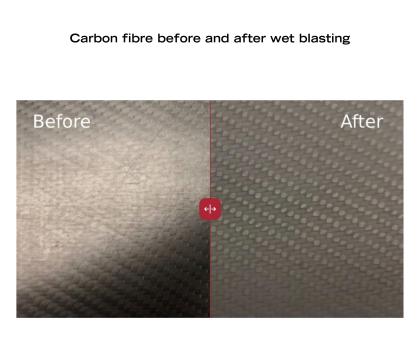
- Surface finish: Uniform satin/matte surface without degrading fibres
- Cleanliness: Immediate removal of residues, mould release agents, and machining debris
- Surface prep: Creates a micro-etched profile ideal for adhesives, coatings, and primers
- Temperature control: Water-cushioned media keeps composites cool, preventing heat distortion
- Environmental advantage: Dust-free, closed-loop systems improve safety and workshop cleanliness
- Versatility: Equally effective on hybrid parts combining composites with titanium, magnesium, and aluminium
Typical wet blasting applications:
- Pre-bonding prep for carbon fibre chassis parts
- Cleaning and restoring aerodynamic components like splitters, diffusers, and wing elements
- Finishing composite intake systems, ducts, and internal assemblies
- Servicing and maintaining composite components for reassembly and reuse
Compared to dry blasting’s aggressive nature and hand finishing’s limitations, wet blasting offers the best balance of speed, consistency, and component care — qualities that motorsport engineering demands at every level.
In an environment where milliseconds and material integrity decide outcomes, refining finishing processes isn’t just good practice — it’s a competitive advantage.
If you’re exploring ways to optimise your composite workflows or rethink your surface finishing strategy, we’d be happy to discuss the best way forward.
Learn more