
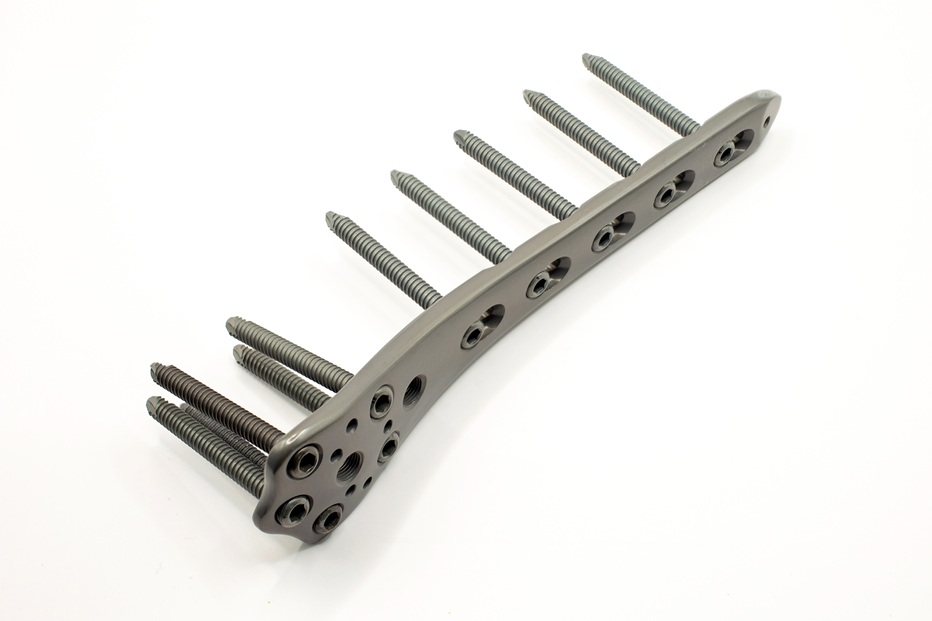
When a titanium hip implant fails, it's rarely the material that's the problem. It's the surface.
That's why wet blasting - a finishing process combining abrasive media, water, and compressed air - is rapidly becoming the gold standard in medical implant surface preparation. And the science behind it is compelling.
Unlike dry blasting, wet blasting eliminates embedded abrasive contamination and delivers a controlled, uniform surface texture with no thermal stress or damage to complex geometries.
A cleaner, precisely textured surface, to a specific Ra tolerance, means osteoblasts - the cells that form bone - find more anchor points. The biology of integration improves dramatically when the surface is right.
Here's what makes wet blasting particularly powerful for osseointegration:
✦ The water cushion prevents micro-fractures in the substrate, preserving material integrity
✦ Consistent Ra values across complex geometries - even in spinal cage threads or acetabular cup pores
✦ Bioactive coatings like hydroxyapatite adhere far more effectively to wet-blasted surfaces
✦ ISO 10993-compliant cleanliness - no organic residues, no risk of inflammatory response
Wet blasting creates a surface topography at the micron and sub-micron level that mimics the roughness cues bone-forming cells respond to naturally.
In orthopaedics and dental implantology, this translates to faster load-bearing timelines, reduced revision surgery risk, and better patient outcomes.
Are you specifying surface finish in your implant development process? We'd love to discuss how our tried and tested wet blast technology can improve results: