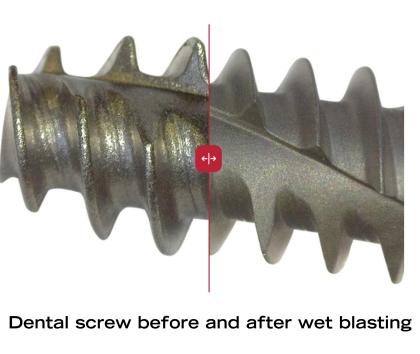
Finishing additive manufactured components with internal channels by dry blasting isn't finishing - it's guesswork...
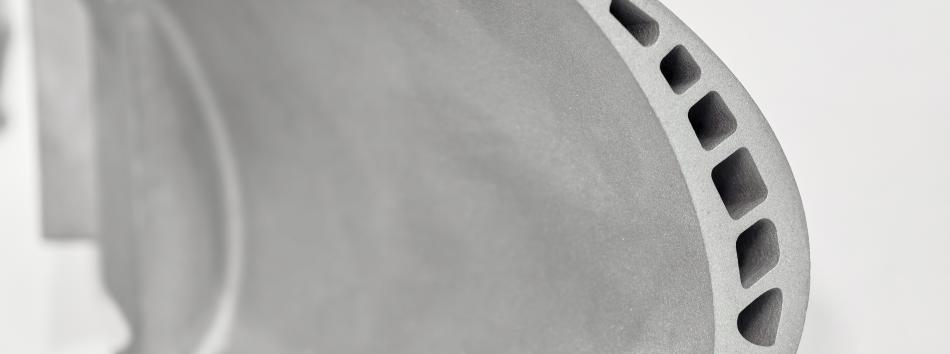
When a DMLS or SLS component comes off the build plate, un-sintered and partially sintered powder is locked inside complex internal channels. Dry blasting forces air and abrasive through those channels without any mechanism to carry the dislodged powder out. In a complex internal geometry, you can compact loose powder further into the channel rather than remove it. The blockage remains, with no visible sign anything has gone wrong.
Wet blasting works differently. The slurry of water and abrasive media acts as a carrier fluid. It loosens the powder and transports it out with the flow. When slurry exits a cleared internal channel, it's visible. That is the only built-in confirmation mechanism available to the operator that the channel is genuinely clear, not just blasted.
Learn more about the benefits of finishing additive manufactured components by wet blasting