Bone integration starts at the surface...
Bone integration starts at the surface. So does compliance failure...
Whether bone integrates or rejects, whether a coating bonds or delaminates, whether a regulatory audit passes or stalls, it all traces back to surface finishing.
And yet much of the implant manufacturing industry still relies on processes specified decades ago.
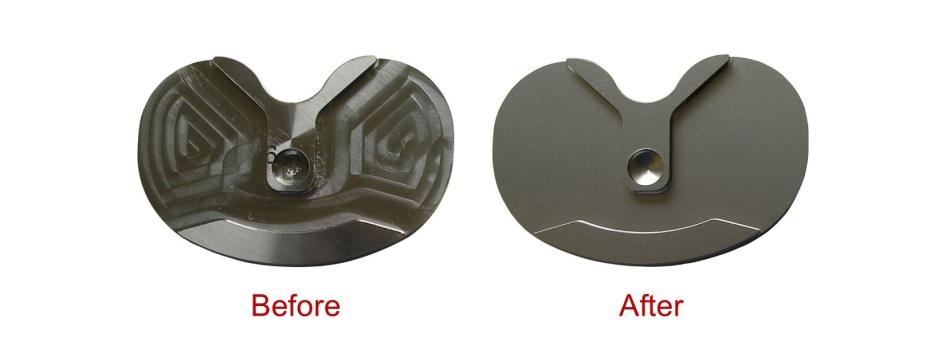
Dry blasting embeds abrasive particles into titanium surfaces. Vibratory finishing can't deliver the zonal surface finish control that orthopaedic implants require. Drag finishing struggles with complex geometries, leaving articulation and osseointegration surfaces finished inconsistently on the same component.
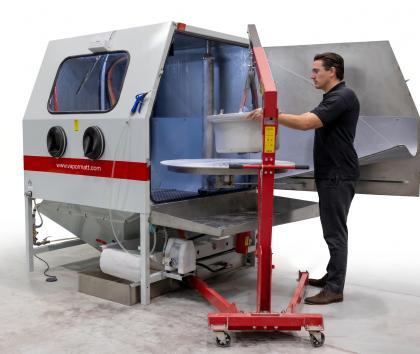
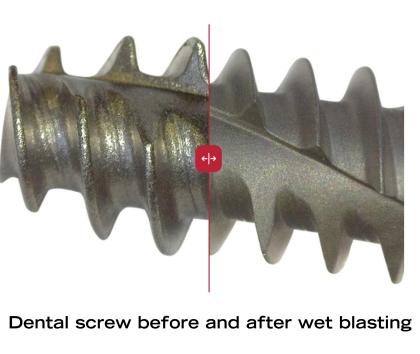
Wet blasting solves all those issues. A Vapormatt machine like the Puma+ controls slurry concentration, pressure, media profile, and cycle time, all fully recordable and validatable. It achieves the micro-rough textures that optimise bone cell adhesion, typically between 1.0 and 4.0 microns Ra, and can finish articulation surfaces to a different specification on the same component.
For additive manufactured implants, the liquid slurry flushes internal channels while refining the surface simultaneously, providing visible confirmation that channels are clear. Something dry processes cannot replicate.
Learn more about medical and dental implants