
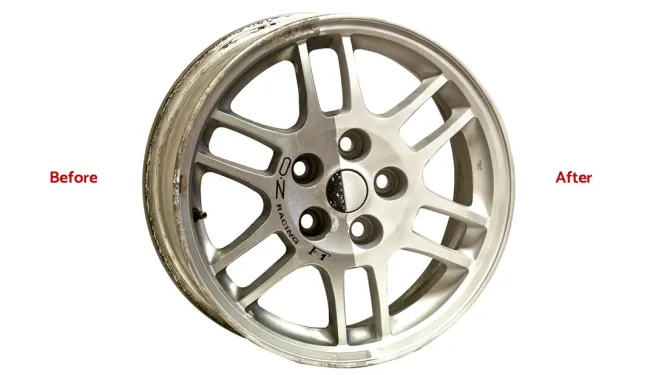
Speed
Preparation time cut from 30 minutes to under three
Consistency
Same surface profile on every wheel, every time
Compliance
No chemicals, no COSHH burden, no disposal costs
Versatile
One machine handles cleaning, SMART repair, and full strip
Every wheel that leaves your workshop is a reputation statement
Your customers drop off a set of kerb-scuffed alloys expecting same-day results. The pressure is real: one slow prep stage, one inconsistent strip, one finish that fails under lacquer and the job comes back. Manual sanding takes 30 minutes per wheel. Chemical stripping demands COSHH controls, disposal costs, and a separate rinse stage. Dry blasting is fast but unforgiving on soft aluminium alloys, leaving embedded media, rough profiles, and substrate distortion that shows through paint.
Vapormatt has spent decades engineering wet blasting processes across more alloy specifications, more coating systems, and more demanding surface finishing requirements than any competitor. That accumulated process knowledge is directly available to alloy wheel repair operations of every scale.
Why traditional wheel prep methods slow you down and compromise finish quality
The standard alternatives in alloy wheel preparation each carry a specific failure mode. Understanding them is the first step to eliminating reject risk.
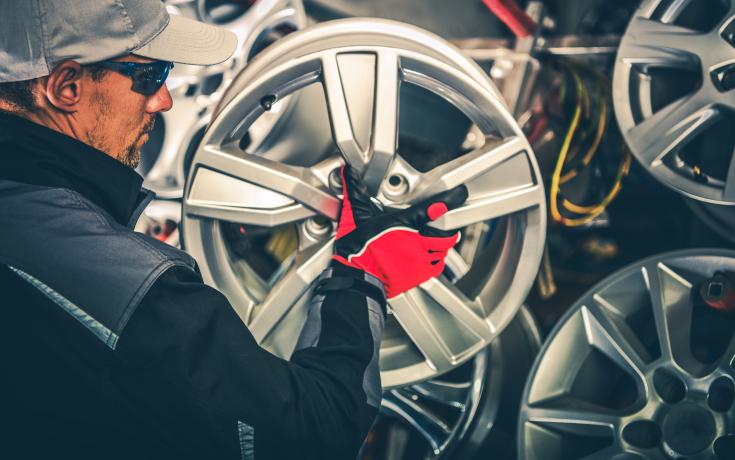
vs. manual sanding and hand preparation: Industry benchmarks confirm manual preparation takes an average of 30 minutes per wheel. At anything above ten wheels per day, this single stage becomes the bottleneck that prevents same-day turnaround. Consistency depends entirely on the technician, which means coat adhesion varies wheel to wheel and finish quality cannot be guaranteed.
vs. dry blasting (sand or shot): Dry abrasive blasting accelerates preparation but introduces a different problem. Without the hydraulic cushioning effect of water, abrasive media embeds into soft aluminium alloy surfaces. This creates two costs: the embedded particles contaminate the coating interface and reduce adhesion, and the rougher surface profile can exaggerate minor damage rather than feathering it cleanly. For diamond-cut or polished finish wheels, dry blasting is not appropriate at all.
vs. chemical stripping: Acid dip or chemical strip removes coatings effectively but creates a compliance burden. Handling, ventilation, waste neutralisation, and disposal all sit under COSHH regulations. The process cannot be integrated into a compact workshop or mobile operation without significant infrastructure investment. It also adds a separate rinsing stage before any mechanical preparation can begin.
Learn how wet blasting compares with other finishing processes
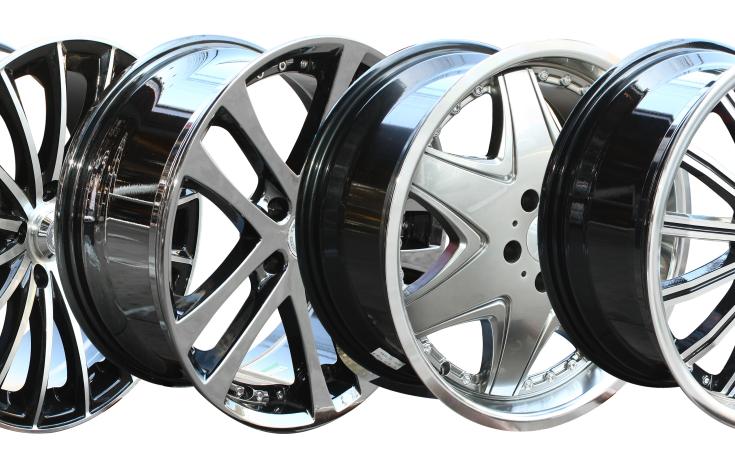
Wet blasting: one process, three outcomes, controlled every time
Wet blasting replaces all three of those stages with a single, controllable operation. A water-abrasive slurry is directed at the wheel under compressed air. The hydraulic cushioning effect reduces abrasive impact energy, preventing pitting or substrate distortion. Parameters including media type, slurry concentration, flow pressure, and dwell time are adjusted to deliver the specific outcome required.
Three outcomes are available from a single machine:
- Coating-safe cleaning: Brake dust, road grime, and light oxidation removed without affecting the existing lacquer or paint layer. Ideal for wheels returning for tyre fitment or seasonal refurbishment.
- Feathered edge preparation for SMART repairs: Localised damage stripped to a clean, defined edge ready for filler and repaint, without affecting the surrounding intact coating. No masking compound needed to protect adjacent surfaces.
- Full strip to bare metal with simultaneous surface key: Old powder coat, paint, and lacquer removed in a single pass while the substrate is profiled for maximum coating adhesion. The clean, uniform micro-profile that wet blasting leaves is the optimal anchor for powder coating, wet paint, and lacquer systems.
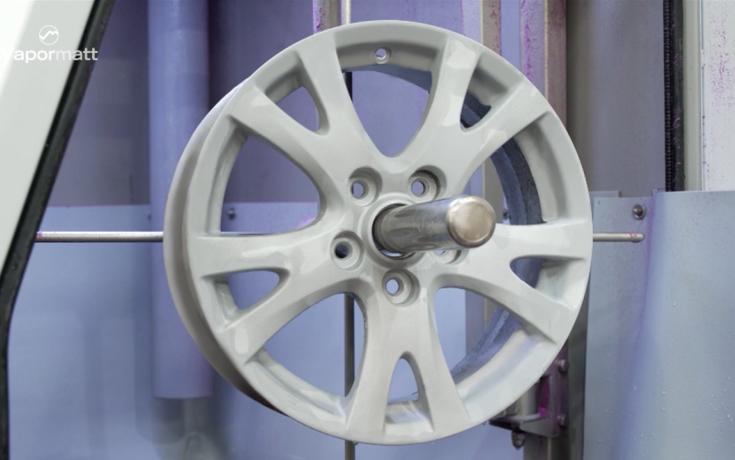
A technician using a Vapormatt Puma with wheel jig and turntable has been documented completing the preparation stage in under three minutes per wheel, compared to 30 minutes by hand. At a workshop processing 20 wheels per day, that is more than four hours of productive capacity recovered daily.
Watch the Vapormatt Puma wet blasting machine strip and prepare an alloy wheel ready for re-coating
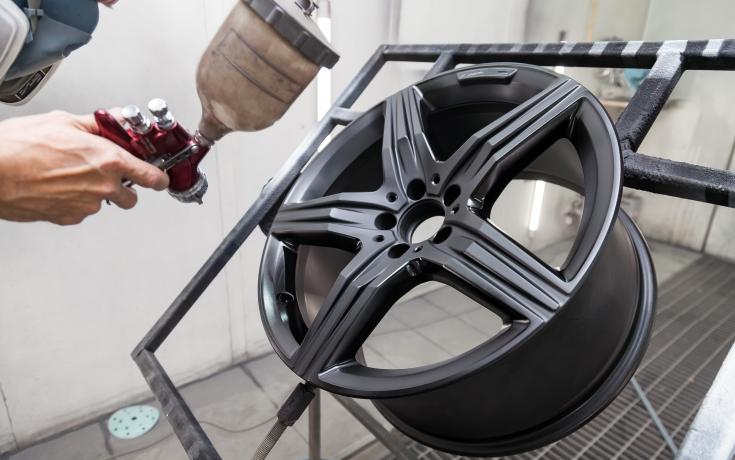
Wet blasting applications for alloy wheel SMART repair and refurbishment
The process fits directly into any SMART repair workflow, from single-operator mobile setups to fixed-site production lines processing 40 or more wheels per day. Applications include:
- SMART repair spot preparation: feathered edge strip of localised curb damage, scuffs, and corrosion blisters
- Full refurbishment strip: complete removal of powder coat, wet paint, or clear lacquer
- Pre-coating surface key: controlled micro-profile for powder coating or liquid paint systems
- Diamond-cut preparation: clean, dimensionally stable substrate ahead of CNC lathe machining
- Degreasing and cleaning: removal of brake dust, road film, and tyre dressing without disturbing intact coatings
- Polished and satin finish preparation: controlled surface refinement for brushed, satin, or clear-lacquered finishes
See more applications for paint stripping and coating preparation
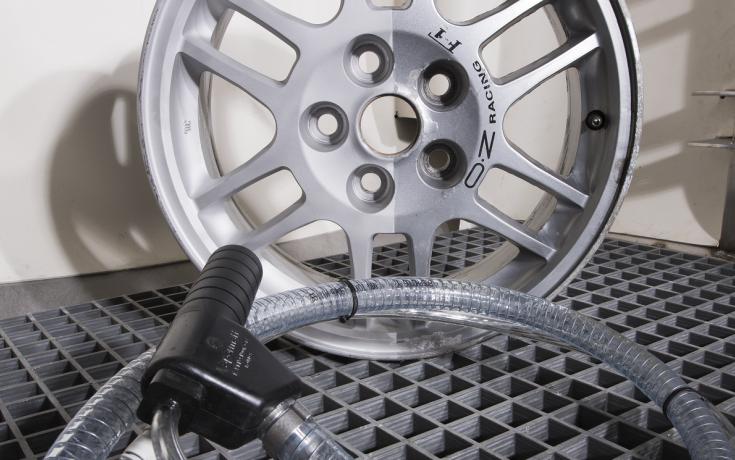
Why Vapormatt
No other wet blasting manufacturer has developed alloy and aluminium surface finishing processes across as many specifications or as many industries. That breadth of application engineering, from aerospace-grade aluminium components to automotive alloy wheels, means Vapormatt machines are built around the physical demands of soft alloy surfaces, not adapted from equipment designed for harder substrates.
The Cazoo case study, available to download from this page, documents a high-volume alloy wheel processing operation using Vapormatt equipment to meet consistent finish standards across large daily throughput. The process repeatability that case study demonstrates is a direct product of Vapormatt's proprietary slurry management and media classification technology.
Machines are designed and built in the UK, with a global aftermarket support network across 22 countries. Process parameters are documented and transferable: the settings that deliver the right surface profile on your first wheel deliver the same result on your five hundredth.
The bottom line
Manual preparation, dry blasting, and chemical stripping all compromise either speed, finish quality, or compliance position. Wet blasting eliminates all three trade-offs in a single compact process that fits any workshop footprint. The alloy wheel repair market grew 16.9% in the past year. Workshops that cannot deliver consistent, same-day results at volume will lose that growth to competitors who can. The Vapormatt Puma, configured with the optional wheel jig and turntable, is the proven machine for this application.
FAQs
Will wet blasting damage the alloy wheel substrate?
No. The hydraulic cushioning effect of the water-abrasive slurry absorbs impact energy and prevents the media from embedding into soft aluminium. Unlike dry blasting, wet blasting does not cause pitting, micro-fractures, or substrate distortion. The process can be adjusted from gentle surface cleaning through to full strip, with the wheel's structural integrity preserved throughout.
Can wet blasting handle all alloy wheel finishes, including diamond-cut and polished wheels?
Yes. Media type, slurry concentration, and blast pressure are all adjustable. For diamond-cut wheels, wet blasting removes old coatings and produces a dimensionally stable, clean substrate ahead of CNC lathe machining. For polished or satin finishes, finer media at lower pressure delivers surface refinement without over-cutting. One machine covers all finish types.
Does wet blasting comply with workshop health and safety requirements?
Wet blasting suppresses airborne dust at source. The water in the slurry captures particulate before it becomes airborne, removing the dust inhalation risk associated with dry blasting and eliminating the need for dedicated extraction infrastructure in most workshop configurations. The process requires no solvents, acids, or chemical stripping agents, significantly reducing COSHH obligations compared with chemical preparation methods.
How does wet blasting fit into a same-day SMART repair workflow?
Preparation is completed in a single cabinet cycle, typically under five minutes per wheel depending on coating type and damage severity. The process combines strip, clean, and surface key into one operation with no separate rinse stage required. The wheel leaves the cabinet ready for filler, prime, paint, or direct-to-coat application, keeping the repair within same-day turnaround targets even at higher daily volumes.
What Vapormatt machine is recommended for alloy wheel SMART repair?
The Puma manual wet blasting machine, fitted with the optional wheel jig and turntable, is the primary recommendation for SMART repair and single-operator workshop use. For higher-volume fixed-site operations processing 20 or more wheels per day.