Image


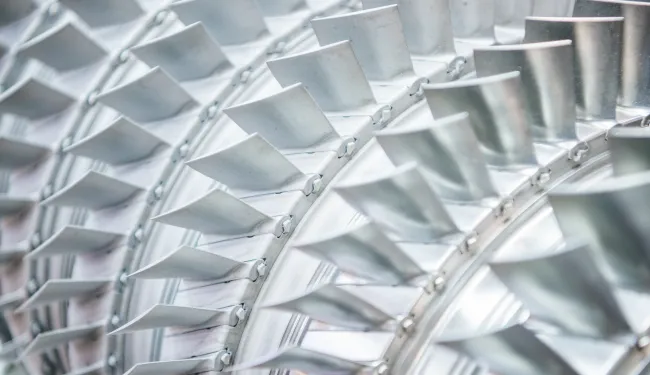


Wet blasting delivers the compressive residual stress that extends fatigue life, while the water flushes debris continuously. The result is a peened surface that is clean, consistent, and free from the surface contamination that dry processes leave behind. As a result of every process variable - pressure, media concentration, gun position, and motion - being monitored and controlled in closed loop, the peening intensity specified by your engineer is the peening intensity the machine holds, cycle after cycle.
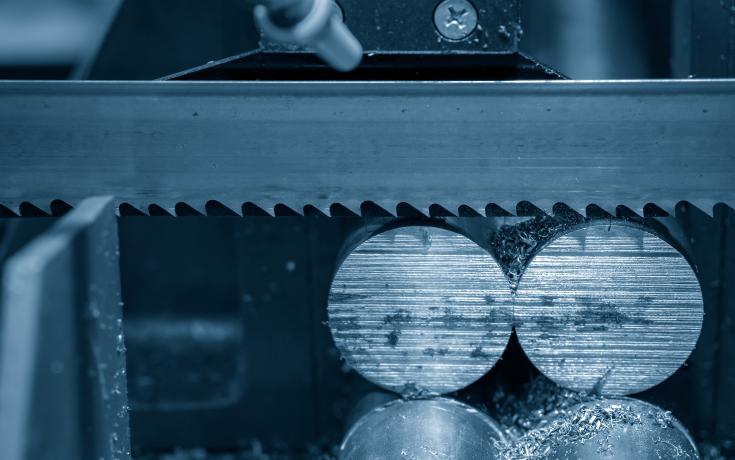
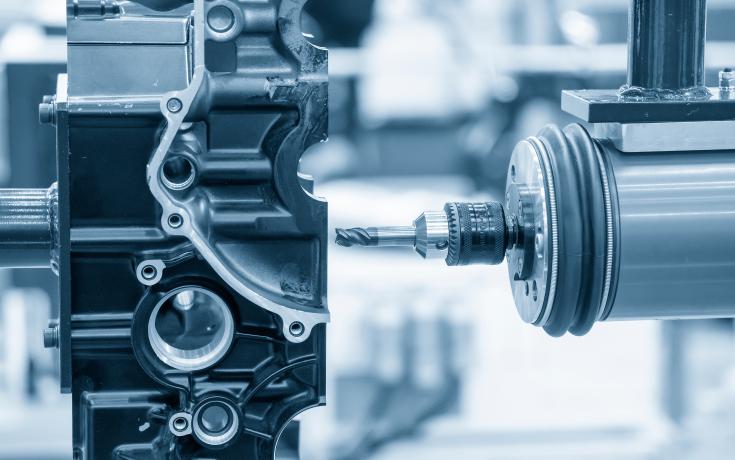
A slurry of spherical media suspended in water is propelled at the component surface under controlled air pressure. The media imparts compressive stress at the point of impact; the water film prevents media fracture, controls the energy delivered per impact, and carries away contaminants without embedding them. Adjusting air pressure, media type and size, gun geometry, and component motion changes the peening intensity achieved, giving engineers a precise and repeatable lever for each component specification.
Typical setup: peening
The parameters shown below are indicative and confirmed for the component types listed. Wet blasting peening handles the full range from precision aerofoil surfaces to continuous industrial tooling.
| Component type | Typical size or weight | Process mode | Achievable outcome | Minimum control |
|---|---|---|---|---|
| Aerospace titanium fan blade (Ti-6Al-4V aerofoil) | Up to approx. 1.5 m span | Automatic — turntable with Z-axis oscillation | Almen intensity 15–20N (Type N), 200% coverage | Closed-loop air pressure control; automatic motion |
| Aerospace LPC blade (titanium alloy, multi-stage) | Small aerofoil, multi-stage variants | Automatic — turntable with Z-axis oscillation | Almen intensity 7–13N (Type N), 100% coverage, intensity window held across 13 measurement positions | Closed-loop air pressure control; automatic motion |
| 3D printed tensile test sample (aluminium alloy) | Approx. 200 mm x 10 mm x 8 mm | Manual | Surface Ra reduced to 1.5 µm (Almen intensity not the aim of this trial) | Basic manual machine |
| Bandsaw blade (continuous, industrial) | 70 mm section thickness, continuous coil | Automatic — gantry (Profelis) | 1500 MPa compressive residual stress | Closed-loop air pressure control |
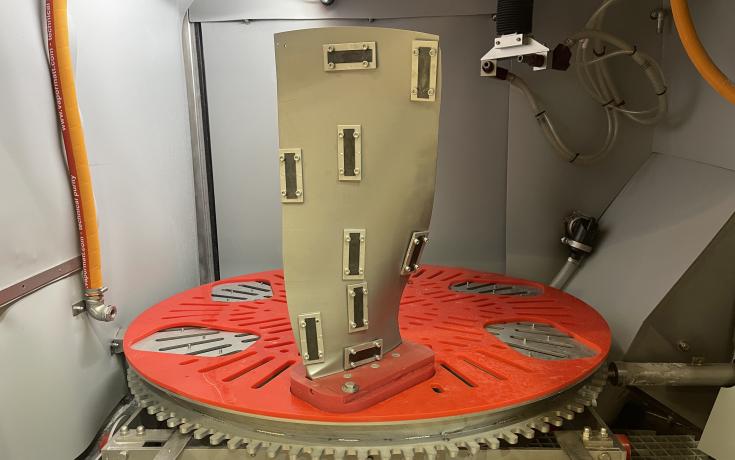
A Japanese aerospace manufacturer needed to validate wet blasting peening against customer-specified Almen intensity windows for titanium fan blades and multi-stage LPC blades, with 13 Almen strip positions on the fan blade and separate saturation curves required for each blade stage. In Vapormatt sample processing trials using a Sabre machine configured to replicate a Cougar vertical, with glass beads size No.5 at 5–6 bar air pressure and 2.4 bar slurry pressure, all 13 fan blade positions returned intensities within the 15–20N window, and LPC blade stages met their respective 7–11N and 10–13N specifications. Source: Vapormatt sample processing trial TRF-1884.
Wet blasting peening is used across aerospace, industrial tooling, and additive manufacturing post-processing. For sector-specific requirements - including fatigue-critical components in [aerospace applications] and surface integrity demands in [additive manufacturing post-processing] - the process parameters and qualification routes differ. Those pages cover the application in its industry context.
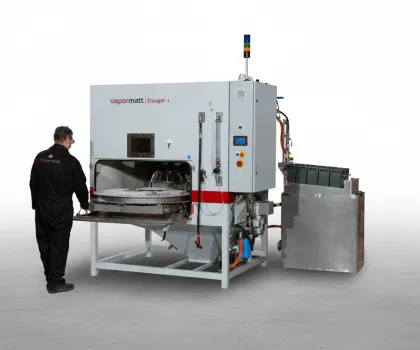
Profelis - continuous product such as bandsaw blade, where throughput per metre is the primary commercial driver.
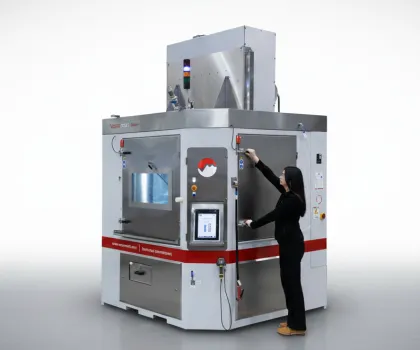
Cougar+ - medium to large discrete components, including aerofoil sections up to approximately 1.5 m, where production volume and process control specification are both relevant.
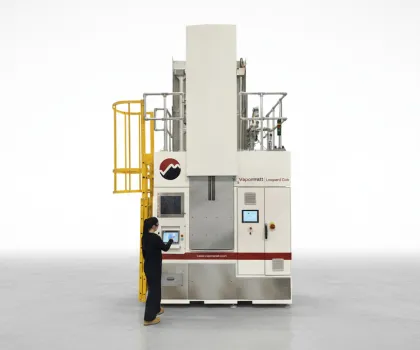
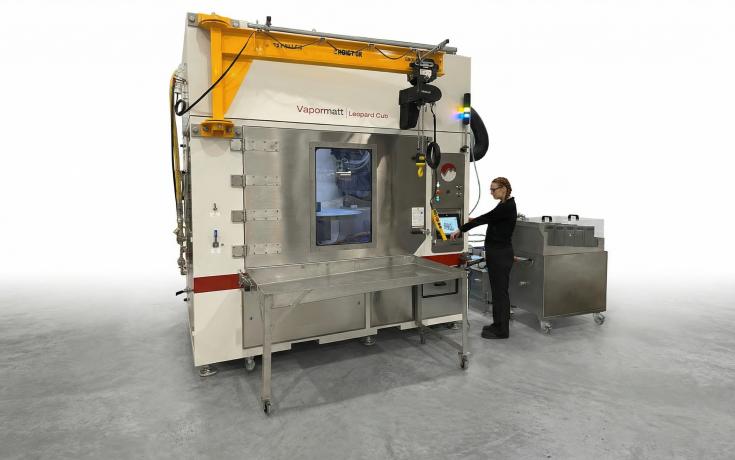
Leopard Cub - very large discrete components where part size is the constraint.
Vapormatt machines run saturation curve validation as part of commissioning each new component recipe. Almen strips are placed at multiple positions across the component, process time is doubled at each step until arc height increase falls to 10% or below, and the saturation point is confirmed before a production recipe is locked. The machine then holds that recipe in closed loop. If your specification carries multiple intensity windows for different sections of the same part, each section is validated separately.
Coverage consistency on curved or compound surfaces depends on keeping the blast stream perpendicular to the surface as the component moves. Vapormatt machines achieve this through multi-axis component manipulation - turntable with Z-axis oscillation for most aerofoil work, 6-axis robotic positioning for the most complex geometries. In Vapormatt sample processing trials on titanium fan blades, intensity readings across 13 Almen strip positions on a single blade ranged from 15N to 20N, all within the specified 15–20N window.
Yes. The process uses standard Type A or Type N Almen strips and gauges. Saturation curves are plotted from the trial data and documented in a test report. If your specification references a particular media standard - for example, CSS 8 VG300 AECMA prEN 2750 for glass beads - the machine can be loaded with conforming media and the trial documented against that reference.
Each component type has its own stored recipe — media type, pressure, gun position, motion profile — and changeover is a recipe selection, not a re-setup from scratch. For mixed-component production environments, the more relevant question is fixturing: if components share a fixture family, changeover time is minimal.
The water acts as a cushion and a transport medium, not a reactant. It prevents media fracture, which keeps media geometry consistent and avoids the angular debris that can cause surface contamination in dry processes. A DI water rinse removes residual media and slurry after processing. The surface exits the process clean and ready for inspection or coating without an additional cleaning stage.