
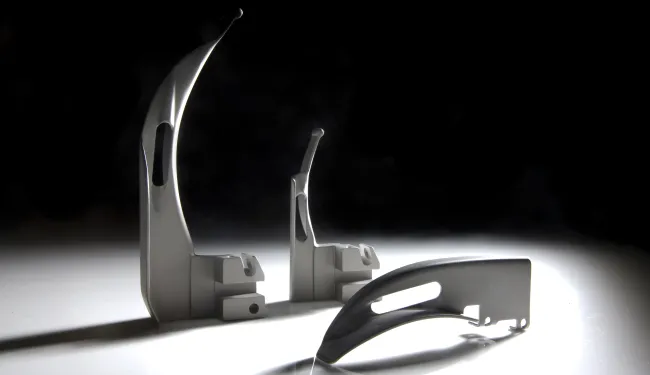
Wet blasting (also known as vapour or vapor blasting) uses a slurry of water and fine abrasive to deburr, clean and texture medical and dental components to a controlled surface roughness (Ra), without embedding abrasive in the surface. Manufacturers use Vapormatt wet blasting machines to prepare surgical and dental instruments for sterilisation (typically 0.25–0.6µm Ra, with a non-reflective satin finish), to texture orthopaedic and dental implants for osseointegration (typically 1.0–4.0µm Ra), and to clean.
Vapormatt wet blasting machines log every process parameter, including blast pressure, media concentration and cycle time, so finishing can be validated under ISO 13485 and FDA 21 CFR 820 and repeated batch after batch. The process works on stainless steel, titanium alloys, cobalt-chrome and engineered ceramics, and biocompatible calcium-phosphate media is available for implants. Vapormatt's range runs from compact manual cabinets for R&D and process trials to five-axis CNC cells for production.
Applications for wet blasting in medical and dental manufacturing
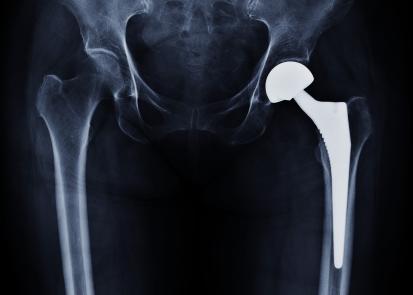
Medical and dental implants
Hip stems, tibial trays, spinal cages and dental implants textured to a controlled Ra for osseointegration and coating adhesion.
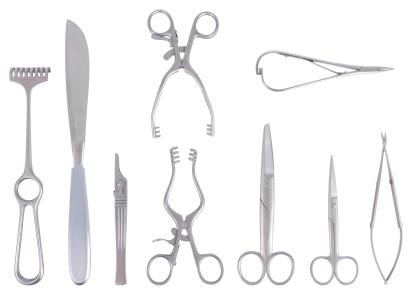
Medical and dental instruments
Surgical and dental instruments deburred to 0.25–0.6µm Ra: sterilisation-ready, with a glare-free satin finish.