Image



Weld marks and machining lines on stainless steel fabrications create surface traps that no cleaning protocol can reliably reach, and that is when contamination becomes your problem.
Wet blasting removes weld scale, machining marks, and surface contamination in a single controlled pass, leaving a consistent, measurable surface finish across the whole component. The slurry cushions abrasive impact so the finish is even rather than aggressive, and the water carrier flushes debris from the surface as it works. Because pressure, abrasive grade, and dwell time are all adjustable, the same machine can produce a finer finish for a hygienic surface specification or a more textured result where weld cleaning is the primary aim.
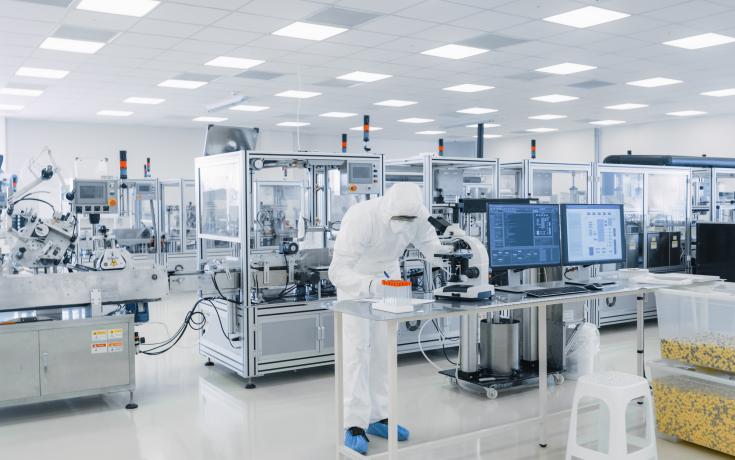
The slurry stream combines water and abrasive into a single flow that simultaneously abrades the surface, flushes contamination, and moderates the energy of each particle. This produces a uniform, low-variance surface roughness across complex geometries including weld seams, internal corners, and tubular sections. The result is a surface that is both visually consistent and measurable against a specified surface roughness target.
Typical setup: hygienic finish wet blasting
The parameters below are indicative and confirmed for the component types listed. They are a starting point for self-qualification, not a specification.
| Component type | Typical size or weight | Process mode | Achievable outcome | Minimum control |
|---|---|---|---|---|
| Stainless steel tubular frame, medical trolley | Up to 1m x 0.5m | Manual | Weld discolouration removed, minimal change to existing surface finish | Basic manual machine |
| Stainless steel shower drain tray | 900mm x 150mm x 100mm | Automatic | Ra 0.4-1.5 µm achievable depending on abrasive and pressure selection; all machining and weld marks removed | Automatic component motion |
In Vapormatt sample processing trials, stainless steel shower drain trays (900mm x 150mm) were processed to remove all weld scale and machining marks. Using aluminium oxide abrasive at 5.5 bar with four guns in simulated automatic mode, throughput reached 60 parts per hour. Ra outcomes across all four tested processes ranged from 0.9 to 1.5 µm Ra; abrasive selection and pressure were the primary controls on final finish.

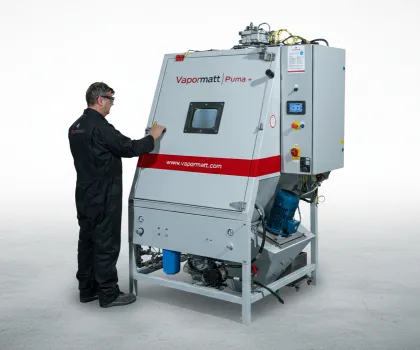
Iskra PIO, a Slovenian pharmaceutical machinery manufacturer, partnered with Vapormatt to adopt wet blasting using the Puma and Leopard Sump machines, replacing manual polishing and brushing to achieve faster, more consistent hygienic stainless steel surface finishes below 0.8μm Ra.
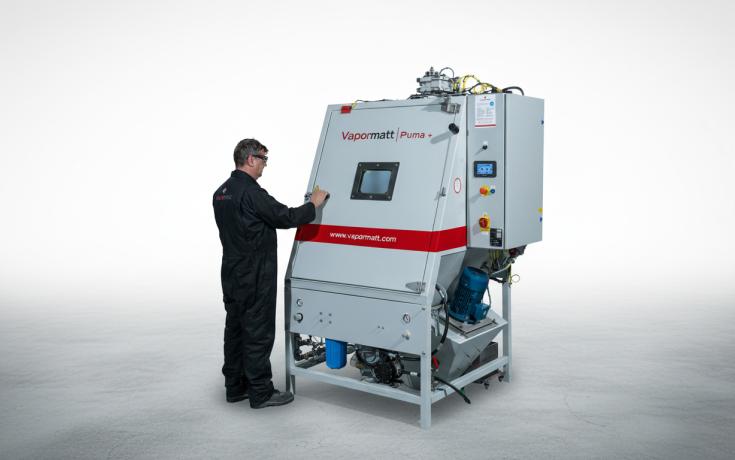
Vapormate or Puma: manual processing of small components at low throughput, where flexibility matters more than cycle speed.
Leopard: very large fabricated parts or higher-throughput requirements where component size rules out a manual cabinet.
Puma+ with barrel attachment: high-volume small parts where batch processing and consistent finish across large quantities are the priority.
At the pressures used for hygienic finishing, material removal is minimal. The process removes surface contamination and levels the finish rather than cutting into the substrate. For close-tolerance components, we recommend a sample processing trial before committing to production parameters.
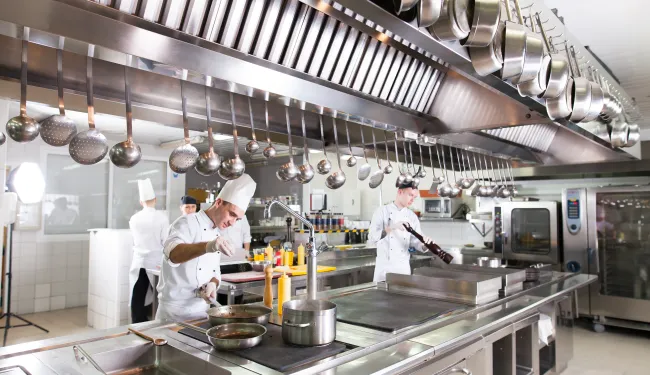
Visual inspection does not confirm Ra. Surfaces that look clean can still carry peaks and troughs that trap bacteria and resist sterilisation. The hygiene standards for stainless steel in medical and food environments specify Ra values in the 0.25 to 0.6 µm range; wet blasting gives you a process you can measure and repeat to that target.
Ra is measured with a contact profilometer before and after processing. In Vapormatt sample processing trials, process variance across four measurement points on a stainless steel tray was a standard deviation of 0.07 µm Ra at the lowest-variance setting. Consistent abrasive grade, pressure, and dwell time are the controls; all three are lockable on Vapormatt equipment.
Yes, with the right abrasive selection. A mix of aluminium oxide and glass beads removes weld scale and produces a consistent finish in one operation. Where weld contamination is heavy, a more aggressive abrasive grade may be required; this shifts the Ra outcome upward, so the process recipe needs to be confirmed against your finish specification.
No. Entry-level wet blasting machines for this application require only basic process control. The recipe is set and locked; the operator loads and unloads components. More complex geometries or tighter Ra tolerances may warrant a step up in machine capability, but the majority of hygienic finishing work on standard stainless fabrications does not require specialist intervention.