
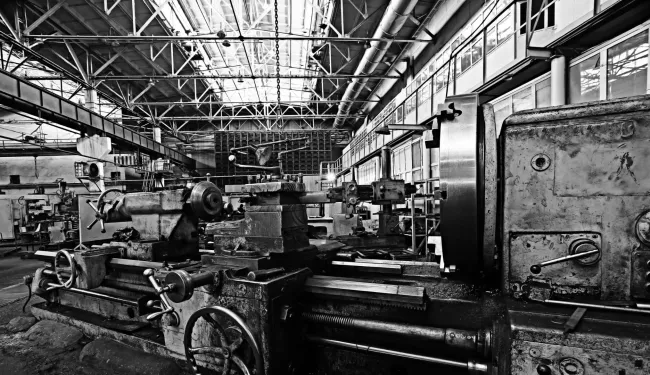
In the late 1940s, sandblasting was the default surface finishing process across British manufacturing. It worked. It also caused silicosis: an irreversible and incurable lung disease caused by inhaling fine silica particles. Every operator was exposed.
The UK Government acted. The Blasting (Castings and Other Articles) Special Regulations 1949 banned sand and any abrasive containing free silica from blasting, with effect from 1950. An entire industry needed a safer process. Norman Ives Ashworth already had one.
Who invented wet blasting? A jet engine problem that changed surface finishing
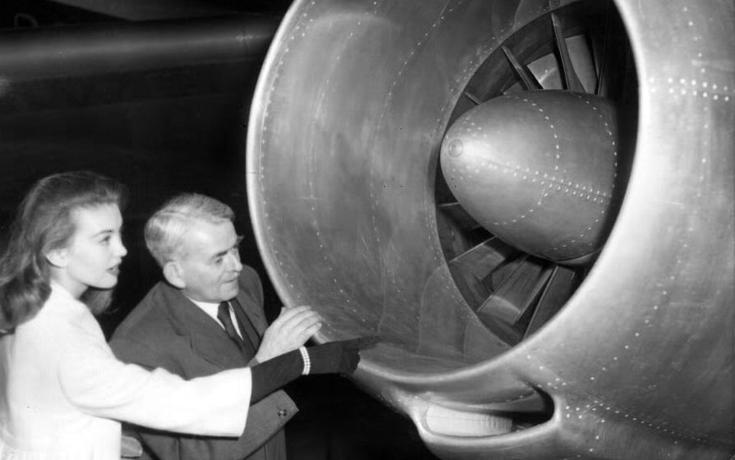
Prior to the ban, Norman was working alongside Sir Frank Whittle on the development of the jet engine. The challenge was precise: how do you achieve a consistent, high-quality surface finish on cast turbine blades when dry abrasive processes are too aggressive and too unpredictable?
Norman's answer was to add water. By suspending abrasive media in water to form a slurry and propelling it with compressed air, the process delivered a far more controllable impact. Norman called the process liquid honing: the water cushioned each particle as it struck the surface, producing a finer and more consistent finish than any dry method could achieve. Airborne dust was virtually eliminated at source, and operators were no longer breathing silica dust.
Wet blasting was not a workaround. It was a demonstrably better process.
Abrasive Developments and Vaqua: the first commercial wet blasting company
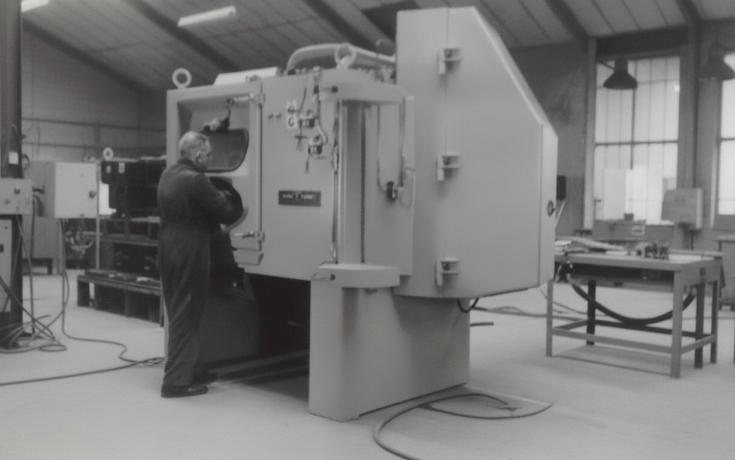
With the technical proof established and industry demand created by the Factories Act, Norman founded Abrasive Developments Limited (ADL) in the Warwickshire village of Henley-in-Arden. Under the Vaqua brand, ADL produced machines: the Kompact, Komet, Juno, and Achilles, all names that became well known across Europe through the 1950s and 1960s.
ADL was consistently first to market. The innovations set the technical standard others followed. That track record made ADL an acquisition target, and Norman sold the business to United Surface Finishing, now part of the Wheelabrator Group, in the 1970s.
The founding of Vapormatt in 1978
Norman's son, Stewart Ashworth, had grown up inside ADL. He had helped build the technology, understood the process deeply, and was not prepared to stop when the company was sold.
In 1978, Stewart founded Vapormatt with his eldest son, Terry, on the Channel Island of Guernsey. Their intention was clear: continue developing wet blasting, improve it, and build a business defined by engineering rigour.
Vapormatt's first machine went to Jersey Fine Tools in the Channel Islands for jewellery finishing, a precision application demanding exactly the kind of controlled, gentle surface treatment that wet blasting delivers and no dry process can. That first customer relationship demonstrated from day one what the process could achieve on high-value, delicate components.
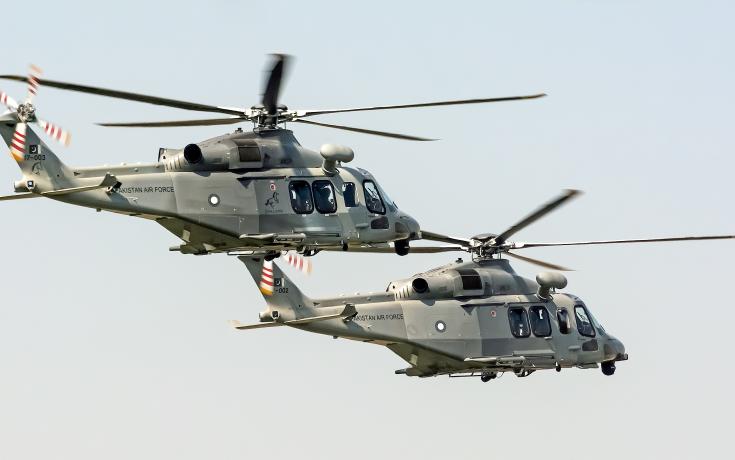
Four years later, in 1982, Vapormatt delivered its first automatic machine to Westland Helicopters (later AgustaWestland, now Leonardo Helicopters) in the UK. The application was demanding: preparing composite rotor blades for bonding the metal leading edge, a process where surface consistency directly affects structural integrity in flight. It was Vapormatt's first digitally controlled, Cartesian robotic wet blasting machine, and it is still in operation today.
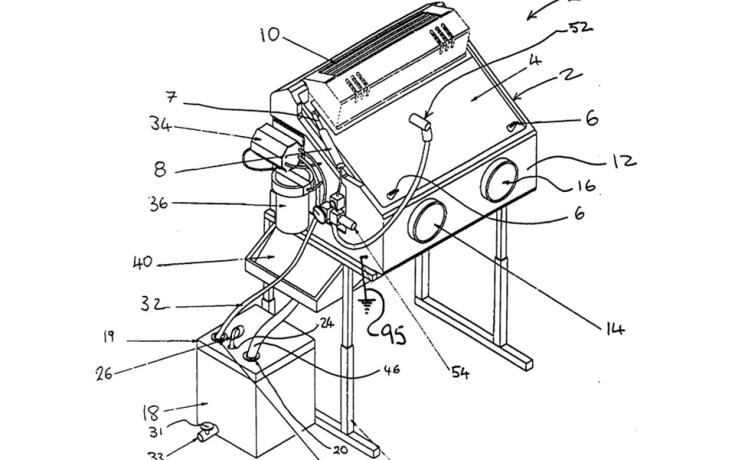
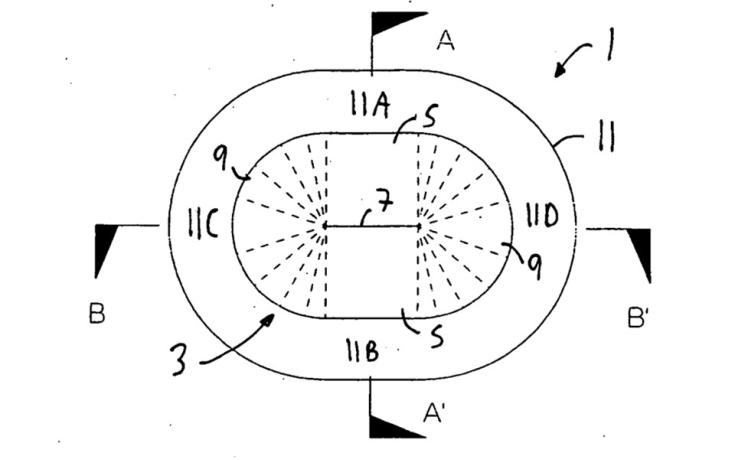
Four decades of wet blasting patents, one focus
Vapormatt's first patent was granted in 1982 and the company has continued filing across every critical dimension of the wet blasting process. Twelve patents in total:
- 1982: Improvements to abrasive finishing machines
- 1987: Blast gun systems
- 1990: Surface treatment methods
- 1996: Blast apparatus design
- 1997: Particulate conveying systems
- 1998: Cleaning apparatus
- 2003: Particle separation
- 2007: Slurry feed systems
- 2009: Sump design
- 2012: Workpiece treatment methods
- 2018: Blast gun and surface preparation methods
- 2021: Cutting edge treatment
Every patent solves a specific engineering problem that competitors had either failed to address or had not yet identified. No other wet blasting company has this depth of documented process development.
From the Channel Islands to 50+ countries
For the next two decades, Vapormatt grew entirely from its Channel Islands base. Manufacturing, design, and operations all ran from Guernsey until 2003. The company became a significant local employer, funding community initiatives and engineering sponsorships: from powerboat racing to hill climb motorsport.
What began in Stewart's house in Guernsey became a global operation. The engineering focus never changed.
In 2004, the company made a deliberate strategic choice: rather than compete on machine volume across broad markets, Vapormatt concentrated on high-precision machines for technically demanding applications.
The result was deeper expertise in fewer, more critical sectors: carbide cutting tools, aerospace components, wire and cable manufacturing, composites, additive manufacturing, and medical devices. R&D investment increased. The engineering team expanded. The patent programme continued.
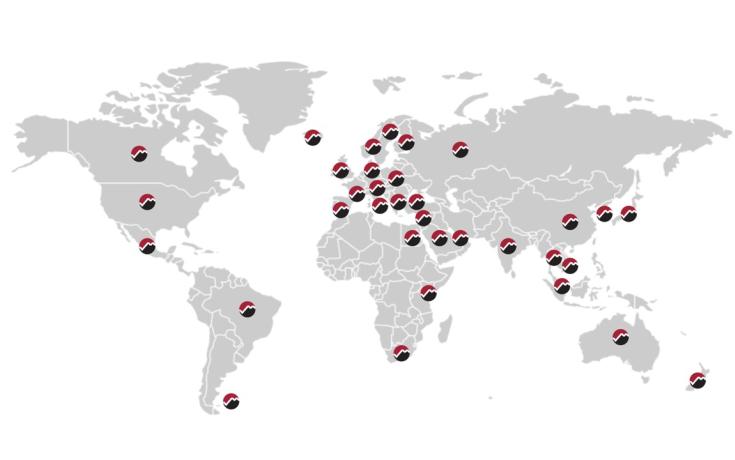
Today, Vapormatt operates from its Innovation Centre in Bridgwater, Somerset, with partners on six continents. Over 2,000 machines have been sold into more than 50 countries. The family still leads the business: Robin Ashworth, third generation, became Managing Director in 2003 and is now CEO; co-founder Terry Ashworth serves as Non-Executive Director; and the fourth generation, including Matt Ashworth (Head of R&D) and Ryan Ashworth (Head of Sales and Marketing), already hold senior roles
FAQs
Why was wet blasting developed for jet engines?
Norman Ives Ashworth developed wet blasting in the late 1940s while working alongside Sir Frank Whittle on the jet engine. Cast turbine blades needed a consistent, high-quality finish, and dry abrasive blasting was too aggressive and unpredictable. Suspending the abrasive in water cushioned each impact, giving a finer, more controllable finish. Ashworth called the process liquid honing.
Why was silica sand banned from blasting in the UK?
Blasting with silica sand caused silicosis, an incurable lung disease caused by breathing fine silica dust. The Blasting (Castings and Other Articles) Special Regulations 1949 prohibited sand and other abrasives containing free silica from blasting, with effect from 1950. The prohibition still applies today under Schedule 2 of the COSHH Regulations. Wet blasting became British industry's safer alternative.
What were the first commercial wet blasting machines?
The first commercial wet blasting machines were built by Abrasive Developments Limited (ADL), the company Norman Ives Ashworth founded in Henley-in-Arden, Warwickshire. Sold under the Vaqua brand, models including the Kompact, Komet, Juno and Achilles became well known across Europe through the 1950s and 1960s.
How is Vapormatt connected to Vaqua and Abrasive Developments Ltd?
Vaqua was the brand name of Abrasive Developments Limited (ADL), founded by Norman Ives Ashworth. ADL was sold to United Surface Finishing, now part of the Wheelabrator Group, in the 1970s. In 1978, Norman's son Stewart Ashworth and grandson Terry Ashworth founded Vapormatt in Guernsey to continue developing wet blasting. The Ashworth family still owns and leads Vapormatt today.
How has wet blasting technology changed since the 1940s?
Early wet blasting machines were manual cabinets. Vapormatt delivered its first automatic, digitally controlled robotic machine in 1982. Since then, Vapormatt has built a portfolio of 12 patents covering:
- vortex pumps
- particle separation
- low-level sumps
- micro nozzles that use at least 60% less compressed air
Modern closed-loop Vapormatt machines recycle water and media continuously and achieve surface finishes down to 0.2µm Ra.