
Stat
dafdsa
Sector challenges and desired outcomes
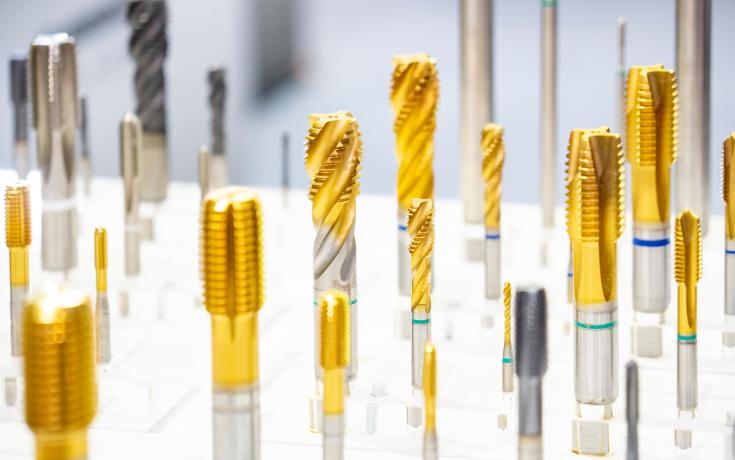
Common tap-finishing problems
- Swarf trapped in flutes and reliefs after grinding, heat treatment, EDM, or rework
- Oil/coolant residues that interfere with inspection, coating adhesion, or packaging
- Micro-burrs on flute edges and lead-in chamfers that raise cutting forces and reduce tool life
- Inconsistent cosmetic finish across batches (manual brushing and ad-hoc cleaning)
- Risk of embedded media and dust management issues associated with dry blasting
Desired outcomes
- Clean flutes and cutting features with minimal edge rounding
- Stable, repeatable surface condition before coating (PVD/CVD) or final QC
- Reduced manual touch time and fewer “mystery rejects”
- Cleaner, safer working environment with improved process control
Applications of wet blasting for threading taps
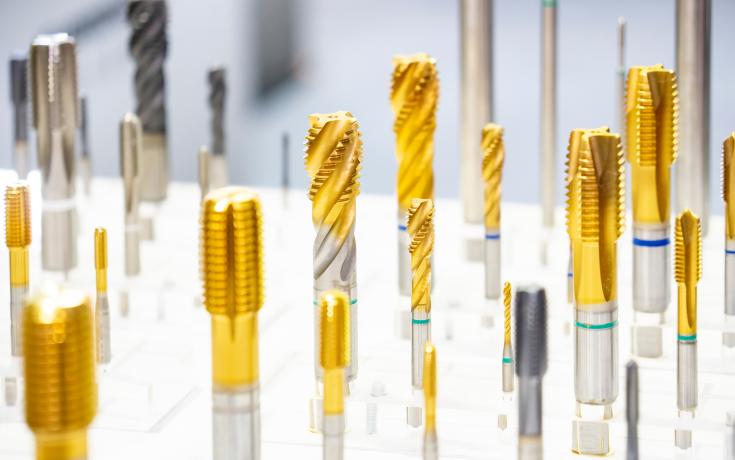
Wet blasting is used across cutting tool manufacturing and refurbishment for cleaning and controlled finishing (competitors typically position this under “cutting tools”, “tooling inserts”, or “edge honing”).
Typical tap applications
- Post-grind cleaning: remove grinding sludge, coolant residue, and handling contamination
- Flute and relief cleaning: flush-out fine chips and residues from tight geometries
- Micro-deburring: reduce fine burrs on edges where appropriate (process-controlled)
- Pre-coating surface preparation: remove brittle layers/foreign matter to support coating adhesion (without unnecessary cutting-edge damage)
- Post-coating cleanup: remove handling marks/contamination prior to packing (application-dependent)
- Refurb/return-to-service: cleaning before inspection, regrind, or recoat
Why wet blasting for threading taps
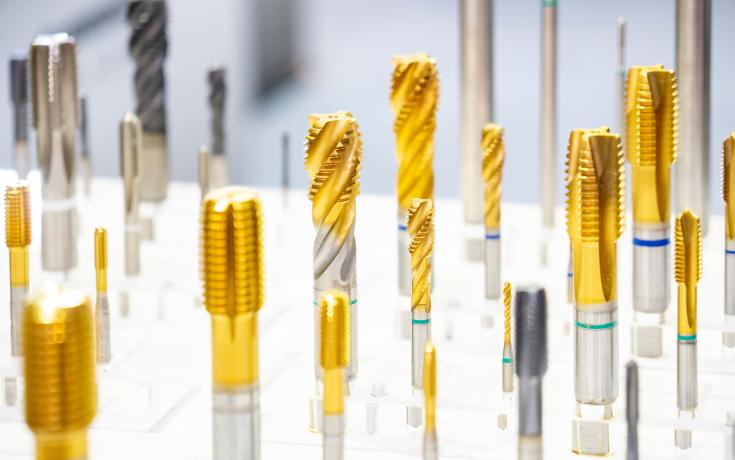
Threading taps sit in the “high-risk, high-value” zone: you need cleaning power, but you can’t afford uncontrolled edge rounding.
Wet blasting helps because the slurry flows over the surface rather than behaving like a purely dry-impact process, giving you a broader control window when tuned correctly.
Benefits tied to tap pain points
- Protects functional geometry
Use fine media, controlled pressure, and validated exposure time to clean without “softening” the cutting edge. (We’ll always recommend trials for new tap geometries/materials.) - Cleans where brushes can’t reach
Flutes, chamfers, and relief features are accessible without aggressive contact or awkward manual tools. - Lower risk of embedded abrasive
Wet slurry processes are commonly positioned as reducing impregnation/embedded media vs dry blasting. - Better process repeatability
Recipe-based control (pressure, media, concentration, time, nozzle strategy) drives consistent batch outcomes. - Cleaner working environment
Dust-free operation is a standard wet blasting advantage claimed across the category.
Comparison vs other processes
| Process | What it’s good at | Where it struggles on threading taps | Typical risk |
|---|---|---|---|
| Wet blasting (Vapormatt) | Controlled cleaning + fine deburring; complex geometries | Requires correct recipe to avoid over-processing | Low when validated |
| Dry blasting | Fast oxide/scale removal | Dust; higher chance of edge damage and media embedment on fine features | Medium–high |
| Tumbling / mass finishing | Batch handling for robust parts | Can’t reliably protect sharp cutting edges; limited flute control | High |
| Chemical cleaning / etching | Oils/oxides removal | Handling, disposal, selectivity, and surface condition variability | Medium |
| Ultrasonic cleaning | Oils/particulates removal in cavities | Doesn’t reliably remove burrs; may not condition surface for coating | Low–medium |
| Manual brushing / pick tools | Quick spot fixes | Inconsistent, labour-heavy, hard to validate | Medium |
What this means in practice
If your priority is clean flutes and consistent surface condition while preserving cutting geometry, wet blasting gives you the best balance of controllability and throughput. Competitor messaging frequently highlights the flow-based, gentle nature and the ability to reach difficult surfaces for deburring/finishing.
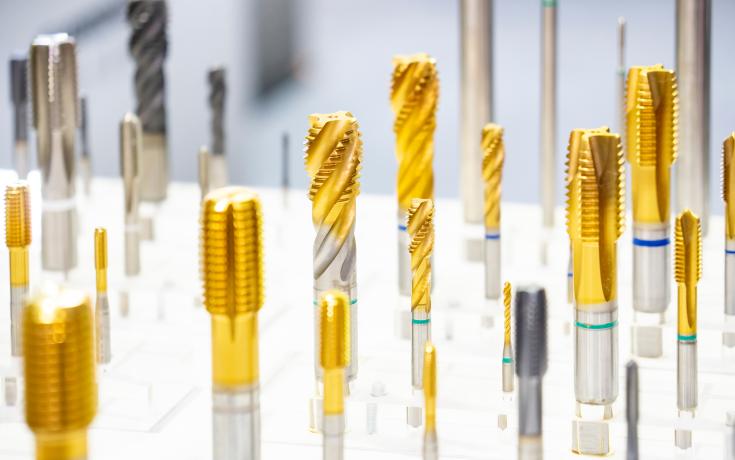
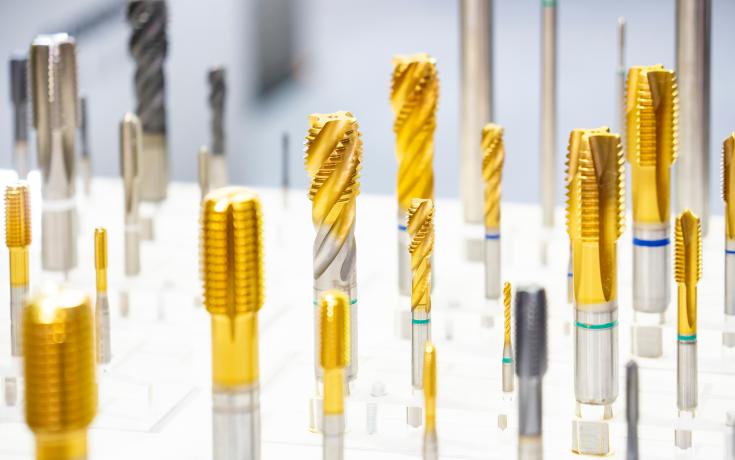
How Vapormatt delivers
Machines and system design
We design wet blasting systems for cutting tools where geometry protection and repeatability matter:
- Rigid cabinet and nozzle architecture designed for stable delivery
- Closed-loop slurry and rinse options to support consistent cleanliness
- Options for fixturing strategies suited to taps (single-part fixtures, racks, or batch baskets) [Assumption]
Automation and HMI
For taps, automation typically pays back when you need stable outcomes at volume:
- Recipe control (pressure, cycle time, media strategy) with operator guidance
- Optional rotary/indexing approaches for repeat exposure on complex features [Assumption]
- Data capture to support quality control and traceability [Placeholder: available data features]
Process control and repeatability
Competitors emphasise controlling slurry concentration and filtration as key to consistency; Vapormatt systems are engineered around the same fundamentals: stable slurry delivery, media management, and repeatable recipes.
Service, support, and lifecycle partnership
- Application development support (media selection, exposure limits, fixture approach)
- Commissioning, operator training, and maintenance planning
- Spares, consumables, and process reviews to keep performance stable
Case spotlights
Case spotlight 1: Tap flute cleaning before coating
- Challenge: inconsistent coating adhesion linked to contamination in flutes and on relief faces
- Wet blasting approach: controlled pre-coat wet blast to remove foreign matter/brittle layers while protecting cutting edges (validated by sample runs)
- Result: improved coating consistency and reduced rework [Placeholder: quantified results]
(Competitors explicitly position wet blasting as a coating pre-treatment for cutting tools.)
Case spotlight 2: Micro-burr control after grinding
- Challenge: micro-burrs raising cutting forces and causing thread quality variation
- Wet blasting approach: fine abrasive recipe aimed at burr removal without geometry loss
- Result: more consistent tool performance and less manual finishing [Placeholder: quantified results]
(Competitors describe wet blasting as capable of fine burr removal with ultra-fine abrasives.)
Final takeaway
Wet blasting gives you a controlled, repeatable way to clean and lightly finish threading taps—especially flutes, chamfers and reliefs—without the dust, variability, or unnecessary edge damage associated with harsher methods. If you need consistent surface condition before coating or inspection while protecting cutting geometry, Vapormatt wet blasting is the most dependable route.
What is wet blasting for threading taps?
Wet blasting (also called vapour blasting / vapor blasting) uses a water-based slurry of fine media to clean and finish threading taps in a controlled way, helping remove residue and micro-burrs while protecting tool geometry when correctly set.
Is wet blasting safe for sharp cutting edges on taps?
It can be, provided the process is tuned (media type/size, pressure, angle, time and standoff). For taps, Vapormatt typically recommends validating edge condition against your tolerances.
Will wet blasting blunt or round my taps?
Any abrasive process can change edges if over-applied. Wet blasting reduces risk through controllable parameters and repeatable recipes, but you should always run trials for each tap geometry/material and define acceptance criteria.
Can wet blasting remove swarf and debris from tap flutes?
Yes. Wet blasting is well-suited to cleaning complex geometries such as flutes and reliefs where chips, grinding sludge, and residues can lodge.
Is wet blasting better than dry blasting for threading taps?
For many tap applications, wet blasting offers better control and a dust-free environment. Dry blasting can be more aggressive and can increase the risk of edge damage and contamination if not tightly controlled.
Can wet blasting prepare taps for PVD or CVD coating?
It’s commonly used as a pre-coating preparation step to remove contamination and stabilise surface condition. The key is ensuring the recipe supports adhesion without compromising cutting geometry.
Does wet blasting improve coating adhesion on taps?
It can, by improving cleanliness and removing residues that interfere with adhesion. Outcomes depend on your upstream process (grinding/heat treat), coating system, and validated surface requirements.
What media is best for wet blasting threading taps?
There isn’t a single “best” media. Selection depends on tap material (HSS/carbide), coating stage, and finish goals. Typical options include glass beads, ceramic beads, plastic media, and aluminium oxide—each with different cutting/peening behaviour [media type recommendation].
Can wet blasting remove micro-burrs on tap chamfers and leads?
Yes, it can reduce light burrs when the process is tuned for controlled deburring. For critical cutting edges, results should be verified by inspection and performance testing.
What surface finish can wet blasting achieve on taps (Ra/Rz)?
Wet blasting can change surface texture depending on media and parameters. Vapormatt defines targets with you in Ra/Rz terms and validates the recipe to meet your requirement [Ra target] [Rz target].
Is wet blasting suitable for forming taps as well as cutting taps?
Often, yes. Forming taps and cutting taps have different functional surfaces and sensitivities, so the process recipe and inspection criteria should be set accordingly [tap type list].
Can wet blasting clean taps after heat treatment?
It can help remove residues and surface contamination after heat treatment, depending on the oxide/scale severity. Heavier scale may require an adjusted media strategy or staged process [process staging placeholder].
How do you prevent flash rust on steel taps after wet blasting?
By using correct rinsing and drying steps, and where appropriate, corrosion inhibitors. The best approach depends on your steel grade, storage method, and downstream process [inhibitor/drying method].
Does wet blasting leave abrasive media embedded in the tool?
Wet slurry processes are typically used to reduce the risk of embedded dust compared with dry methods, but prevention still relies on correct media choice, filtration, rinsing, and process control.
Can wet blasting replace ultrasonic cleaning for taps?
It depends on the goal. Ultrasonics are strong for oil/particulate cleaning, while wet blasting can deliver both cleaning and controlled surface conditioning/deburring. Some workflows use both (ultrasonic for degrease, wet blast for finish) [Assumption].
How do you fixture threading taps for wet blasting?
Common approaches include single-part fixtures, racks, or batch baskets depending on size, flute geometry, and throughput. Fixturing must ensure repeatable exposure and avoid part-to-part contact [fixture concept].
Can wet blasting be automated for high-volume tap processing?
Yes. Automation can improve consistency and throughput using recipe control and repeatable part presentation. The right level of automation depends on batch size and quality requirements [throughput].
What parameters matter most when wet blasting taps?
Media type/size, slurry concentration, air pressure, nozzle angle, standoff distance, exposure time, and rinse/dry stages. Vapormatt typically develops a process window around your acceptance criteria.
Is wet blasting suitable for carbide taps?
Often yes, but carbide edges are sensitive to uncontrolled abrasion. Media selection and exposure control are critical, and verification should include edge inspection and performance checks [inspection method].
What quality checks should follow wet blasting of threading taps?
Typical checks include visual cleanliness of flutes, surface condition, edge/geometry verification [edge tolerance], roughness measurement [Ra/Rz], and—where relevant—coating adhesion or cutting performance validation.