
fjkafddafa
afdsfdsafd
Sector challenges and desired outcomes
Common challenges
- High cosmetic expectations on visible components (uniform satin/matte finishes, consistent ‘look’ batch to batch)
- Coating adhesion failures driven by contamination, inconsistent abrasion, or media embedment
- Composite surface preparation risks (fibre damage, resin sensitivity, overheating)
- Refurbishment variability (manual sanding, inconsistent stripping, rework)
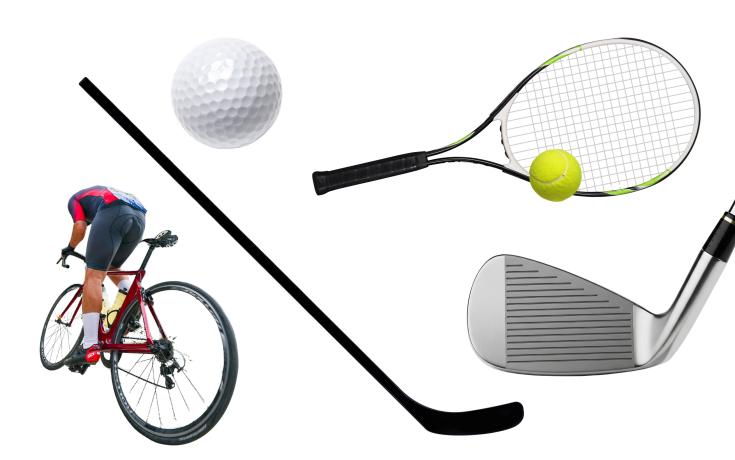
- Sustainability pressure: recovering, reconditioning and re-coating components (including golf balls)
Desired outcomes
- Repeatable, measurable surface condition for coating and bonding
- Controlled, low-damage processing for composites and thin-walled parts
- Cleaner parts straight out of the cabinet (reduced handling contamination)
- Faster, more consistent refurbishment workflows with fewer manual steps
Applications of wet blasting in sporting goods
Wet blasting uses a water and abrasive slurry to clean, finish or texture surfaces, with water providing lubrication and flushing for a finer, more controlled result than dry blasting.
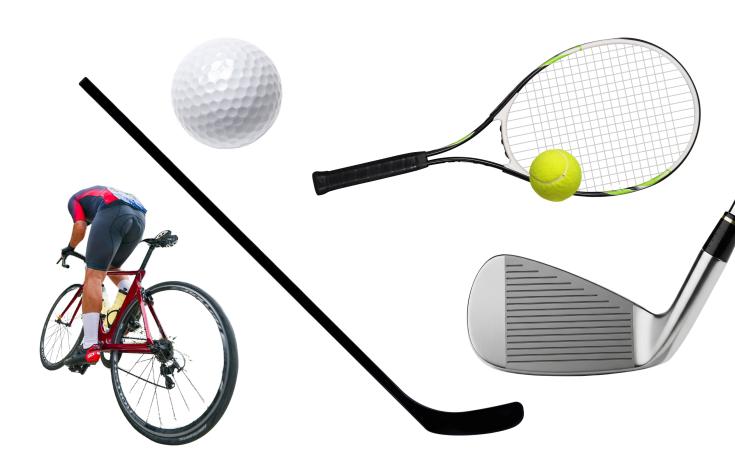
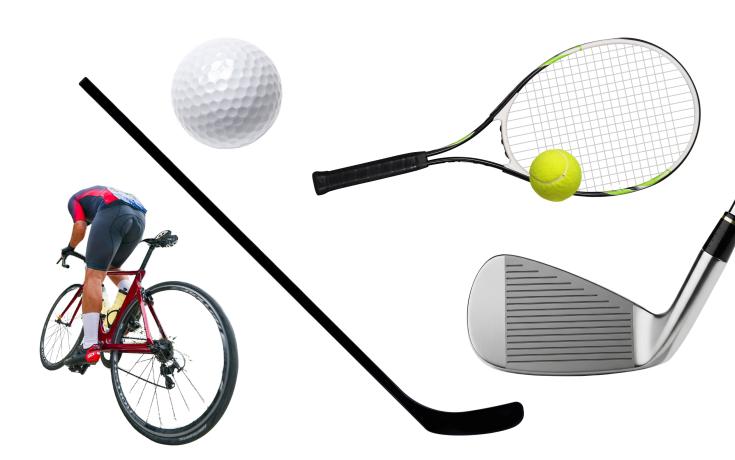
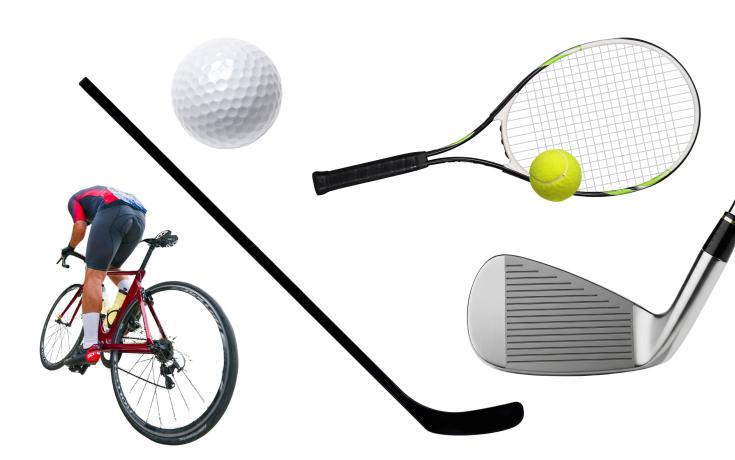
Composite sporting goods (hockey sticks, tennis rackets, and similar)
Wet blasting is widely used for composite surface preparation because it can remove contaminants and create a controlled surface for bonding or coating while avoiding fibre damage when correctly set up and controlled.
Typical applications
- Pre-paint and re-coat preparation on carbon fibre composite shafts/frames (remove surface contamination, lightly key lacquer/clear coat areas)
- Bonding preparation for composite-to-metal joints (e.g., inserts, ferrules, end fittings), improving adhesive wet-out and mechanical interlock via micro-roughening
- Selective coating/graphic removal (controlled stripping in layers on composites where appropriate process windows exist)
- Edge finishing and safety improvements (controlled abrasion/edge radiusing on composite features where handling safety matters)
Practical process notes (composites)
- Use low-aggression media and parameters tailored to the resin system and fibre architecture; validate with trials (pressure, stand-off, dwell time and media choice all matter).
- Wet blasting helps reduce heat build-up (important for heat-sensitive resin matrices) and avoids electrostatic charging that attracts dust before bonding/coating.
Recovered golf balls: preparation for repainting and re-marking
For recovered/reclaimed golf balls, the goal is a clean, uniformly keyed surface ready for primer, repainting and clear coating—without distorting dimples or damaging the cover.
Where wet blasting fits
- Decontamination and deep cleaning: remove algae/soil films, oils and residues while washing debris away during processing.
- Controlled keying for repainting: create a consistent anchor profile for primer/paint adhesion, reducing the variability of manual scuffing. (Coating systems often specify an anchor profile requirement.)
- Lower dust and cleaner handling: wet blasting suppresses dust and reduces particle rebound compared with dry blasting approaches.
Suggested refurbishment flow (example)
- Sort and inspect (cover integrity, deep cuts)
- Wet blast to clean + lightly key
- Rinse and dry (controlled drying to avoid water marks)
- Primer → repaint → clear coat → re-stamp
- Final inspection ([gloss level], [colour match], [adhesion test])
Important: media selection and parameters must protect the cover material (often urethane or ionomer). Validate with sample trials and adhesion testing.
Metallic parts and sub-assemblies used across sporting goods
Sporting goods also include a wide range of metal components—club heads, bike and skate components, fasteners, housings, brackets and decorative trims.
Typical applications
- Cosmetic finishing (uniform matte/satin finishes on aluminium, stainless steel, titanium components)
- Deburring and edge softening on machined parts without aggressive deformation
- Pre-coating preparation (remove oxidation/handling contamination; improve coating adhesion consistency)
Tooling, moulds and production support
Where sporting goods use composite lay-up or moulding, wet blasting can support:
- Mould cleaning (removal of release agent residues and build-up to protect tool life)
- Defect removal / rework prep (controlled removal of surface imperfections prior to re-coating)
Quote
Why wet blasting for sporting goods
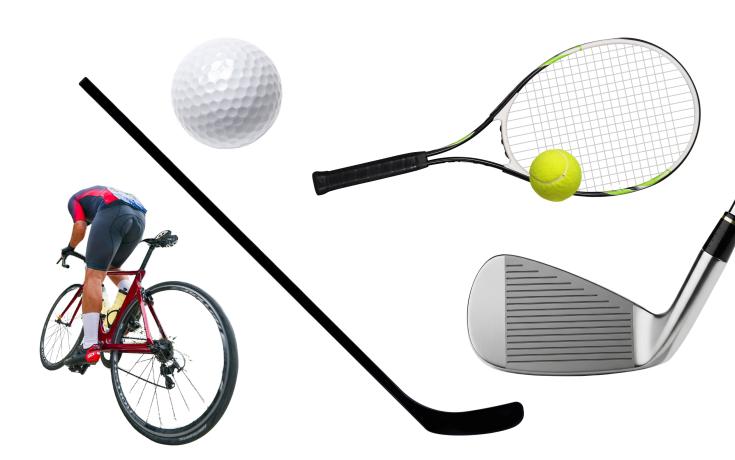
Wet blasting is a strong fit for sporting goods because it combines surface engineering control with the practical realities of mixed-material products.
Benefits tied to sector pain points
- Repeatable surface preparation for coating and bonding (micro-roughening + contaminant flushing)
- Composite-friendly processing when parameterised correctly—reduced heat input and controlled abrasion to protect fibres and resin systems
- Cleaner parts with fewer downstream issues: wet blasting removes and washes away residues during the process rather than redistributing them
- Lower dust and less static: supports cleaner finishing environments and reduces pre-coat contamination risk
- Less risk of media embedment compared with dry blasting, supporting coating integrity and corrosion performance on metals
Comparison vs other processes
| Process | Typical outcome | Key limitations for sporting goods | Where wet blasting is stronger |
|---|---|---|---|
| Dry blasting | Fast stripping/texture | Dust, rebound, higher risk of inconsistent finish; potential media embedment and static | Cleaner, finer finishes; reduced dust; better control on delicate parts |
| Tumbling / mass finishing | Edge smoothing in bulk | Limited control on visible cosmetics; not suitable for large/composite assemblies | Controlled, targeted finishing; cosmetic control |
| Chemical stripping/etching | Removes coatings/oxidation | Chemical handling, disposal, and compatibility risks (especially composites) | Physical process alternative; can reduce reliance on harsh chemicals |
| Manual sanding/scuffing | Local keying | Labour-intensive; inconsistent; high rework risk | Repeatable surface condition and throughput |
| Shot peening | Fatigue improvement on metals | Not a cosmetic/coating-prep process; can deform delicate parts | Wet blasting provides finishing + cleaning with gentler impact |
Narrative: Competitor sources repeatedly highlight the role of water in cushioning impact, enabling finer, more uniform finishes, while also providing washing action that removes contaminants as you process.
How Vapormatt delivers
Vapormatt engineered wet blasting for industry and continues to set the standard—bringing world-class engineering together with long-term, customer-first partnership.
Machines and system design
- Manual and automated wet blasting systems to match part size, volumes and finish requirements [Placeholder: Vapormatt model range relevant to sporting goods]
- Fixturing designed for repeatable orientation, stand-off and coverage on complex geometries (club heads, frames, inserts, composite shafts) [Placeholder]
Automation and HMI
- Recipe-driven process control to standardise outcomes across operators, shifts and sites [Placeholder]
- Integration options for loading/unloading and inspection stations in refurbishment lines (e.g., golf ball reconditioning) [Placeholder]
Process control and repeatability
Competitors describe tight control through parameters such as air pressure, media concentration, and system design that maintains slurry quality via agitation and filtration.
- Vapormatt develops the process window with you—media selection, concentration strategy, nozzle setup, and cycle definition—then locks it into an operator-proof recipe. [Placeholder]
Service, support and lifecycle partnership
- Process development, commissioning, spares and ongoing optimisation—built around responsiveness and long-term ownership value.
Case spotlights
- Composite refurb prep for re-coating (hockey sticks / rackets)
- Objective: consistent keying without fibre damage
- Outcome: improved coating adhesion consistency; reduced manual sanding time [time saved] [Placeholder]
- Recovered golf ball repaint line
- Objective: remove contamination and create uniform key for repaint
- Outcome: fewer paint defects and more consistent finish [defect rate reduction] [Placeholder]
- Premium cosmetic finish on machined metal components
- Objective: uniform satin finish with controlled edge break
- Outcome: improved cosmetic consistency across batches [Cp/Cpk] [Placeholder]
Final takeaway
Wet blasting delivers clean, controlled surface preparation for sporting goods across metals and composites—improving finish consistency, coating adhesion and bond reliability. From keying hockey sticks and tennis rackets to preparing recovered golf balls for repainting, Vapormatt helps reduce rework and support refurbishment at scale.
FAQs
What is wet blasting (vapour blasting) and why is it used in sporting goods?
Wet blasting uses a water-and-abrasive slurry to clean and texture surfaces with high control. In sporting goods it’s commonly used to improve cosmetic consistency, coating adhesion and bond reliability on mixed materials such as aluminium, stainless steel and composites.
Is wet blasting safe for carbon fibre hockey sticks and tennis rackets?
It can be, provided the process is set up for composites. Media choice, pressure, nozzle distance and dwell time must be tuned to avoid fibre damage or over-cutting the resin. A short trial on representative scrap parts is best practice before production.
How does wet blasting help prepare composite sports equipment for repainting or re-lacquering?
Wet blasting can remove contaminants and lightly key existing coatings to promote consistent primer/paint adhesion—reducing the variability and labour of manual sanding, especially on complex contours.
Can wet blasting improve bonding strength for inserts and fittings on composite sporting goods?
Yes. Wet blasting can create a controlled micro-texture and remove contamination at joint interfaces, supporting more consistent adhesive wet-out and mechanical interlock (for example, composite-to-metal inserts, end fittings or ferrules).
How do you prepare recovered golf balls for repainting using wet blasting?
Wet blasting can deep-clean recovered balls and provide a uniform “key” for primer and repainting. The process must be validated to protect the cover material and preserve dimple geometry—media and parameters should be selected specifically for the ball construction.
Will wet blasting change or soften golf ball dimples?
It shouldn’t when correctly controlled, but an overly aggressive setup can round features. Use appropriate media and low-impact parameters, then verify with visual inspection and sample measurements as part of the refurb process.
What sporting goods parts are commonly wet blasted besides composites?
Typical examples include aluminium and stainless components such as club heads and accessories, bicycle parts, skate components, fasteners, housings and decorative trims—especially where a consistent satin/matte finish is required.
Is wet blasting better than dry blasting for sports equipment finishing?
For many sporting goods applications, yes: the water cushions impact and flushes debris, helping achieve finer, more uniform finishes with less dust and less risk of embedding media—useful for both cosmetics and coating prep.
What abrasive media is used for wet blasting sporting goods?
It depends on the substrate and the outcome (cleaning vs keying vs cosmetic finishing). Composites and polymer covers typically require gentler media and tighter control, while metals may use a broader range. Media selection should be confirmed by sample trials against your coating/adhesive system.
How do you prevent corrosion or staining on metal sporting goods parts after wet blasting?
Rinse and dry control is critical. Many processes use defined drying steps and, where appropriate, corrosion inhibitors compatible with the downstream coating system. Your workflow should include handling controls to avoid re-contamination before painting or anodising.
Can wet blasting remove coatings like paint, powder coat, or anodising from sporting goods components?
It can assist with coating removal depending on coating type, thickness and substrate, but it’s usually best described as controlled cleaning/texture rather than a guaranteed stripper. If removal is required, validate capability and cycle time on your exact coating system.
Does wet blasting support sustainability in sporting goods refurbishment?
Yes. By improving the consistency of cleaning and surface prep, wet blasting can reduce rejects and rework, and enable refurbishment workflows—such as reconditioning recovered golf balls or re-coating premium composite equipment—helping extend product life.