
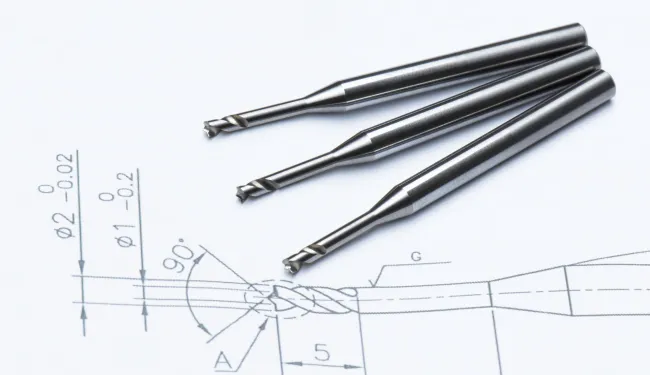
Adhesion
Clean, activated surfaces improve coating bond and performance
Durability
Controlled edge honing reduces chipping and extends tool life
Efficiency
Combines cleaning, deburring and edge prep in fewer steps
Repeatability
Consistent edges and surfaces, tool after tool
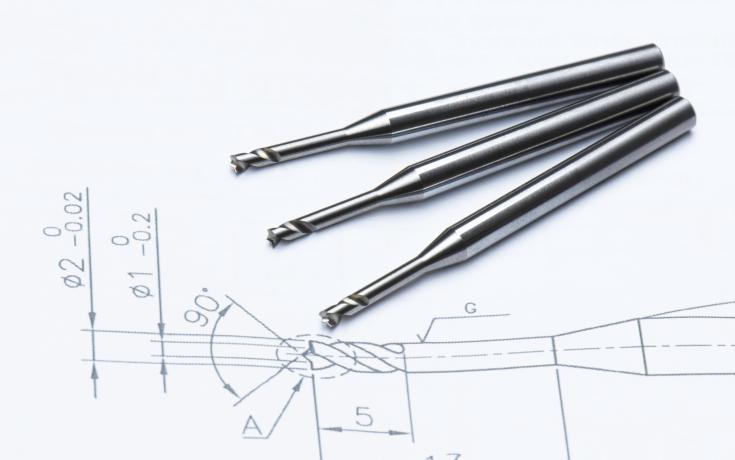
Microtool finishing challenges and desired outcomes
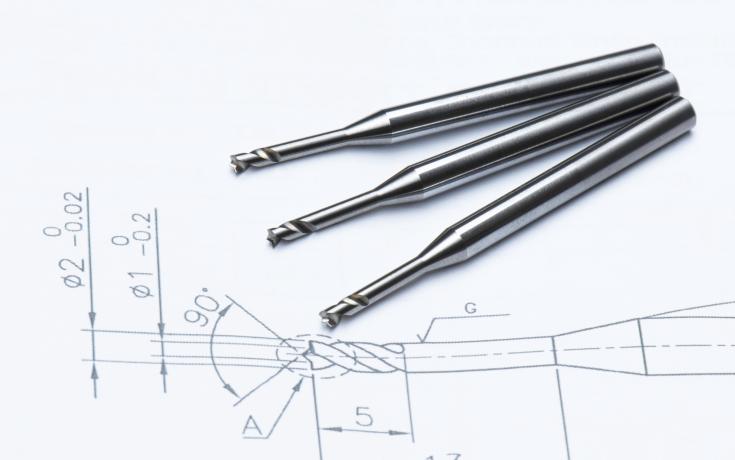
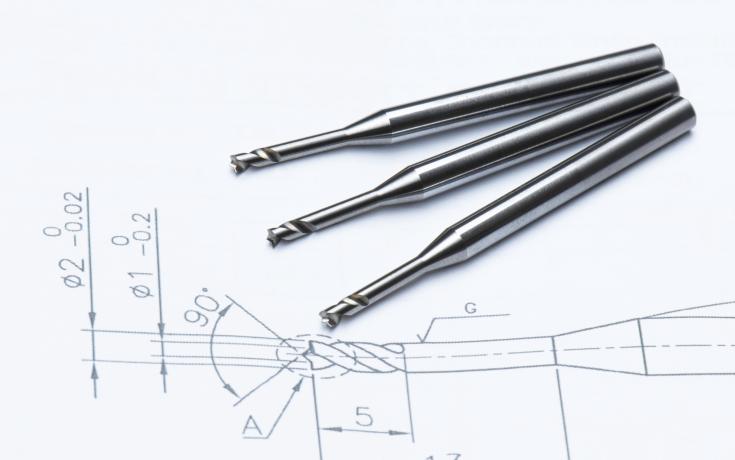
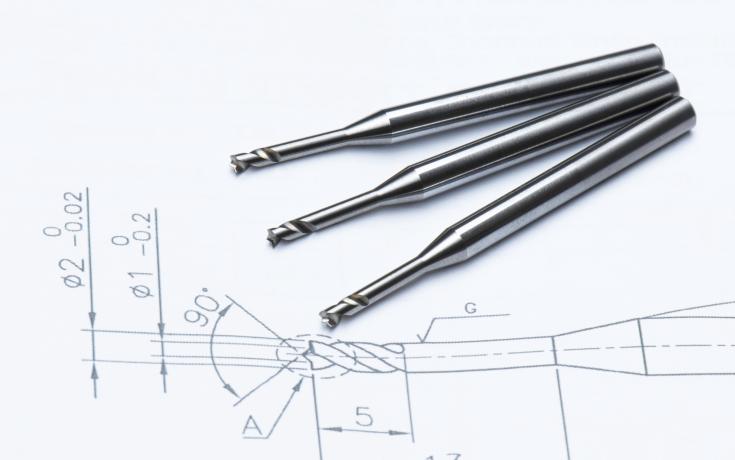
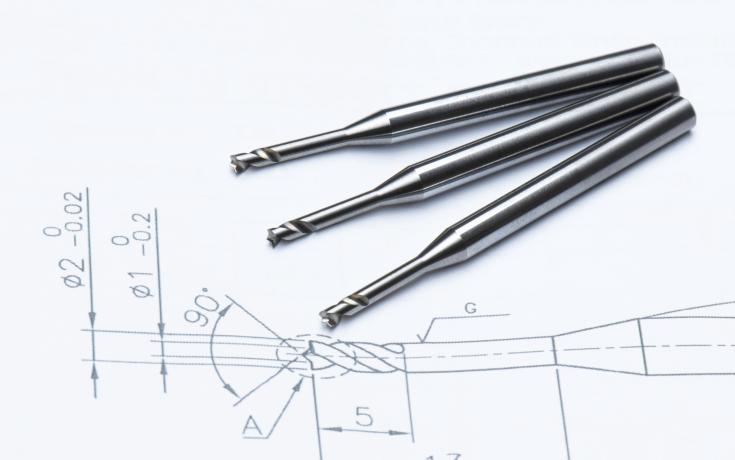
Micro drills, micro end mills, thread mills, taps and other small-diameter round shank tools are unforgiving. Common challenges include:
- Edge fragility: Micro-cutting edges chip or curl easily if too sharp or inconsistently prepared
- Burrs and surface flaws: Grinding marks, micro-burrs and embedded contamination reduce performance
- Coating sensitivity: PVD and other coatings rely on a clean, reactive, correctly profiled surface
- Post-coat imperfections: Droplets and surface defects can increase friction and early wear
- Handling damage: Every additional process step increases scrap risk and labour cost
- Repeatability pressure: Customers expect the same performance tool after tool, batch after batch
Desired outcomes:
- Longer tool life, stable chip formation, reduced breakage
- Coatings that adhere consistently and perform in demanding materials
- Fewer operations and less tool handling (lower cost, lower risk)
- Measurable, controllable finishing with documented repeatability
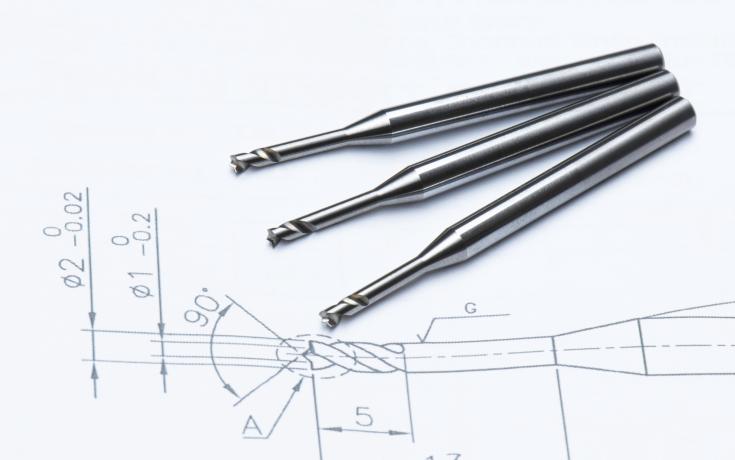
Applications of wet blasting in microtool manufacturing and regrind
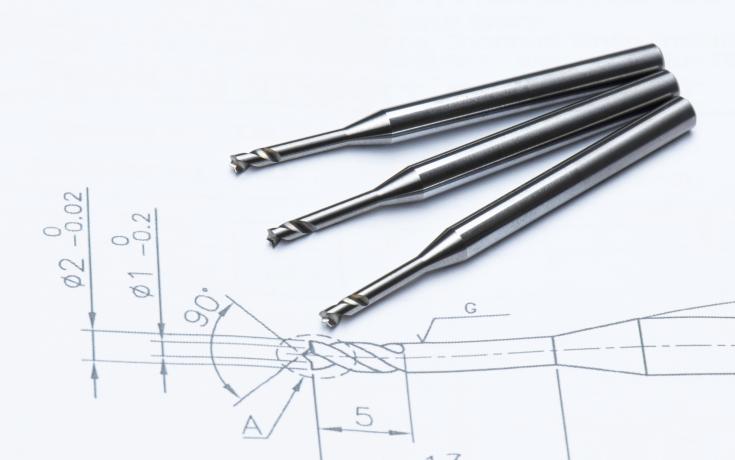
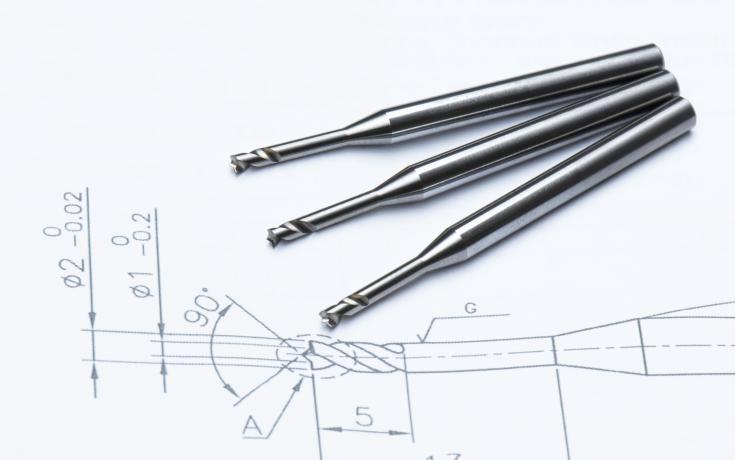
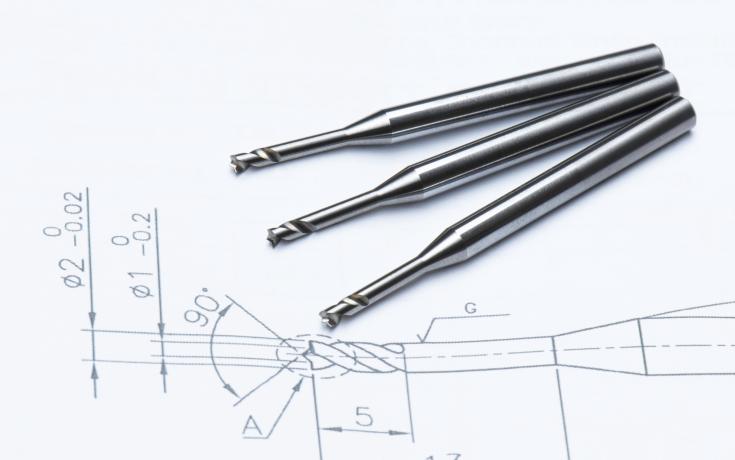
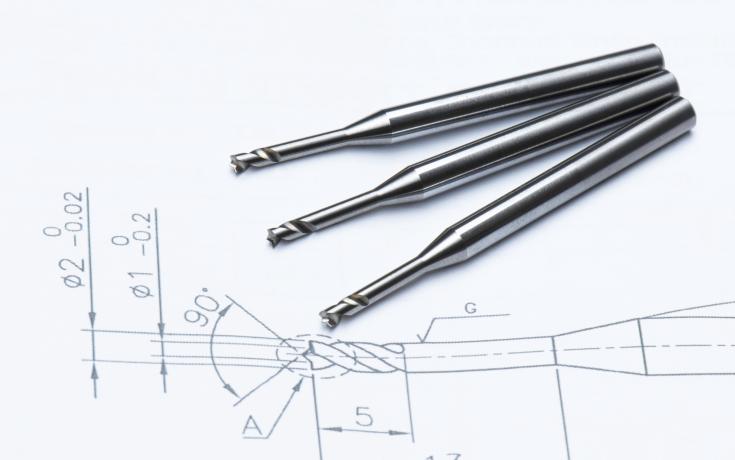
Typical microtool applications include:
- Precision cleaning and de-greasing before coating or inspection
- Deburring and removal of minor surface flaws after grinding
- Edge honing / edge rounding to a defined micrometre tolerance and profile (K-factor)
- Edge preparation to support stable chip formation for target materials
- Surface activation and finishing to a specified roughness for coating adhesion (Ra / Rz)
- Post-coat droplet removal and refinement of coating topography
- Peening of coatings to improve durability in demanding applications
- Finishing of additively manufactured (AM) round shank tools and features
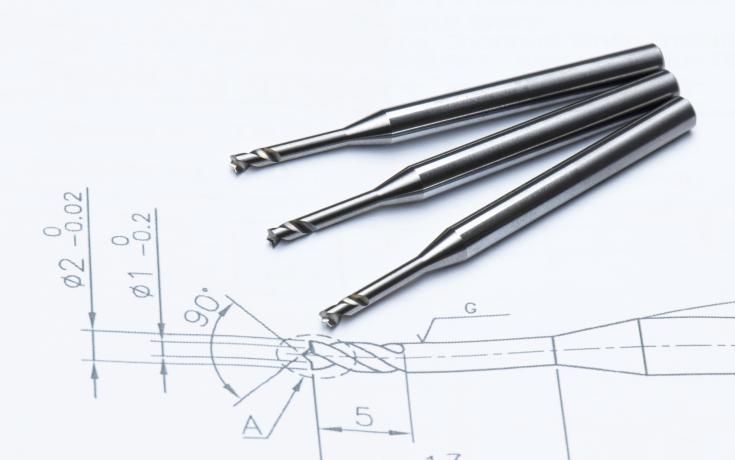
Why choose wet blasting for microtools?
Cleaning, deburring and finishing in one operation
Wet blasting (also known as vapour blasting, vapor blasting or aqua blasting) rapidly removes contaminants, oils, residues and oxides — and in the same process can deburr and refine surfaces. The ability to combine cleaning, de-greasing, deburring and edge preparation into a single ‘edge preparation’ process is a major lever for lower handling cost and lower damage risk.
Edge honing for durability and longevity
A highly sharpened cutting edge can be brittle. A controlled edge hone improves mechanical stability and helps prevent chipping and curling — allowing tools to run at production speed from new.
Wet blasting can apply an edge hone to a specific micrometre tolerance and profile (K-factor), from a ‘waterfall’ hone (K-factor > 1) to a reverse waterfall / trumpet hone (K-factor < 1). Wet blasting can apply this more accurately and consistently than alternative processes such as drag finishing.
Patented capability: adjusting K-factor during the process
Vapormatt has developed and patented technology that enables adjustment of the K-factor during the wet blast edge honing process. Useful when microtool designs need controlled transitions, differential edge conditions, or geometry-specific edge preparation.
Edge honing to support the ideal ‘chip’
Controlled edge geometry supports:
- Better chip evacuation (less re-cutting and clogging)
- Reduced friction at the cutting zone
- Reduced built-up edge (BUE)
- Reduced vibration and more stable cutting
The practical outcome is improved tool life and a better finish on the workpiece — especially critical for microtools where chip control windows are narrow.
Creating the perfect surface for PVD and other coatings
A successful coating depends on a clean, correctly prepared, reactive surface. Wet blasting is highly effective at activating surfaces and producing an Ra surface roughness suitable for coatings.
Wet blasting can also finish tools to an Ra appropriate for effective sterilisation where required in medical applications.
Removal of coating imperfections (post-coat)
After coating, wet blasting can remove coating imperfections, like PVD droplets, to leave a more uniform surface and an optimum Ra for best cutting performance. The process enables controlled, gentle refinement so tool geometry - especially cutting edges - remain intact.
Peening coatings for increased durability
Coatings such as PVD can have incumbent tensile stresses that contribute to fatigue cracking. Wet blasting can peen coatings, converting tensile stresses to compressive stresses, helping improve coating durability and tool life in demanding applications.
Health, safety and environmental improvements
Wet blasting brings practical HSE advantages:
- Dust suppression: Water significantly reduces airborne dust, improving workplace air quality and reducing respiratory risk
- Non-flammable process: Reduced risk of fire / explosion compared with dry blasting in dusty environments
- Water recycling: Systems are designed to recycle water to minimise consumption
- Media management: Filtration removes spent media, helping maintain media quality for consistent finishing
- Noise reduction: Typically quieter than dry blasting
Comparison vs. other processes
| Requirement | Wet blasting (Vapormatt) | Dry blasting | Drag finishing / tumbling | Chemical etching | Manual finishing |
|---|---|---|---|---|---|
| Control at micro-edge scale | High (process variables controlled; suited to tight tolerances) | Variable; higher risk of edge damage | Limited on complex micro geometries | Chemistry-dependent; can be hard to localise | Operator-dependent |
| Combine processes (clean + deburr + edge prep) | Yes (often in minimal operations) | Sometimes (but dust/heat risks) | Usually separate cleaning and finishing steps | Typically separate steps + rinsing | Rarely efficient |
| Coating preparation | Strong (clean, activated surface) | Can embed contamination; dust management required | Not designed primarily for activation | Can affect base material; disposal considerations | Inconsistent |
| Post-coat droplet refinement | Controlled and gentle | Higher risk of damaging coating/edge | Not ideal | Not typical | Inconsistent |
| HSE | Low dust; reduced fire risk | Dust/ATEX controls often required | Slurry/compound handling | Chemical handling/disposal | Manual exposure |
For microtools, the differentiator is more than just surface finish quality — it’s repeatable process control with minimal handling, so you protect fragile geometry while improving edge performance and coating outcomes.
How Vapormatt delivers
Machines and system design
For microtools and small round shank tools, Vapormatt systems are designed to deliver controlled finishing with consistent coverage:
- Oncilla: automated, one-piece-at-a-time processing where recipes (media/water/air pressure and other controllable variables) are refined for the specific tool’s surfaces and cutting edges. Optional additional blast chamber supports two finishing processes in one operation (e.g., coating prep + edge honing).
- Oncilla Cub: similar approach with a fixed specification, one blast zone and basic rinsing/drying for a lower cost solution.
- Puma + Vertical: turntable with multiple satellites (up to 42) to process multiple tools simultaneously, with automated vertical blast-head motion and satellite rotation for 360-degree finishing.
Automation and HMI
Automation matters most when edge radii and surface finish must stay inside tight process windows. Vapormatt automation supports:
- Repeatable tool positioning and consistent exposure
- Recipe-driven processing for different tool families
- Reduced operator variability and reduced training burden
Process control and repeatability
For microtools, controlling what comes out of the blast guns is essential. Vapormatt’s focus is consistency of blast output year after year, even as wear components age, so the finish stays predictable across batches.
Service, support and lifecycle partnership
- Application development support for your specific microtool geometry and target outcomes
- Commissioning, training and optimisation support
- Spares, wear parts and ongoing technical help to protect uptime
Quote
Case spotlights
- Microtool edge preparation for regrind performance
- Challenge: re-ground micro drills chipping early due to brittle edges
- Vapormatt approach: automated edge hone to defined specification (recipe + controlled exposure)
- Result: customer-reported tool life increase 5–7× (application-specific)
- Coating centre: pre-coat activation and post-coat droplet refinement
- Challenge: inconsistent adhesion and droplet-related friction after PVD
- Vapormatt approach: wet blast pre-treatment to specified Ra, then controlled post-coat refinement
- Result: Reduceddropletdefectsby∗∗[Placeholder]∗∗Reduced droplet defects by **[Placeholder]**Reduceddropletdefectsby∗∗[Placeholder]∗∗ and improved cutting consistency PlaceholderPlaceholderPlaceholder
- High-mix microtool production with reduced handling steps
- Challenge: too many handling operations causing damage and labour cost
- Vapormatt approach: combine cleaning, deburring and edge preparation into minimal operations
- Result: Handlingtimereducedby∗∗[Placeholder]∗∗Handling time reduced by **[Placeholder]**Handlingtimereducedby∗∗[Placeholder]∗∗ Scrapreducedby∗∗[Placeholder]∗∗Scrap reduced by **[Placeholder]**Scrapreducedby∗∗[Placeholder]∗∗
Final takeaway
In microtool manufacturing, quality is won (or lost) at the edge and on the surface. Vapormatt wet blasting gives you a controllable, repeatable way to clean, deburr, activate and edge-hone with minimal handling—helping you protect fragile micro-geometry, improve coating performance and deliver consistent chip formation and tool life that keeps customers coming back to your brand.
FAQs
Can wet blasting edge hone microtools without rounding critical features?
Yes - when fixturing, recipe, and exposure are engineered for the tool geometry. The aim is controlled edge preparation, not indiscriminate rounding.
What’s the difference between edge radius and K-factor?
Edge radius describes ‘how much’ rounding is applied; K-factor describes the shape of the hone profile (e.g., waterfall vs reverse waterfall).
Can wet blasting help coating adhesion?
A clean, activated surface with the right roughness supports adhesion. Wet blasting is widely positioned for coating preparation by multiple wet blasting equipment suppliers.
Can you remove PVD droplets after coating without stripping the coating?
Wet blasting can be configured for controlled, gentle refinement that targets defects while protecting geometry. (Validation is application-specific.)
Is wet blasting suitable for high-volume microtools?
Yes — from one-at-a-time cells for maximum accuracy through to multi-satellite systems for productivity. Selection depends on throughput, mix, and control requirements.
What is microtool edge preparation and why does it matter?
Microtool edge preparation is the controlled rounding/honing of the cutting edge to reduce chipping, stabilise chip formation and extend tool life.
What is the difference between vapour blasting, vapor blasting and aqua blasting?
They’re commonly used names for wet blasting processes; terminology varies by region, but the goal is controlled surface finishing using water and media.
Can wet blasting remove grinding marks on carbide microtools?
Wet blasting can refine surface flaws and reduce minor grinding marks while maintaining geometry—when the recipe and exposure are set for the tool.
Will wet blasting change microtool dimensions or tolerances?
Any finishing process can affect dimensions if uncontrolled. Wet blasting is typically selected because it can be tightly controlled for repeatable, minimal material removal.
What media is used for wet blasting microtools?
Media is application-dependent and selected to achieve the required finish and edge condition without damaging the substrate.
How do you measure and verify edge hone and surface finish on microtools?
Edge condition is typically verified using microscopy / metrology; surface finish is verified using profilometry (Ra/Rz) to agreed limits.
What surface finish (Ra/Rz) is best before PVD coating on microtools?
The target depends on coating system, tool material and cutting application. Wet blasting can be tuned to achieve a specified Ra/Rz consistently.
Can wet blasting improve PVD coating adhesion on microtools?
By thoroughly cleaning and activating the surface and delivering a controlled roughness profile, wet blasting supports consistent coating adhesion.
Can you wet blast after coating to remove PVD droplets on micro end mills and drills?
Yes - wet blasting can be configured to refine coating topography and reduce droplets while maintaining edge geometry, subject to process validation.
Does wet blasting help reduce built-up edge (BUE) in micro machining?
A controlled edge hone and refined surface can reduce friction and the tendency for material to adhere to the cutting edge, helping reduce BUE risk.
Is wet blasting suitable for micro regrind operations?
Yes - wet blasting can add controlled edge honing and cleaning so re-ground tools perform more like new (and in some cases better), with repeatable results.
Can wet blasting be automated for high-mix microtool production?
Yes - automation supports recipe-driven processing, consistent positioning and reduced operator variability across different microtool families.