
Technical challenge: large components, tight tolerances, variable workloads
Large aerospace components combine three demands no generic blast machine handles well: complex shapes and large components, both requiring uniform coverage, SPMs requiring real-time monitoring and alarms for deviation, and low volume, high variance in MRO workloads. A machine that cannot adapt between component profiles without extensive civil infrastructure to install is operationally expensive before it processes a single part.
Two configurations for the full range of large-format components
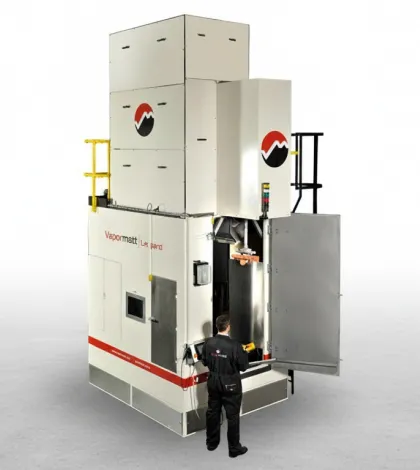
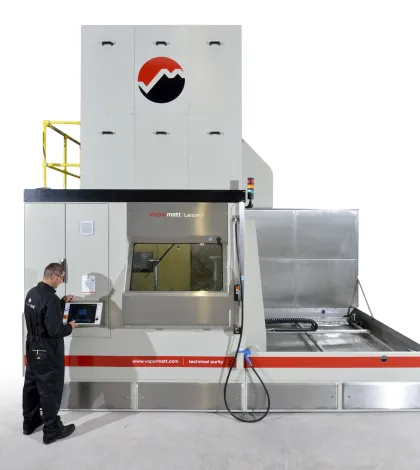
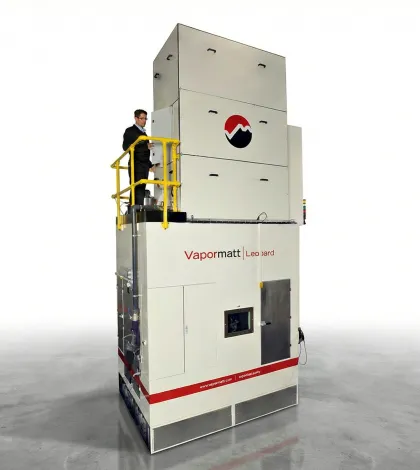
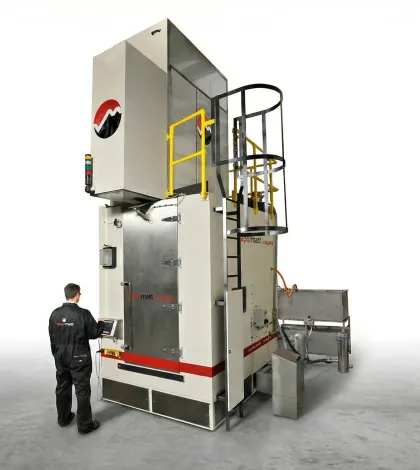
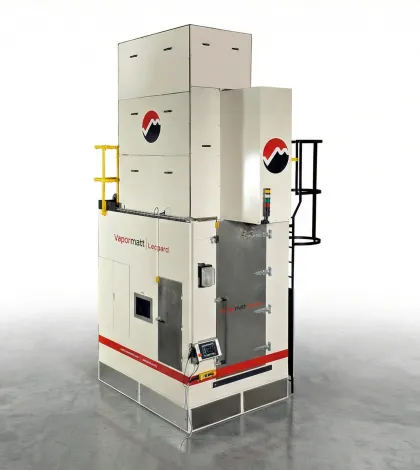
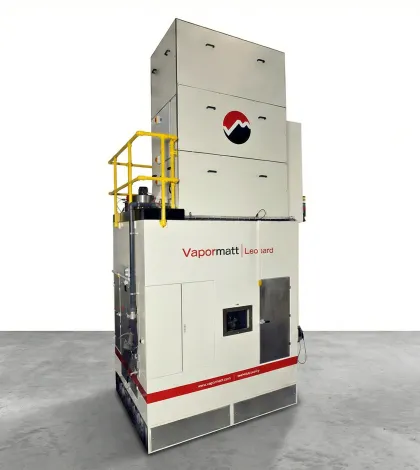
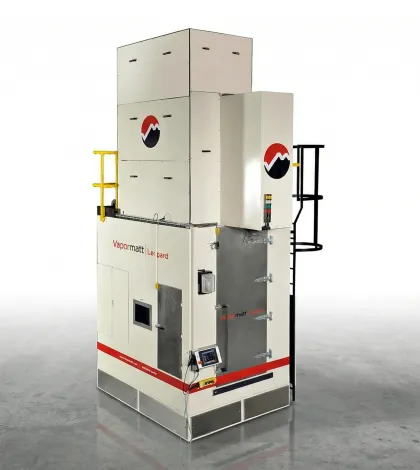
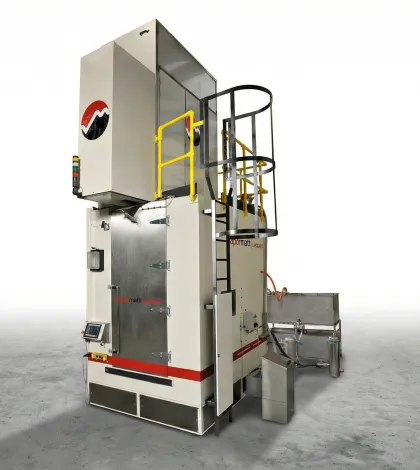
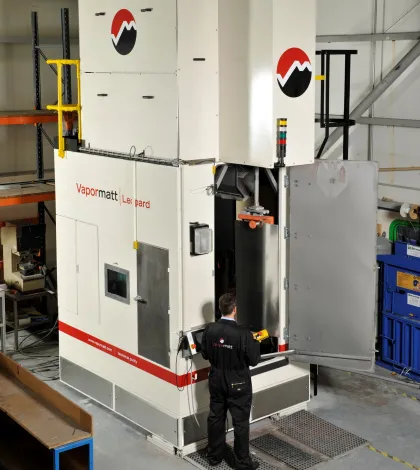
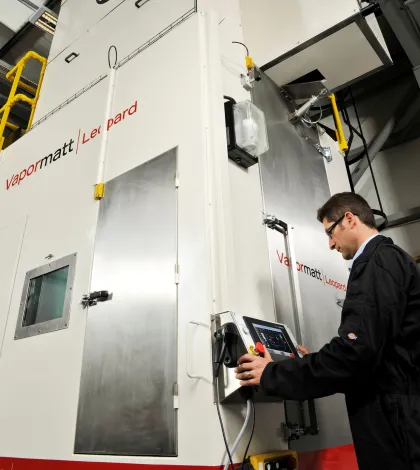
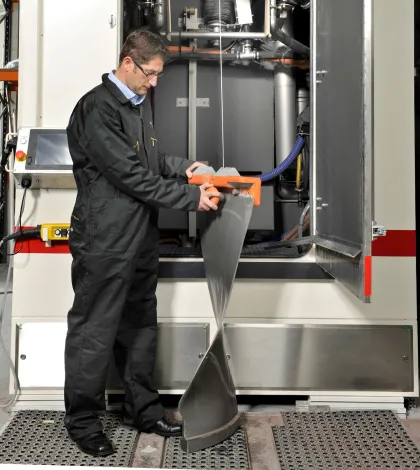
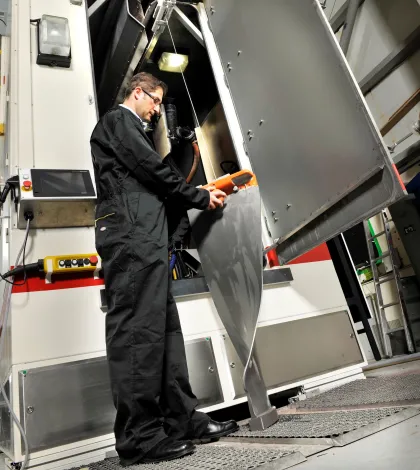
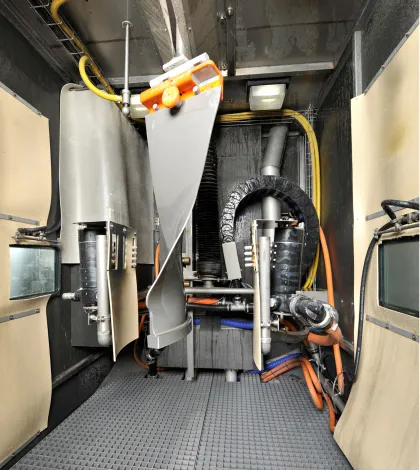
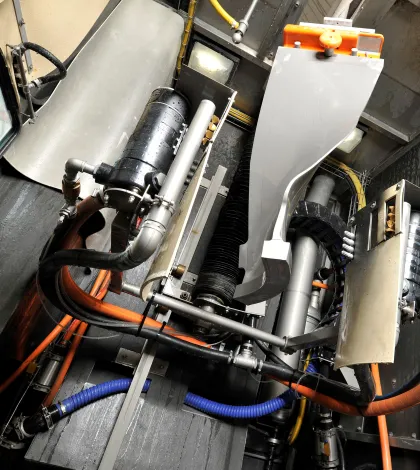
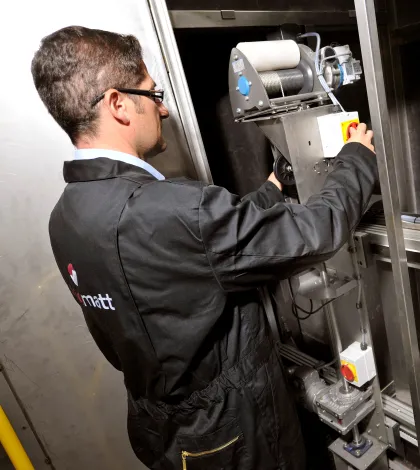
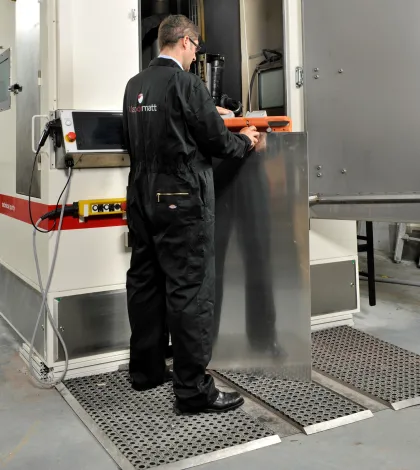
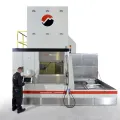
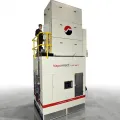
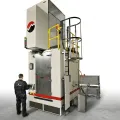
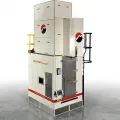
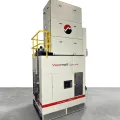
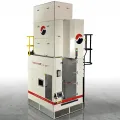
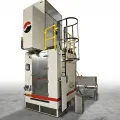
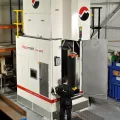
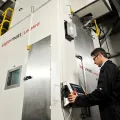
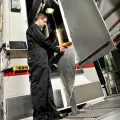
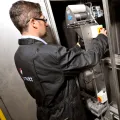
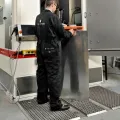
The Leopard Vertical handles tall components such as fan blades for peening and cleaning. The Leopard Horizontal offers more flexibility, taking up to 5 tonnes on a 1.85m (73") turntable, and an external load station, operated by a single person. Both configurations share the same process control architecture. Both are programmable with up to 8 axes of motion and available with a manual operator station. Both footprints are configurable to the facility.
Process control and compliance
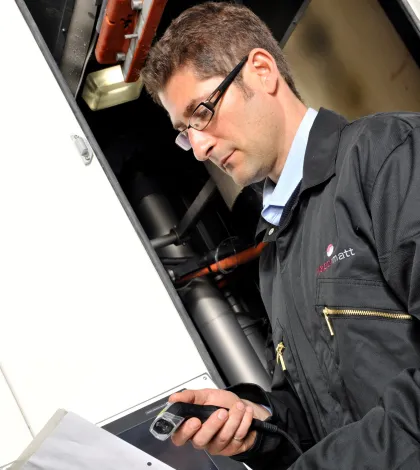
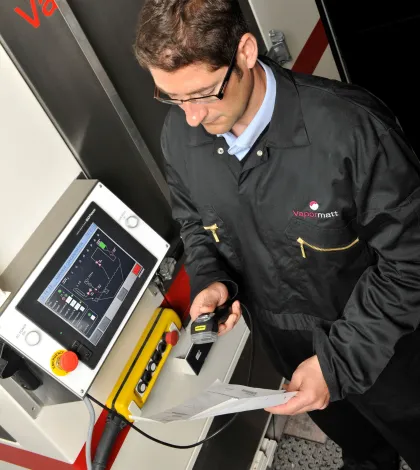
The Leopard monitors slurry pressure, blast air pressure, and airflow continuously, shutting down automatically within one second of any process drift, consistent with AMS 2432 computer-monitored peening requirements. Optional slurry concentration adds abrasive control up to 50%. Every process run is fully documented for audit. Recipes are stored and recalled via the HMI; the optional barcode scanner enables automatic recipe selection between component types.
Why Vapormatt
Vapormatt is the aerospace wet blasting company. Our process knowledge began with Norman Ashworth and Sir Frank Whittle in the late 1940s and has compounded through nearly five decades of machine development and OEM qualification.
- Patented doughnut sump: eliminates the pit requirement entirely, placing the working envelope at floor level and removing civil installation cost and programme delay.
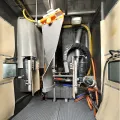
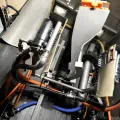
- Up to 8-axis programmable motion: maintains optimal nozzle angle and standoff across compound geometry, eliminating coverage gaps that cause non-conformances on complex components.
MK9 blast guns, optimised pumps, and closed-loop filtration as standard: designed to reduce energy consumption, media usage, and waste, all lowering running costs while meeting the environmental and operator safety standards aerospace facilities require.
Vapormatt holds a portfolio of patented technologies across wet blasting process control, slurry management, and nozzle design.
The Vapormatt Promise: the machine meets the agreed specification, or we make it right.
The bottom line
The Leopard is the large-format wet blasting machine of choice for aerospace OEMs and MRO facilities processing components where process failure is not an option. Facilities relying on fixed-configuration or manually loaded alternatives carry the compliance risk of coverage gaps and the operational cost of machines that cannot adapt as the component mix changes. The Leopard removes both.
Technical specifications
| Parameter | Leopard Vertical | Leopard Horizontal |
|---|---|---|
| Footprint (W × D × H) | 2,575 × 1,100 × 2,804 mm (102" × 43" × 110") | 7,000 × 4,000 × 4,000 mm (276" × 158" × 158") |
| Turntable diameter | 800 mm (32") | 1,850 mm (73") |
| Maximum component weight | 100 kg (220 lb) | 5,000 kg (11,023 lb) |
| Electrical supply | 400/480V, 3-phase, 50/60Hz, 63A | 400/480V, 3-phase, 50/60Hz, 63A |
| Process air | 6–7 bar (90–100 psi); 1.15 Nm³/min (40 SCFM) per gun at 10 mm nozzle | 6–7 bar (90–100 psi); 1.15 Nm³/min (40 SCFM) per gun at 10 mm nozzle |
| Cabinet construction | Welded stainless steel with abrasion-resistant lining | Welded stainless steel with abrasion-resistant lining |
Full technical specifications are available in the downloadable Leopard machine brochure