
afafsasdf
dasfdasffds
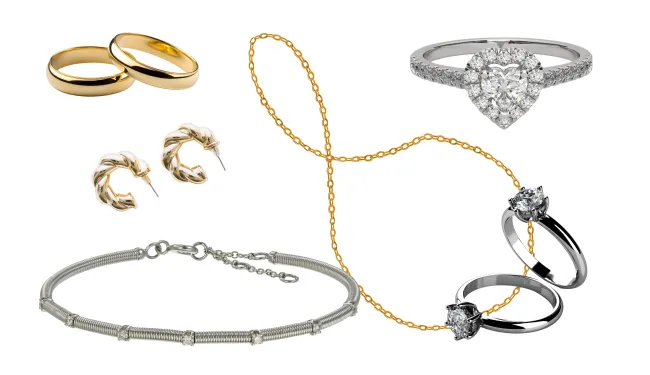
Wet blasting gives jewellery makers a faster route to a controlled, consistent finish—without the dust, rework, and variability that slow production. Vapormatt systems clean intricate details, even out surfaces for inspection, and create a uniform satin or matte finish ready for polishing or downstream finishing.
As the company that brought wet blasting to the world, we engineer repeatable surface finishing systems that jewellery manufacturers can trust—today, and as production scales.
Sector challenges and desired outcomes
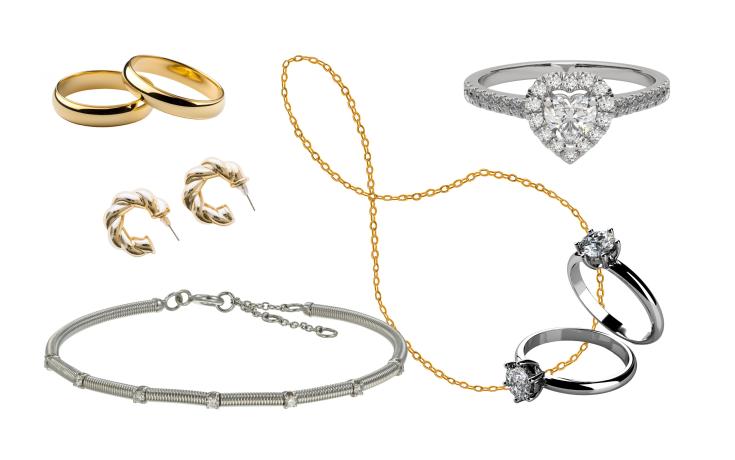
Jewellery finishing has a unique mix of constraints: high-value materials, d visual standards that leave no room for inconsistency.
Common challenges
- Residual investment/plaster, oxidation, and handling contamination after casting and fettling (especially in fine detail)
- Time-heavy manual finishing to remove blemishes before polishing
- Surface variation across a batch (different operators, different touch, different results)
- Rework caused by trapped media, inconsistent texture, or over-aggressive blasting
- Keeping valuable metal on-premise and minimising losses during cleaning/finishing
Desired outcomes
- Uniform satin/matte finish with controlled roughness ready for polish or plating
- Faster, more consistent pre-polish preparation and inspection
- Cleaner working environment with reduced airborne dust
- Repeatable results across shifts, sites, and product lines
Applications of wet blasting in jewellery
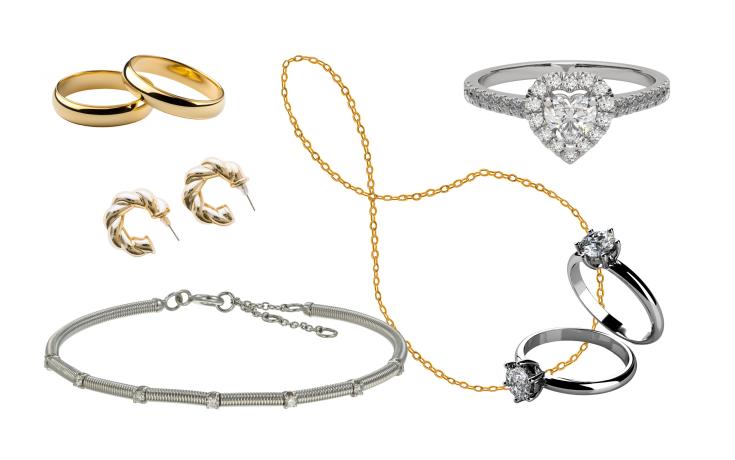
Wet blasting (also searched as vapour blasting / vapor blasting) is used across both artisan workshops and high-throughput jewellery manufacturing.
Typical jewellery applications
- Investment casting clean-up: removing residual investment and surface contamination, preparing for inspection and finishing
- Controlled satin/matte finishing: creating a uniform cosmetic finish prior to polishing
- Detail cleaning in complex geometry: reaching recesses, undercuts, and textured features that mass finishing can miss
- Pre-plating / coating preparation: producing a clean, consistent surface condition for downstream processes [Placeholder: plating/coating process]
- Removal of polishing compound residues: improving cleanliness before final quality checks [Placeholder: compounds used / cleaning stage]
- Coins, medallions, and precious metal parts: descaling and finish control with parameter-driven processing
Quote
Why wet blasting for jewellery
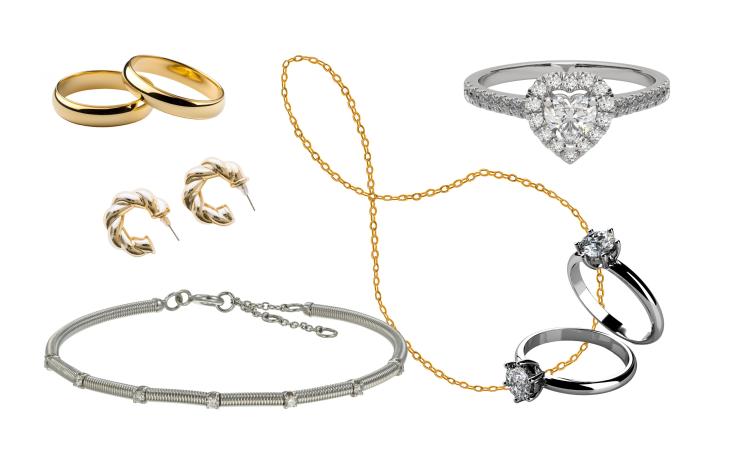
Wet blasting combines water and abrasive media into a controlled slurry. The water cushions impact and helps the media “flow” over complex surfaces—supporting consistent finishing with less aggressiveness than many dry processes.
Benefits tied directly to jewellery pain points
- Consistent cosmetic finish: uniform satin/matte surfaces prior to polish, with controllable texture
- Batch repeatability: parameter-driven processing supports consistent results across operators and shifts (critical for brand-quality production)
- Reduced dust exposure: multiple competitors emphasise wet blasting as dust-free/dust-suppressed versus dry blasting
- Lower risk on delicate geometry: wet blasting is widely positioned as suitable for delicate, precision workpieces, using fine media when required
- Process reach into detail: industry jewellery guidance highlights wet slurry blasting reaching areas that magnetic finishing may not, especially on complex cast trees
- Precious metal control: competitors position vapour blasting systems for precious metals as enabling controlled finishes while keeping valuable materials on-site
Comparison vs other processes
Quick comparison table
| Process | Where it works well | Limitations for jewellery | Where wet blasting fits best |
|---|---|---|---|
| Dry blasting (bead / grit) | Fast material removal, aggressive cleaning | Higher dust burden; greater risk of over-texturing or removing precious metal; harder to control uniformly across small features | Wet blasting for controlled cosmetic finish and cleaner operation |
| Tumbling / mass finishing (vibratory / centrifugal / magnetic) | Throughput finishing and burnishing across many parts | Media can lodge in openings; may not reach deep recesses/undercuts; can mark fine features | Use wet blasting as a targeted “detail reach” step or pre-polish conditioner |
| Chemical pickling / etching | Oxide removal and brightening in some workflows | Chemical handling, disposal, and variability; may not deliver the surface texture you want | Wet blasting reduces reliance on harsh chemistry in some routes, and standardises texture before polish |
| Manual finishing (hand tools) | Local correction and artisanal control | Labour-heavy, inconsistent, hard to scale | Wet blasting standardises the baseline finish and reduces manual time |
| Ultrasonic cleaning | Removing fine contamination from assemblies | Not a surface texturing method; limited on heavy residues | Use before/after wet blasting depending on contamination and quality requirements [Placeholder] |
What the comparison means in practice
Competitors consistently position wet blasting as a gentler, more controlled alternative to dry blasting (less dust, softer finish, fine media capability). In jewellery production, that typically translates into fewer finishing surprises and a more predictable surface condition before polishing, plating, or final QC.
How Vapormatt delivers
Machines and system design
We engineer wet blasting systems around your jewellery realities: intricate geometry, high-value materials, and consistent cosmetic outcomes.
- Manual and production-scale systems matched to part size and throughput [Placeholder: preferred loading method / batch size]
- Fixture, basket, and masking strategies to protect critical features and support repeatability [Placeholder]
- Closed-loop approaches to minimise water and media waste, aligned to production environments (filtration and media management are central to process stability)
Automation and HMI
If your jewellery operation needs volume consistency, automation reduces variation and improves traceability.
- Recipe-based processing (pressure, media, time, nozzle strategy) [Placeholder: control setpoints]
- Optional automation for batch handling and repeatable coverage [Placeholder: automation level]
- Operator guidance via clear HMIs to standardise best practice across shifts
Process control and repeatability
Wet blasting is only valuable if it is controlled.
- Surface texture control via media selection and parameters (roughness targets defined by your polish/plating route)
- Rinse/clean stages to reduce carryover and support clean inspection [Placeholder: rinsing approach]
- Fine detail finishing without sacrificing consistency (validated via sample processing)
Service, support, and lifecycle partnership
Jewellery production does not tolerate downtime—especially where finishing is a bottleneck.
- Application testing and process development to confirm finish outcomes before purchase [Placeholder: sample processing pathway]
- Spares, service support, and process optimisation as requirements change (new alloys, new styles, new volumes)
Case spotlights
1) Investment-cast ring trees: faster clean-up and better inspection
- Challenge: residual investment and inconsistent surface condition before production finishing
- Wet blasting outcome: uniform satin surface, improved visual inspection stage, reduced manual rework
- Results: [cycle time], [rework reduction], [scrap reduction]
2) Stone-set designs and hard-to-reach geometry
- Challenge: reaching undercuts and behind settings without inconsistent manual work
- Wet blasting outcome: better access into recesses (validated on sample parts), more consistent baseline finish
- Results: [finish consistency metric], [throughput]
- Validation note: stone type/setting must be tested.
3) Coins and medallions: controlled matte-to-polish routes
- Challenge: consistent cosmetic finish on precious metal surfaces while managing value and cleanliness
- Wet blasting outcome: parameter-driven finish control; competitors position this as enabling desired finishes with minimal material removal when correctly set up
- Results: [finish spec], [material loss target]
Final takeaway
Wet blasting gives jewellery makers a repeatable way to clean castings and achieve a controlled satin or matte finish, reducing rework and improving inspection—without the dust and variability of dry blasting.
FAQs
What is wet blasting (vapour blasting) for jewellery finishing?
Wet blasting uses a water-and-media slurry to clean and finish jewellery surfaces in a controlled way. It’s commonly used to standardise the surface after casting and before polishing or plating, especially on intricate details.
Can wet blasting remove investment casting residue from jewellery?
Yes—wet blasting is widely used to help remove stubborn investment residue and surface contamination left after casting. It also evens out the surface condition so parts are easier to inspect before the next finishing step.
What jewellery finishes can wet blasting produce (satin, matte, uniform texture)?
Wet blasting is often used to create a consistent satin or matte finish, or to provide a uniform “pre-polish” texture. The final appearance depends on media type, process settings, and the jewellery alloy.
Is wet blasting suitable for gold jewellery (yellow, white, rose gold)?
It can be, provided the media and parameters are selected for the specific alloy and finish target. Jewellery-grade results rely on controlled settings and sample trials to confirm the exact surface look and feel.
Can wet blasting clean and finish sterling silver jewellery without heavy scratching?
Wet blasting can produce controlled finishes on silver when the process is tuned correctly. As with any abrasive process, the risk of marking is managed through media choice, pressure, and cycle time.
Can wet blasting be used on platinum jewellery and palladium alloys?
Yes, wet blasting is used on a range of precious metals, including platinum-group alloys. The key is matching the media and settings to the finish specification and downstream polishing route.
Will wet blasting damage gemstones or stone-set jewellery?
It depends on the stone type, setting security, and process parameters. Because risk varies (especially with softer or fracture-prone stones), sample testing and clearly defined limits are essential before processing stone-set pieces.
Can wet blasting clean behind settings and in fine jewellery details?
Wet blasting is valued for reaching recesses, undercuts, and intricate features that are difficult to finish consistently by hand. Fixturing, nozzle approach, and rinsing strategy all influence how effectively details are cleaned.
How does wet blasting compare to dry bead blasting for jewellery?
Wet blasting typically reduces airborne dust and can be easier to control for consistent cosmetic finishing on delicate features. Dry blasting can be more aggressive and may increase variability if not tightly controlled.
How does wet blasting compare to tumbling or magnetic finishing for jewellery?
Mass finishing is strong for throughput on accessible surfaces, while wet blasting is often used to address complex geometry, fine detail, or to standardise the baseline finish before polish. Many jewellery workflows use both, each for what it does best.
Can wet blasting prepare jewellery for plating (e.g., rhodium plating)?
Wet blasting can help create a clean, consistent surface condition ahead of plating, depending on your plating specification and cleaning sequence. The correct process is typically confirmed with trials to ensure adhesion and cosmetic requirements are met.
What media is used for wet blasting jewellery?
Media selection is driven by the required finish (satin vs matte), the alloy, and the level of cleaning needed. In jewellery, fine, consistent media is commonly chosen to control texture while protecting sharp details—validated through sample parts and agreed finish standards.